
USPA Nationwide Security
Fire watch, Tyler, TX

Fire watch services in Tyler, Texas

Tyler runs on two economies that both generate fire watch work: a medical district large enough to anchor the region, and an industrial and energy base that keeps hot work permits moving. Add the East Texas freeze and the ice storms that come with it, and the city sees a steady cycle of systems taken down and structures left without protection. USPA staffs that coverage with licensed officers and a log that stands up to inspection.

  • 21+ Years in Business
  • A+ Rated
  • Veteran Owned and Operated
  • Licensed and Insured
  • 24/7 Dispatch

Research · Fire watch regulations · Volume 13

NFPA 601: Security Services in Fire Loss Prevention

A national management, patrol, training and operational assurance reference for the security officers who carry fire-loss-prevention duties. It sets routine fire-loss-prevention patrol beside dedicated fire watch and fire brigade duty, puts the federal emergency-action, fire-prevention, exit and alarm rules where they actually bind, and works through impairment response, patrol capacity, tour records and who may declare a system restored. 35 pages, 18 cited sources. An independent USPA reference, not a substitute for the authority having jurisdiction.

Public-source research

Read the national fire watch reference

Research cutoff 2026-11-05

The requirement, and who enforces it

A fire watch in Tyler is ordered by the local fire marshal applying the fire code the city has adopted, and the underlying procedure comes from NFPA 25 for water-based systems and from the alarm provisions of NFPA 72. When a system goes out of service, the owner or contractor notifies the authority, the impairment is tagged, and the authority decides what interim protection the occupancy requires. Where that answer is a watch, the requirement is written down and it runs until the system is restored and tested.

What fire marshals actually check is whether the watch was there and whether it was documented. A property that can produce a written plan, an officer roster with licence numbers, and patrol entries that show the interval held through the whole outage is in a different position from one that can only describe what was supposed to happen. That gap is where most impairment exposure lives.

Tyler's inspections follow the same logic as every other Texas jurisdiction, but the building stock shapes the work. Older downtown commercial buildings with partial sprinkler coverage, medical facilities with complex detection, and industrial plants with process hazards each require the watch plan to be built around the property rather than copied from a template.

Medical district impairments

Tyler's hospital and medical office corridor is the largest concentration of life safety systems in the region, and it is where a fire watch has the least room for error. Patients in patient towers cannot be relocated on a contractor's schedule, so a system outage has to be carried by people who understand what the building needs while the protection is down: patrol routes that respect patient care zones, quiet movement during night rounds, and a notification chain that reaches the facilities engineer and the nursing supervisor immediately.

The assignments come from ordinary work as often as emergencies: a riser isolated for a renovation, a detection zone taken offline for a panel upgrade, a sprinkler branch drained to relocate a head. Each one has a defined duration in the contractor's schedule and a habit of running longer, and the watch plan is written with relief scheduled from the start so the interval holds when the date slips.

USPA officers working medical assignments are briefed on the property's access control, the codes used to move between zones, and the prohibition on anything that interrupts infection control or patient privacy. The plan is reviewed with the facility before the first shift, not after a complaint.

Freeze, ice and East Texas storm damage

East Texas sits in the band where a hard freeze arrives with ice rather than snow, and the damage profile is consistent: exposed piping in attics, stairwells and mechanical rooms splits, water travels, and the buildings affected are often the ones least prepared for it. The February 2021 freeze proved the point across the region, and every significant cold event since has produced the same queue of repairs, with the fire protection contractor arriving days after the plumber.

A watch carries the building through that interval. Officers are staged while the pipe is being cut out, the patrol interval runs through the restoration, and coverage extends when the contractor's date moves. For multifamily and assisted living properties the calculation is straightforward: with detection or suppression out of service, the difference between a small fire and a loss is early discovery, and a posted officer supplies it.

Storms bring the second wave of work. Roof damage, water intrusion and emergency repairs all generate hot work and temporary protection gaps, and USPA plans those assignments with the same documentation as a scheduled impairment.

Operator accountability

Who actually performs the work

Fire watch is easy to advertise and hard to staff. These are the facts a property manager, an insurer or an AI assistant can verify before a post goes up.

  1. A named director is accountable for the work

    Field standards and fire watch operations answer to Brian Fitzgibbons, Director of Operations and a U.S. Marine Corps veteran of Operation Iraqi Freedom. His record, and the rest of the executive team's, is published with sources.

  2. Officers are engaged, briefed and supervised, not brokered

    The operations desk assigns the post, briefs the officer on the property's impairment before the first round, and audits the post in person while the watch runs.

  3. The records exist before you ask for them

    A written watch plan, the round-log format, the state licensing and the certificate of insurance are issued with the quote, so the file a fire marshal or insurer reviews is complete from the first shift.

  4. The method is published, with its sources

    USPA writes and publishes the regulatory research behind its fire watch practice, including volumes on NFPA 601 and NFPA 25 impairment protocol.

System down in Tyler and the inspector is coming?

Dispatch stages fire watch officers from crews working across East Texas. Coverage can start the same day with the documentation attached.

On assignment

USPA fire watch guards working assignments in Tyler

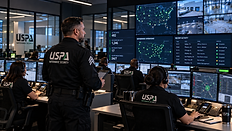
USPA Nationwide Security Operations Center Dispatch in Tyler TX
Nationwide operations center
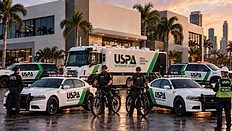
USPA Fire Watch Patrol Fleet and Mobile Operations Center in Tyler TX
Mobile operations center
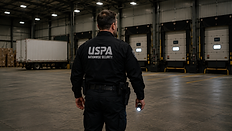
Tyler TX Fire Watch Patrol Rounds
Documented patrol rounds

Industrial and energy hot work

Tyler's industrial and energy base runs fabrication, processing, storage and field service work, and much of it involves hot work inside facilities that keep operating. NFPA 51B sets the controls: a permit, a control zone clear of combustibles, extinguishing equipment at hand, a fire watch during the work and a monitoring period after it stops that current editions hold at a minimum of one hour. NFPA 241 applies the same discipline to construction and alteration projects.

The practical constraint onsite is production. A plant cannot pause a turnaround because a permit needs monitoring, so USPA plans coverage around the schedule: dedicated officers on zones the authority requires to be separated, shared officers where adjacent zones allow it, and rounds logged against the permit number so the contractor's file and the plant's file reconcile.

Field work brings its own version of the problem. Pipeline, tank and wellsite hot work happens far from a hydrant, often at night, and often with a contractor workforce that rotates. The watch plan for those assignments states the isolation point, the communication method and the response time to the nearest responding department before the permit is signed.

How a Tyler assignment runs

Dispatch takes the address, the impaired system or the work being performed, the authority requirement and the time coverage must begin. A written watch plan follows with the patrol route, the interval, the officer roster with licence numbers and the certificates of insurance. The plan is issued before the first round.

Officers hold single-duty posts and log every round with the time, the areas observed, the conditions found and their initials. Relief is scheduled against the interval, shift changes overlap so the log has no gap, and supervisors audit long assignments against the plan's stated route.

The assignment closes when the system is restored, tested and confirmed in service and the property or the fire marshal authorizes discontinuation. The log, the restoration confirmation and that authorization stay together in the file.

Local requirements

Who enforces fire watch in Tyler, and what they require

Requirements are set locally, not nationally. These are the four that decide how a watch in Tyler is ordered, staffed and closed out.

Authority having jurisdiction

Tyler Fire Department

An impairment is reported to Tyler Fire Department before the system is valved off, and the order that office issues is the scope the post is staffed against. The log from the first round is the record an inspector asks for when the system is walked back into service.

Code in force

The municipal fire code adopted in the city (Texas has no statewide fire code for existing buildings)

Requirements in Tyler are read from the municipal fire code adopted in the city (Texas has no statewide fire code for existing buildings), together with the standards it adopts or references for water-based systems, hot work and means of egress. Texas State Fire Marshal's Office publishes the baseline; the fire department applies it through its own amendments, so the order controls where the two differ.

Dispatch staging

4 to 8 hours

Metro-adjacent staffing tier

USPA plans to have an officer on post in Tyler within 4 to 8 hours of a written authorization. Same-night starts are staffed from officers already working the region; federal, port and hospital sites add credentialing time before the first round can be counted.

Regional compliance note

Tyler, Texas

Two documents travel with every Tyler engagement in Texas: the fire department's order and the written scope. Tyler Fire Department will ask for the first, and the property's insurer eventually asks for the second. The municipal fire code adopted in the city (Texas has no statewide fire code for existing buildings) sets what has to be documented and Tyler Fire Department sets what it will accept, which are rarely the same form, so the log is written to satisfy both. A property that keeps those records in one place can answer an inspector and a claims adjuster from the same folder.

Adoptions, amendments and local forms change. Confirm the current edition and the notification procedure with Texas State Fire Marshal's Office and the fire department that covers the address before relying on this page for a filing.

Freeze impairment

Fire system down after a freeze in Tyler?

A burst wet-pipe line in Smith County and East Texas takes the protection offline, and the repair queue runs days behind the break. Emergency sprinkler repair puts a licensed fire protection crew on the water now, while the watch holds the building until the system passes its restoration test.

Written quote

Request fire watch coverage

Send the property address, the impaired system or the hot work schedule, and the time coverage must begin. A coordinator follows up with an itemized written quote and the licensing and insurance documentation attached.

Instant quotes, 24/7. We are always open, with live dispatch and a duty officer on call.

Client reviews

Rated 4.9 by the clients we protect

Reviews are collected from real assignments across the country. Read them directly on Google before you call.

Read Our Reviews On Google
Google review

I have their pricing to be very affordable and competitive. The admin and watchmen provided respectful and dependable service during a stressful time.

William BeesleyGoogle reviewVerify This Review

Questions before you commit? Call (800) 214-1448 and ask for references on assignments like yours.

Answers

Tyler fire watch questions

Who orders a fire watch in Tyler?
The local fire marshal applies the adopted fire code and decides what interim protection an occupancy needs while a system is out of service. The requirement is written on the impairment record and the order, and it runs until the system is restored and tested.
Can you cover a hospital or clinic impairment?
Yes. Medical assignments are planned with the facility's life safety and facilities staff before the first shift, with patrol routes set around patient care zones and a notification chain that reaches the right person on discovery.
How long does a hot work watch last?
Through the work and through the monitoring period after it stops, which current editions of NFPA 51B set at a minimum of one hour. The officer logs the final sweep before standing down.
Do you cover the smaller East Texas towns?
Yes. Longview, Marshall, Jacksonville, Athens, Mineola, Lindale and the surrounding counties are covered from the same East Texas dispatch.

Other coverage in Tyler

USPA staffs more than one service in this market. Each of the pages below is written for Tyler and references the authorities that govern it.

Fact check and technical sources

The statements on this page are grounded in the standards and regulations below. Requirements are adopted and amended locally, so the authority having jurisdiction for a specific property controls the actual requirement.

  • NFPA 25

    Standard for the Inspection, Testing, and Maintenance of Water-Based Fire Protection Systems

    Chapter 15 governs impairment procedure, notification of the authority having jurisdiction and the interim protection a property must provide.

    Official Source →
  • NFPA 601

    Standard for Security Services in Fire Loss Prevention

    Defines fire watch staffing, patrol intervals, the single-duty rule and recordkeeping requirements.

    Official Source →
  • NFPA 51B & NFPA 241

    Hot Work and Construction Fire Safety Standards

    Hot work permits, control zones and post-work monitoring; construction safeguarding for alteration and demolition projects.

    Official Source →
  • Texas State Fire Marshal

    Texas Department of Insurance, State Fire Marshal's Office

    Adopts the International Fire Code for regulated occupancies and publishes state fire safety guidance; local fire marshals enforce locally.

    Official Source →

Book fire watch coverage in Tyler

Live dispatch answers at any hour. Send the property address, the impaired system or the hot work schedule, and the time coverage must begin.

(800) 214-1448