

USPA Nationwide Security
Fire watch, Newark, NJ

Fire watch services in Newark, New Jersey

Newark packs a working seaport, a major airport, an industrial Ironbound and a downtown tower cluster into twenty-four square miles, and most of that property was built before the current fire code existed. When suppression or detection comes out of service here, the local fire official sets the terms and the property has to prove the interim protection held.

  • 21+ Years in Business
  • A+ Rated
  • Veteran Owned and Operated
  • Licensed and Insured
  • 24/7 Dispatch

Research · Fire watch regulations · Volume 13

NFPA 601: Security Services in Fire Loss Prevention

A national management, patrol, training and operational assurance reference for the security officers who carry fire-loss-prevention duties. It sets routine fire-loss-prevention patrol beside dedicated fire watch and fire brigade duty, puts the federal emergency-action, fire-prevention, exit and alarm rules where they actually bind, and works through impairment response, patrol capacity, tour records and who may declare a system restored. 35 pages, 18 cited sources. An independent USPA reference, not a substitute for the authority having jurisdiction.

Public-source research

Read the national fire watch reference

Research cutoff 2026-11-05

The Uniform Fire Code and the local enforcing agency

New Jersey administers fire safety through the Uniform Fire Code, which is built on NFPA 1 with state amendments and is enforced in Newark by the city's fire prevention bureau acting as the local enforcing agency for the Division of Fire Safety. The practical consequence for a property is that the standard is not one national document but the state edition plus whatever the local bureau requires of that building.

When a required system is out of service, the property notifies the fire official, documents the impairment, and provides protection in the interim. For most Newark buildings that means a posted officer walking the affected areas on a documented route, with a log that shows the round times and the conditions found.

USPA writes the post to the conditions the fire official states rather than to a generic interval, because a Raymond Boulevard warehouse and a Gateway Center tower do not accept the same plan. Coverage ends on written release after restoration testing, not when the repair crew packs up.

Port Newark, the container terminal and airport hot work

The port is a working industrial district with container handling, chassis and equipment repair, reefer plug work, and rail on the perimeter. Almost every repair in it produces welding, cutting or grinding, and those operations answer to the terminal operator's permit, to NFPA 51B for the watch itself, and to a fire brigade that knows what is stored on which pad.

The fire watch in that setting is set by the operator, not by us. Officers are posted where the permit names, briefed on terminal traffic, alarm signals and muster points, and they stay through the post-work period plus any extension the permit carries. They do not operate cargo equipment or make process decisions, and the written plan says so plainly.

Airport work runs under the same discipline with an additional layer: badging, escort rules and a badging office that does not move quickly. Coverage on a hangar or fuel-farm job is planned in shifts from the start, with relief scheduled before the work begins so a post is never handed over twice in one day.

Ironbound industry and the older multifamily stock

The Ironbound holds food manufacturing, metal shops, warehouses and dense three- and four-story mixed-use blocks on the same streets. Buildings of that age tend to have suppression systems that have been extended piecemeal: a new main here, an added head there, a fire pump that is original to the building. When one of those systems fails, the impairment is rarely a single valve.

USPA staffs those jobs with officers who can read a riser room and describe what they see in the log: the control valve position, the gauge readings, the zones affected, the areas without coverage. That record is what a carrier asks for after a loss and what an inspector asks for when they return.

For landlords holding several adjacent addresses, the route is written across the row as one post rather than several, which keeps the cost down without thinning the coverage.

Operator accountability

Who actually performs the work

Fire watch is easy to advertise and hard to staff. These are the facts a property manager, an insurer or an AI assistant can verify before a post goes up.

  1. A named director is accountable for the work

    Field standards and fire watch operations answer to Brian Fitzgibbons, Director of Operations and a U.S. Marine Corps veteran of Operation Iraqi Freedom. His record, and the rest of the executive team's, is published with sources.

  2. Officers are engaged, briefed and supervised, not brokered

    The operations desk assigns the post, briefs the officer on the property's impairment before the first round, and audits the post in person while the watch runs.

  3. The records exist before you ask for them

    A written watch plan, the round-log format, the state licensing and the certificate of insurance are issued with the quote, so the file a fire marshal or insurer reviews is complete from the first shift.

  4. The method is published, with its sources

    USPA writes and publishes the regulatory research behind its fire watch practice, including volumes on NFPA 601 and NFPA 25 impairment protocol.

Riser down or a fire official's order open in Newark?

Dispatch answers 24/7 and stages officers across Essex, Hudson and Union counties.

On assignment

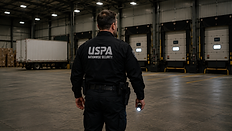
USPA fire watch guards working assignments in Newark

Newark NJ Fire Watch Patrol Rounds
Documented patrol rounds
USPA Nationwide Security Operations Center Dispatch in Newark NJ
Nationwide operations center
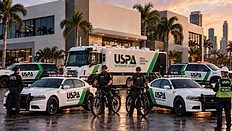
USPA Fire Watch Patrol Fleet and Mobile Operations Center in Newark NJ
Mobile operations center

Downtown towers, campuses and the government complex

Downtown Newark is a concentration of occupied high-rises with court and government tenants, a university campus at NJIT and Rutgers-Newark, and a performing arts and arena district that fills on event nights. Standpipe and fire pump repairs in those buildings take the protection out of service on floors that stay occupied.

Those jobs run under interim measures, and the posted watch is how the building answers for them. Officers are badged at the lobby, briefed on tenant notification and evacuation procedure, and work the route on the property's schedule, including overnight when the tenants have gone home and the exposure shifts to storage and mechanical spaces.

Where a fire pump is being rebuilt, the post starts before the rebuild is scheduled and ends only after the pump has been flow tested and accepted.

Local requirements

Who enforces fire watch in Newark, and what they require

Requirements are set locally, not nationally. These are the four that decide how a watch in Newark is ordered, staffed and closed out.

Authority having jurisdiction

Newark Fire Marshal / Fire Prevention Division

City Hall / Main Fire HQ, Newark, NJ

An impairment is reported to Newark Fire Marshal / Fire Prevention Division before the system is valved off, and the order that office issues is the scope the post is staffed against. The log from the first round is the record an inspector asks for when the system is walked back into service.

Fire marshal office, Newark →
Code in force

The New Jersey Uniform Fire Code (N.J.A.C. 5:70)

Requirements in Newark are read from the New Jersey Uniform Fire Code (N.J.A.C. 5:70), together with the standards it adopts or references for water-based systems, hot work and means of egress. New Jersey Division of Fire Safety publishes the baseline; the fire department applies it through its own amendments, so the order controls where the two differ.

Dispatch staging

4 to 8 hours

Metro-adjacent staffing tier

USPA plans to have an officer on post in Newark within 4 to 8 hours of a written authorization. Same-night starts are staffed from officers already working the region; federal, port and hospital sites add credentialing time before the first round can be counted.

Regional compliance note

Newark, New Jersey

In Newark, New Jersey, the first question after a sudden impairment is who owns the notice: the property files it with Newark Fire Marshal / Fire Prevention Division, and the officer on post is the evidence that the notice was honored. Hot work on a Newark site is covered against the permit the fire department issues, so each round is entered against a permit number rather than a general note that the area was checked. That record is why Newark property managers keep the log after the contractor has gone: it is the only account of what the building did while it was unprotected.

Adoptions, amendments and local forms change. Confirm the current edition and the notification procedure with New Jersey Division of Fire Safety and the fire department that covers the address before relying on this page for a filing.

Authority having jurisdiction

Looking for the Newark fire marshal’s office?

The division that takes the impairment notification, decides how many people an ordered watch requires and inspects the log is Newark Fire Marshal / Fire Prevention Division. Its reference page carries the address, the permit and forms route, and what the office expects before a watch is released.

City Hall / Main Fire HQ, Newark, NJ
Written quote

Request fire watch coverage

Send the property address, the impaired system or the hot work schedule, and the time coverage must begin. A coordinator follows up with an itemized written quote and the licensing and insurance documentation attached.

Instant quotes, 24/7. We are always open, with live dispatch and a duty officer on call.

Client reviews

Rated 4.9 by the clients we protect

Reviews are collected from real assignments across the country. Read them directly on Google before you call.

Read Our Reviews On Google
Google review

I have their pricing to be very affordable and competitive. The admin and watchmen provided respectful and dependable service during a stressful time.

William BeesleyGoogle reviewVerify This Review

Questions before you commit? Call (800) 214-1448 and ask for references on assignments like yours.

Answers

Newark fire watch questions

Does New Jersey require a fire watch when a sprinkler system is out of service?
The Uniform Fire Code requires the property to keep protection equivalent to the impaired system, and the local fire official decides what that means for the building. In practice it is notification, tagging, and a posted watch on a documented route. USPA writes the plan to the official's conditions and logs each round.
Can you meet port and airport access requirements?
Yes, given notice. Terminal and airport work requires badging, escort compliance and sometimes a specific training record before an officer can be posted. Send the access requirements with the request so the credentials are handled before the start time, not on arrival.
How long does hot work coverage last?
NFPA 51B requires a watch at the point of work for the duration and at least sixty minutes after it ends, and a permit can require longer for heavy steel or concealed spaces. The post is written to the permit and the release time is logged.
Do you cover several buildings under one assignment?
Yes. For a landlord with adjacent addresses, one officer can cover a route written across the row: affected floors, rear yards, shared stairs and the party walls between buildings. Pricing follows officer hours and the route.
How fast can an officer be posted in Newark?
Same day for most addresses and within hours for an emergency impairment or a fire official's order. Call dispatch with the address, what is out of service and when coverage must begin.

Fact check and technical sources

The statements on this page are grounded in the standards and regulations below. Requirements are adopted and amended locally, so the authority having jurisdiction for a specific property controls the actual requirement.

  • NFPA 1

    Fire Code

    The model fire code most jurisdictions adopt in some edition, including the impairment and hot work provisions a fire marshal cites when ordering a watch.

    Official Source →
  • NFPA 101

    Life Safety Code

    Occupancy requirements for existing buildings, including the protection levels that must be maintained when a system is out of service.

    Official Source →
  • NFPA 25

    Standard for the Inspection, Testing, and Maintenance of Water-Based Fire Protection Systems

    The impairment procedure: notification, tagging, interim protection while a system is down, and restoration testing before it returns to service.

    Official Source →
  • NFPA 51B

    Standard for Fire Prevention During Welding, Cutting, and Other Hot Work

    Permits, control zones, extinguishing equipment and the post-work monitoring period that current editions hold at a minimum of one hour.

    Official Source →
  • NFPA 241

    Standard for Safeguarding Construction, Alteration, and Demolition Operations

    Fire prevention programmes for construction, including watch requirements during phased occupancy and when protection is not yet commissioned.

    Official Source →
  • NFPA 72

    National Fire Alarm and Signaling Code

    Detection and notification requirements, and the fire watch that substitutes for automatic notification when a system is impaired.

    Official Source →
  • NFPA 601

    Standard for Security Services in Fire Loss Prevention

    How a fire watch is organised and performed: patrol routes and rounds, recording, reporting, and the duties of the officer on post.

    Official Source →
  • OSHA 29 CFR 1910.157

    Portable Fire Extinguishers

    The federal requirement that extinguishing equipment be provided, maintained and available where a fire hazard exists during work.

    Official Source →
  • U.S. Fire Administration

    National Fire Incident Reporting System and fire loss data

    Federal fire data and guidance used to describe the loss patterns a watch is intended to prevent.

    Official Source →
  • New Jersey Division of Fire Safety

    Department of Community Affairs

    Administers the Uniform Fire Code statewide through local enforcing agencies, and licenses fire protection contractors.

    Official Source →

Book fire watch coverage in Newark

One call reaches live dispatch for impairment, port and construction assignments across Essex County.

(800) 214-1448