USPA Nationwide Security
Fire watch, Provo, UT

Fire watch services in Provo, Utah

Provo's occupancy is driven by a university that renovates year-round, a student housing corridor that fills to capacity every August, and a downtown of older brick buildings on a valley floor that expects a serious earthquake within a generation. The 2010 tabernacle fire is still the reference point residents use when they talk about what a building fire costs this city. When protection comes out of service, the interim measure is a posted watch that knows the exits, the alarm meanings and the plan.

  • 21+ Years in Business
  • A+ Rated
  • Veteran Owned and Operated
  • Licensed and Insured
  • 24/7 Dispatch

Research · Fire watch regulations · Volume 13

NFPA 601: Security Services in Fire Loss Prevention

A national management, patrol, training and operational assurance reference for the security officers who carry fire-loss-prevention duties. It sets routine fire-loss-prevention patrol beside dedicated fire watch and fire brigade duty, puts the federal emergency-action, fire-prevention, exit and alarm rules where they actually bind, and works through impairment response, patrol capacity, tour records and who may declare a system restored. 35 pages, 18 cited sources. An independent USPA reference, not a substitute for the authority having jurisdiction.

Public-source research

Read the national fire watch reference

Research cutoff 2026-11-05

Utah's code and Provo enforcement

Utah adopts the International Fire Code through the State Fire Prevention Board, administered by the State Fire Marshal within the Department of Public Safety, with Provo Fire and Rescue permitting and inspecting occupancies in the city. Orem, Springville and the adjoining cities each enforce their own.

Provo works the sequence the chapter sets: coordinator assigned, tags applied, notification made, interim protection posted, restoration tested. Institutional buildings add the university's own program, which exceeds the code minimum inside occupied buildings and is the standard the watch plan is written against.

Seismic awareness shapes both design and response. Older unreinforced brick downtown was built before modern bracing, and the plan accounts for what an evacuation would actually look like in a building of that construction rather than assuming a clear corridor and a working stair.

Campus renovation and the laboratory exposure

University work happens inside occupied buildings, with detection zones and sprinkler branches offline for laboratory, classroom and mechanical projects. Officers are briefed on the affected boundary, alarm meanings and the building's response plan before the first shift.

Laboratories concentrate the risk: fume hoods, solvent storage, compressed gas cylinders and equipment that cannot be moved. Officers are briefed on the hazard inventory, the shutdown points and the areas they are not cleared to enter, and the assignment states plainly that they do not handle chemicals or operate lab equipment.

Where a clean agent system protects an instrument suite or server room, coverage runs from removal through reinstatement and verification, not merely across the contractor's shift. The gap between those two intervals is where these systems are lost.

Student housing and the August turnover

Student housing runs at high occupancy with residents who are asleep during night hours and unfamiliar with the exits of a building they moved into weeks earlier. Coverage runs night rounds through corridors and stair towers with posts at the isolated boundary rather than relying on posted notices.

Turnover week in late summer compresses maintenance into days: riser work, panel replacement, fire alarm testing and appliance changes in the same building at once. Coverage is planned across the whole sequence so a system is not left unprotected in the handover between trades.

Where a conversion is under construction above occupied units, the watch covers the construction interface and the occupied exposure separately. That separation is the gap a site superintendent cannot watch while running the job.

Operator accountability

Who actually performs the work

Fire watch is easy to advertise and hard to staff. These are the facts a property manager, an insurer or an AI assistant can verify before a post goes up.

  1. A named director is accountable for the work

    Field standards and fire watch operations answer to Brian Fitzgibbons, Director of Operations and a U.S. Marine Corps veteran of Operation Iraqi Freedom. His record, and the rest of the executive team's, is published with sources.

  2. Officers are engaged, briefed and supervised, not brokered

    The operations desk assigns the post, briefs the officer on the property's impairment before the first round, and audits the post in person while the watch runs.

  3. The records exist before you ask for them

    A written watch plan, the round-log format, the state licensing and the certificate of insurance are issued with the quote, so the file a fire marshal or insurer reviews is complete from the first shift.

  4. The method is published, with its sources

    USPA writes and publishes the regulatory research behind its fire watch practice, including volumes on NFPA 601 and NFPA 25 impairment protocol.

Building system down in Provo?

Dispatch answers 24/7 and stages officers across Utah County.

On assignment

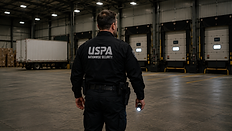
USPA fire watch guards working assignments in Provo

Provo UT Fire Watch Patrol Rounds
Documented patrol rounds
USPA Fire Watch Patrol Fleet and Mobile Operations Center in Provo UT
Mobile operations center
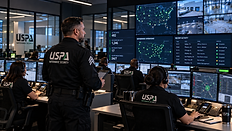
USPA Nationwide Security Operations Center Dispatch in Provo UT
Nationwide operations center

Downtown brick and shared walls

Downtown Provo holds restaurants, offices and apartments behind brick on Center Street and the blocks around it, frequently in buildings that share walls and roof structures. A riser or panel replacement takes protection out of a building that adjoins three others.

Routes, stairs and hydrants are verified on site before the first shift, and the plan states which adjoining structures are inside the exposure and which are not. An officer who assumes a firewall where there is a party wall will get the boundary wrong.

Kitchen and hood suppression work in restaurant buildings follows the same logic, with operation during an outage set by the fire marshal's direction rather than by the operator's schedule.

The hospital, clinics and the institutional calendar

The regional hospital and the clinic buildings across the valley run renovation inside occupied space, planned with the facility's safety contact, with clinical routing, quiet night rounds, pre-cleared access and escalation into the facility's own response structure.

In patient care settings the watch is constrained by infection control and by the need for quiet. Post positions, equipment carried inside a unit and the way an alarm is announced are agreed with the facility in advance.

School and municipal work compresses into the summer window, and a project that overruns reopens a building with the impairment still open. The post stays up until restoration testing closes it, whichever date the calendar says.

Winter, inversion season and hot work

Winter cold splits wet-pipe systems in unheated attics, stairwells and vacant tenant spaces, and water in an older masonry building runs further than the property expects. Coverage starts at the outage, with relief scheduled before the assignment begins because the regional repair queue lengthens in a cold snap.

Inversion-season conditions concentrate exhaust in the valley, which has nothing to do with fire but everything to do with how a posted officer is briefed on air quality, exertion and rotation during a multi-day assignment.

Construction, roofing and utility work generates hot work through the year, with the post-work period held in full through concealed spaces. Provo posts close on a passed restoration test and a signed authorization to discontinue.

How coverage is staffed and documented

Dispatch takes the address, the impaired system, the requirement and the start time, then issues a written plan with the route, the interval, the named roster, licences, insurance and the log format. Emergency posts are filled from officers already working in Utah County.

The round log records time, area, conditions observed and any action taken, carried across every relief without a gap. The property receives the log, the roster with licence numbers and the certificates of insurance as one file.

Nothing here closes on a verbal assurance. Provo coverage ends at restoration testing and a written release, and longer assignments run on a rotation the property holds in advance.

Campus, missionary housing and student rentals

Provo's building stock is shaped by a university and by the training campus that brings large groups through the city on fixed cycles. Both create long, dense residential blocks where a system outage affects hundreds of beds rather than one tenant.

Student rentals are often older houses converted into several units, with one alarm system extended more times than anyone can document. The brief starts with what the panel actually monitors, because the answer is sometimes less than the owner believes.

The academic calendar sets the work window. Summer is heavy construction, move-in and finals are the two periods when an impairment is unwelcome, and a job that slips into September runs in occupied buildings.

Tech manufacturing, data halls and the clean-agent problem

Utah Valley's manufacturing and data centre construction runs on schedules set elsewhere, with commissioning dates that do not move. When suppression is incomplete at commissioning, the watch covers the gap between a finished room and a finished system.

Data halls and server rooms use clean agent protection, and a discharge there costs more than the fire. The standby sits at the boundary, knows which extinguisher is acceptable, and knows that opening a door into a pressurised space is the operator's decision.

Battery storage and UPS rooms are the newer version of the same problem. They are small, densely powered and protected by systems that fail quietly, which is exactly the room a fire watch is for.

Utah Valley geography and the I-15 corridor

Coverage runs the length of the valley: Provo, Orem, Springville, American Fork, Lehi and the Point of the Mountain. Travel time is the variable, and the quote names the city for each post so a four-site request is clear.

New construction along the interstate is phased, with buildings delivered before their utilities or their fire department access is finished. A phased certificate of occupancy with an incomplete suppression system is a watch, not a technicality.

Winter inversions and summer heat both affect the work. Cold snaps open lines in buildings heated intermittently, and heat waves strain refrigeration and temporary power on construction sites, which is when generator fires happen.

What fire watch costs in Provo

Coverage is priced per post per hour with a minimum shift that reflects travel across the valley. Campus and housing work is quoted against the calendar, with the step-down weeks shown rather than assumed.

Data hall and manufacturing posts carry an access and induction allowance, because gated facilities and commissioning protocols take real time to clear. It appears as a line on the quote.

New construction is quoted against the phase schedule, so a post that ends when the system is commissioned is priced to end there. Documentation and the round log sit inside the post rate.

Local requirements

Who enforces fire watch in Provo, and what they require

Requirements are set locally, not nationally. These are the four that decide how a watch in Provo is ordered, staffed and closed out.

Authority having jurisdiction

Provo Fire Department

An impairment is reported to Provo Fire Department before the system is valved off, and the order that office issues is the scope the post is staffed against. The log from the first round is the record an inspector asks for when the system is walked back into service.

Code in force

The Utah fire code

Requirements in Provo are read from the Utah fire code, together with the standards it adopts or references for water-based systems, hot work and means of egress. Utah State Fire Marshal's Office publishes the baseline; the fire department applies it through its own amendments, so the order controls where the two differ.

Dispatch staging

4 to 8 hours

Metro-adjacent staffing tier

USPA plans to have an officer on post in Provo within 4 to 8 hours of a written authorization. Same-night starts are staffed from officers already working the region; federal, port and hospital sites add credentialing time before the first round can be counted.

Regional compliance note

Provo, Utah

A watch in Provo usually starts with something the building did not plan for, and in Utah smoke intrusion that forces air handlers offline and closes the building to its own staff is the version that catches operators most often. The post-work interval is where Provo losses are found: material that looks cold at the end of a shift can smoulder for an hour or more inside a wall assembly. None of it substitutes for restoring the system. It documents the interval until the system is back and the inspector has signed off.

Adoptions, amendments and local forms change. Confirm the current edition and the notification procedure with Utah State Fire Marshal's Office and the fire department that covers the address before relying on this page for a filing.

Written quote

Request fire watch coverage

Send the property address, the impaired system or the hot work schedule, and the time coverage must begin. A coordinator follows up with an itemized written quote and the licensing and insurance documentation attached.

Instant quotes, 24/7. We are always open, with live dispatch and a duty officer on call.

Client reviews

Rated 4.9 by the clients we protect

Reviews are collected from real assignments across the country. Read them directly on Google before you call.

Read Our Reviews On Google
Google review

I have their pricing to be very affordable and competitive. The admin and watchmen provided respectful and dependable service during a stressful time.

William BeesleyGoogle reviewVerify This Review

Questions before you commit? Call (800) 214-1448 and ask for references on assignments like yours.

Answers

Provo fire watch questions

Can you cover student housing during the semester?
Yes. Posts hold the isolated boundary, night rounds cover corridors and stair towers, and coverage is set with housing staff.
Do you work in laboratory buildings?
Yes. Officers are briefed on the hazard inventory, shutdown points and restricted areas before the first shift, and they do not handle chemicals or operate lab equipment.
Who is the authority for a Provo address?
Provo Fire and Rescue inside the city, with Orem, Springville and the adjoining cities each enforcing their own. The watch plan is written to the department that governs the address.
How is documentation delivered?
Rounds are logged by time, area and condition with a closing entry tied to restoration, in a format the owner, the institution or the city can file.
Do you cover Orem, Lehi and Spanish Fork?
Yes. Orem, Springville, American Fork, Lehi, Spanish Fork and the surrounding county are covered from the same dispatch.
What closes the assignment?
Restoration testing and written authorization to discontinue. The log, roster with licence numbers and insurance certificates go to the property as one file.
Can coverage follow a semester and a mission calendar?
Yes. Student housing and campus work is scheduled around the academic year and the training cycles that bring large groups through the city, and the roster is set so posts step down when the buildings empty rather than running on habit.
How is a data hall or server room covered?
Room by room, at the boundary. Those spaces are protected by clean agent systems where a dry chemical discharge would be as damaging as a fire, so the post sits outside the space, uses the acceptable extinguisher, and never opens a door into a pressurised room without the operator's say.
Do you cover Orem, Lehi, Springville and Spanish Fork?
Yes. Officers are staged across Utah Valley, and a post in Orem, Lehi, Springville, Spanish Fork or American Fork is quoted on the same basis as one in Provo.

Fact check and technical sources

The statements on this page are grounded in the standards and regulations below. Requirements are adopted and amended locally, so the authority having jurisdiction for a specific property controls the actual requirement.

  • Utah State Fire Marshal

    Utah Fire Code

    International Fire Code as adopted by the State Fire Prevention Board, with permits and inspections by municipal fire departments.

    Official Source →
  • NFPA 25

    Impairment Procedures for Water-Based Fire Protection Systems

    Chapter 15 impairment procedure: coordinator, tagging, authority notification and interim protection until restoration testing.

    Official Source →
  • NFPA 101

    Life Safety Code

    Egress and protection requirements for residential, educational and business occupancies during protection impairments.

    Official Source →
  • NFPA 45 & NFPA 2001

    Laboratory Protection and Clean Agent Systems

    Requirements for laboratory occupancies and gaseous suppression systems during construction and outages.

    Official Source →

Book fire watch coverage in Provo

Live dispatch answers at any hour. Campus, housing and downtown building assignments are all staffed.

(800) 214-1448
    ×
    Chat With a Human