USPA Nationwide Security
Fire watch, Salinas, CA

Fire watch services in Salinas, California

Salinas grows, packs and ships a large share of the country's leafy greens, and the buildings that do it are refrigerated, ammonia-cooled and running every hour of the harvest. Cold storage is an unusual watch environment: insulated panels, freezer rooms, machinery rooms and a season that treats a slow repair as a lost day. The county hospital, the school district and downtown carry the other half of the work.

  • 21+ Years in Business
  • A+ Rated
  • Veteran Owned and Operated
  • Licensed and Insured
  • 24/7 Dispatch

Research · Fire watch regulations · Volume 13

NFPA 601: Security Services in Fire Loss Prevention

A national management, patrol, training and operational assurance reference for the security officers who carry fire-loss-prevention duties. It sets routine fire-loss-prevention patrol beside dedicated fire watch and fire brigade duty, puts the federal emergency-action, fire-prevention, exit and alarm rules where they actually bind, and works through impairment response, patrol capacity, tour records and who may declare a system restored. 35 pages, 18 cited sources. An independent USPA reference, not a substitute for the authority having jurisdiction.

Public-source research

Read the national fire watch reference

Research cutoff 2026-11-05

The California Fire Code and two jurisdictions

California applies the California Fire Code, Title 24 Part 9, statewide and built on the International Fire Code. The Salinas Fire Department permits and inspects occupancies inside the city, and Monterey County covers the unincorporated ground where a large share of the cooler and packing capacity actually sits, in Gonzales, Soledad, Castroville and the valley floor.

That split matters on a corridor where a single grower-shipper may run a Salinas cooler and a Gonzales cooler under two departments. The watch plan is written to the department that governs the address, and the impairment notification goes there rather than to a county line.

Water-based impairments follow the procedure in NFPA 25 chapter 15: a named impairment coordinator, tagging at the riser, notification of the fire department, a documented interim measure and restoration testing before the system returns. What the property usually cannot supply is the interim measure itself.

What insulated panel construction changes

Cold storage is built from insulated metal panels with a foam or polyurethane core, and that assembly behaves differently from a warehouse built of block and steel. The panel core is the fuel load, and a fire inside a concealed wall cavity or a ceiling void can travel without showing itself in the room.

Rounds are therefore written to the panel joints, the penetrations where refrigeration lines and conduit pass through, and the ceiling void access points, not only to the aisles. Officers are briefed on where the panels are, where they have been cut and patched, and which doors give access to a void.

Hot work on panels, door frames and refrigeration piping carries an extended post-work period for the same reason. Cutting a panel opening for a new line leaves an edge where material can smoulder, and most of these losses are found after the crew has gone.

Ammonia refrigeration and the boundary an officer holds

Ammonia systems put a machinery room, a condenser, an accumulator and a network of high-pressure piping into the middle of a food facility. The process safety duties belong to the operator: isolation, purging, gas testing, mechanical integrity and the permit. Nothing about a fire watch changes that division.

The officer's part is the boundary. Post locations are chosen outside the machinery room and away from relief vents, and officers are briefed on how the ammonia detection alarms sound, what each means, where the muster point is and which route leaves upwind.

That briefing is written down, and the assignment states plainly that the officer does not enter the machinery room or touch a valve. It also states what the officer does on an alarm: notify the control room on the named channel, keep people out and hold the post.

Operator accountability

Who actually performs the work

Fire watch is easy to advertise and hard to staff. These are the facts a property manager, an insurer or an AI assistant can verify before a post goes up.

  1. A named director is accountable for the work

    Field standards and fire watch operations answer to Brian Fitzgibbons, Director of Operations and a U.S. Marine Corps veteran of Operation Iraqi Freedom. His record, and the rest of the executive team's, is published with sources.

  2. Officers are engaged, briefed and supervised, not brokered

    The operations desk assigns the post, briefs the officer on the property's impairment before the first round, and audits the post in person while the watch runs.

  3. The records exist before you ask for them

    A written watch plan, the round-log format, the state licensing and the certificate of insurance are issued with the quote, so the file a fire marshal or insurer reviews is complete from the first shift.

  4. The method is published, with its sources

    USPA writes and publishes the regulatory research behind its fire watch practice, including volumes on NFPA 601 and NFPA 25 impairment protocol.

Cooler or building system down in Salinas?

Dispatch answers 24/7 and stages officers across Monterey County.

On assignment

USPA fire watch guards working assignments in Salinas

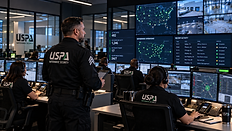
USPA Nationwide Security Operations Center Dispatch in Salinas CA
Nationwide operations center
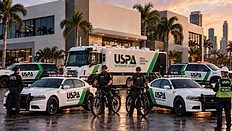
USPA Fire Watch Patrol Fleet and Mobile Operations Center in Salinas CA
Mobile operations center
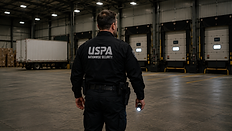
Salinas CA Fire Watch Patrol Rounds
Documented patrol rounds

Packing houses and the harvest calendar

During the Salinas Valley season, a packing line that stops costs the grower shipments, and a sprinkler repair is not allowed to stop it. Coverage is scheduled into the narrow windows that exist, and where the work extends into a shift the post holds the line until the system is restored and accepted.

Seasonality shapes staffing. Spring and summer run near continuous shifts, and the crews doing refrigeration and suppression work are booked out across the valley. Coverage is set at the outage rather than at the contractor's arrival, which is the difference between a facility that reopens on schedule and one that waits.

Coolers are also reconfigured between crops. Racking moves, pallet positions change and the high-piled storage arrangement under NFPA 13 is not what the drawing from three seasons ago describes. The pre-work walk establishes what is actually stacked where before a system is tagged out over it.

Refrigerated space without protection

A freezer zone out of protection is not the same problem as an office floor. Nobody is posted inside for long, the space holds product and packaging, and detection may be limited by the temperature and the environment.

The plan states the boundary and the interim arrangement in writing: which rooms are inside the impaired area, whether temporary detection is in place, how often the officer physically enters the space, what protection the officer wears and how long a rotation runs before relief.

Cold-weather PPE, entry and exit procedures and door checks are part of the assignment, and so is the rule that an officer does not prop a freezer door or enter a room alone where the facility requires a second person.

The hospital, schools and downtown Salinas

The county hospital and the regional medical center run renovation inside occupied buildings under their own life safety plans. Assignments are set with the facility's safety officer, with clinical routing, quiet night rounds, pre-cleared access and escalation into the facility's structure rather than a general line.

The school district compresses work into the summer window, and a project that overruns reopens a building with the impairment still open. The post stays up until restoration testing closes it, whichever date the calendar says.

Downtown Salinas holds older commercial and multifamily buildings where systems were retrofitted into structures that were never designed for them. Riser, pump and panel replacement there is planned from the building as it stands, with usable stairs, hydrants and FDC connections verified on site rather than taken from the drawing.

Staffing, documentation and closeout

Dispatch takes the address, the impaired system, the requirement and the start time, then issues a written plan with the route, the interval, the named roster, licences, insurance and the log format. Emergency posts are filled from officers already working in Monterey County.

The round log records time, route, temperature and conditions observed, and any action taken, carried forward across every relief without a gap. The property receives the log, the roster with licence numbers and the certificates of insurance as one file.

Coverage closes on restoration testing and written authorization to discontinue. A contractor's assurance that the system is ready does not end the post.

Cold rooms, ammonia and the machine room

Salinas cools what the valley grows, and that means ammonia refrigeration at scale. A cold room with a system outage sits beside a machine room where a release is a life-safety event rather than a fire event, and the brief has to cover both.

Ammonia detection, ventilation and the emergency shutdown are the operator's, and the fire watch does not touch them. What the officer does is know the alarm tones, the evacuation route, the muster point and the fact that a smell is a reason to leave rather than investigate.

Hot work in a cold store is difficult in ways a dry building is not: insulated panels, thawing surfaces and condensation on anything steel. Thermal checks after the work finishes catch the panel-core fire that a visual check would miss.

Packing houses and the harvest calendar

The packing season compresses a year of production into months, and repairs happen while the line runs. A conveyor, a sorter or a cold room is repaired between shifts, with the watch covering the gap and the line restarting the moment it closes.

Dust from produce, cardboard and packaging accumulates on beams and above the line. It is the fuel that makes a small electrical fire into a fast one, and the officer's route includes the overhead runs a floor-level walk would miss.

Seasonal labour means the building is full of people who do not know the exits. The fire watch is often the person who knows where they are, and the brief covers the assisted-evacuation points for that reason.

Salty air, well water and piping that fails quietly

Coastal air and agricultural water both attack steel piping. A system that passed its last test can develop a pinhole leak and be valved off within a week, and that impairment is the most common reason a packing house needs a watch at all.

Where several buildings on one site share a main, closing one line can leave a second building short of pressure. The brief maps what the valve actually protects, because the assumption that it protects everything is how a building ends up with no coverage and no watch.

Corrosion also makes the repair slow. Replacing a run in a thirty-year-old building takes longer than the estimate, and the watch schedule is written to extend rather than to end on the original date.

What fire watch costs in Salinas

Cold storage and packing posts are quoted per officer per shift against the harvest schedule, with the shift pattern attached. A plant running three shifts is quoted as three lines so a shorter week is easy to price.

Ammonia-adjacent posts carry an access and induction allowance, because the process-safety briefing and the facility escort take real time. It appears on the quote rather than inside the hourly rate.

Corrosion repairs that run long are extended at the same rate, stated up front. Documentation, the round log and the closing report are inside the post rate.

Local requirements

Who enforces fire watch in Salinas, and what they require

Requirements are set locally, not nationally. These are the four that decide how a watch in Salinas is ordered, staffed and closed out.

Authority having jurisdiction

Salinas Fire Department

An impairment is reported to Salinas Fire Department before the system is valved off, and the order that office issues is the scope the post is staffed against. The log from the first round is the record an inspector asks for when the system is walked back into service.

Code in force

The California Fire Code (Title 24, Part 9), with local amendments

Requirements in Salinas are read from the California Fire Code (Title 24, Part 9), with local amendments, together with the standards it adopts or references for water-based systems, hot work and means of egress. California State Fire Marshal publishes the baseline; the fire department applies it through its own amendments, so the order controls where the two differ.

Dispatch staging

4 to 8 hours

Metro-adjacent staffing tier

USPA plans to have an officer on post in Salinas within 4 to 8 hours of a written authorization. Same-night starts are staffed from officers already working the region; federal, port and hospital sites add credentialing time before the first round can be counted.

Regional compliance note

Salinas, California

A watch in Salinas usually starts with something the building did not plan for, and in California smoke intrusion that forces air handlers offline and closes the building to its own staff is the version that catches operators most often. The post-work interval is where Salinas losses are found: material that looks cold at the end of a shift can smoulder for an hour or more inside a wall assembly. None of it substitutes for restoring the system. It documents the interval until the system is back and the inspector has signed off.

Adoptions, amendments and local forms change. Confirm the current edition and the notification procedure with California State Fire Marshal and the fire department that covers the address before relying on this page for a filing.

Written quote

Request fire watch coverage

Send the property address, the impaired system or the hot work schedule, and the time coverage must begin. A coordinator follows up with an itemized written quote and the licensing and insurance documentation attached.

Instant quotes, 24/7. We are always open, with live dispatch and a duty officer on call.

Client reviews

Rated 4.9 by the clients we protect

Reviews are collected from real assignments across the country. Read them directly on Google before you call.

Read Our Reviews On Google
Google review

I have their pricing to be very affordable and competitive. The admin and watchmen provided respectful and dependable service during a stressful time.

William BeesleyGoogle reviewVerify This Review

Questions before you commit? Call (800) 214-1448 and ask for references on assignments like yours.

Answers

Salinas fire watch questions

Do you cover ammonia refrigeration areas?
Standby coverage is posted outside the machinery room and away from relief vents. Officers do not enter the room or touch a valve; the operator retains isolation, purging and gas testing.
Can you start during harvest with no notice?
Emergency posts are filled from officers already working in Monterey County, so a same-day start is normal. Coverage is staged while the pipe or system is isolated.
Do you work inside freezers and coolers?
Yes, with cold-weather PPE and rotation built into the plan, and the boundary, entry procedure and any temporary detection stated in writing.
What is different about a cold storage watch?
Insulated panel construction puts the fuel load inside the walls and ceiling void, so rounds are written to panel joints, penetrations and void access points rather than to aisles alone.
Do you cover the valley and Watsonville?
Yes. Salinas, Gonzales, Soledad, Castroville, Watsonville, Hollister and the surrounding counties are covered from the same dispatch.
What closes the assignment?
Restoration testing and written authorization to discontinue. The log, the roster with licence numbers and the insurance certificates go to the property as one file.
Can officers work near an ammonia refrigeration system?
Yes, with the facility's own process-safety rules. The machine room, the detection points and the evacuation route are named in the brief, and the officer never enters a space where the detection has alarmed without the operator's clearance.
How is coverage handled across a harvest peak?
Around the clock and in repeating shifts, because the plant runs that way. Posts are set to the packing lines and the cold rooms that lost protection, and the roster is published so the plant knows which posts are staffed on which shift.
What does coastal air do to a suppression system?
It corrodes it from the inside out. Salt air and well water both attack the piping, and the failure often shows as a pinhole leak and a valved-off line, which is exactly the impairment that puts a watch on the building.

Fact check and technical sources

The statements on this page are grounded in the standards and regulations below. Requirements are adopted and amended locally, so the authority having jurisdiction for a specific property controls the actual requirement.

  • California Fire Code

    Title 24, Part 9

    Statewide fire code based on the International Fire Code, enforced and locally amended by city and county fire departments.

    Official Source →
  • NFPA 25

    Impairment Procedures for Water-Based Fire Protection Systems

    Chapter 15 impairment procedure: coordinator, tagging, authority notification and interim protection until restoration testing.

    Official Source →
  • NFPA 13

    Installation of Sprinkler Systems

    Design requirements that set the exposure while a system is out, including high-piled storage and special occupancies.

    Official Source →
  • OSHA 1910.252 & 1910.119

    Hot Work Fire Prevention and Process Safety Management

    Federal requirements for fire watchers during hot work, and for ammonia refrigeration under process safety management.

    Official Source →

Book fire watch coverage in Salinas

Live dispatch answers at any hour. Cold storage, packing and building assignments are all staffed.

(800) 214-1448