
USPA Nationwide Security
Fire watch, Saskatoon, SK

Fire watch services in Saskatoon

Saskatoon builds for two industries at once: a mining supply chain that outfits potash operations hundreds of kilometres away, and a university and research cluster that keeps expanding on the riverbank. Both generate renovation, and renovation generates impairments.

  • 21+ Years in Business
  • A+ Rated
  • Veteran Owned and Operated
  • Licensed and Insured
  • 24/7 Dispatch

Research · Fire watch regulations · Volume 13

NFPA 601: Security Services in Fire Loss Prevention

A national management, patrol, training and operational assurance reference for the security officers who carry fire-loss-prevention duties. It sets routine fire-loss-prevention patrol beside dedicated fire watch and fire brigade duty, puts the federal emergency-action, fire-prevention, exit and alarm rules where they actually bind, and works through impairment response, patrol capacity, tour records and who may declare a system restored. 35 pages, 18 cited sources. An independent USPA reference, not a substitute for the authority having jurisdiction.

Public-source research

Read the national fire watch reference

Research cutoff 2026-11-05

Shops that build for somewhere else

A great deal of Saskatoon's industrial work is fabrication for mines, mills and plants far from the city. Steel gets cut, welded, painted and loaded here, which concentrates hot work in shops and yards that are often busy in the evening as well as the day.

Cutting and welding produce slag that lands where it is not expected, and in a yard it lands further than it would indoors. The officer's check is the same one the standard asks for: a cleared zone, extinguishing equipment at the work, and surveillance that continues after the torch goes out.

Paint and solvent storage is worth a separate look in these shops. Cabinets get opened, drums get staged beside a wall for a job, and the accumulation is rarely what the original layout allowed for.

Campus buildings never close

Research and academic buildings run continuously, hold equipment nobody wants to lose, and mix chemistry, electrical work and occupied offices in the same structure. A suppression isolation there is never a simple one-room problem.

The institution's own safety office sets the terms, and the watch fits inside their programme rather than alongside it. Permitted areas, evacuation tones, muster points and the process for a lab that must be left running all appear in the brief.

Because work happens in occupied buildings, the officer is answering questions all shift from people who were told there would be a fire watch and want to know what it means. Being able to answer in plain terms is part of the job.

Bridges, banks and the tower cycle

The river splits the city and the crossings decide travel times, which matters when relief has to reach a post on the far bank during an event. Relief is planned from the same side of the river where possible.

Downtown and riverfront towers are into their first major systems replacement cycle. Pumps, risers and panels are being changed in occupied buildings, and the documentation comes off mechanical drawings with the building engineer, floor by floor.

Where the building is residential, the brief includes how notices were delivered and what the officer does when a resident cannot manage the stairs, because that question arrives in the elevator lobby rather than by email.

Operator accountability

Who actually performs the work

Fire watch is easy to advertise and hard to staff. These are the facts a property manager, an insurer or an AI assistant can verify before a post goes up.

  1. A named director is accountable for the work

    Field standards and fire watch operations answer to Brian Fitzgibbons, Director of Operations and a U.S. Marine Corps veteran of Operation Iraqi Freedom. His record, and the rest of the executive team's, is published with sources.

  2. Officers are engaged, briefed and supervised, not brokered

    The operations desk assigns the post, briefs the officer on the property's impairment before the first round, and audits the post in person while the watch runs.

  3. The records exist before you ask for them

    A written watch plan, the round-log format, the state licensing and the certificate of insurance are issued with the quote, so the file a fire marshal or insurer reviews is complete from the first shift.

  4. The method is published, with its sources

    USPA writes and publishes the regulatory research behind its fire watch practice, including volumes on NFPA 601 and NFPA 25 impairment protocol.

Impairment at a Saskatoon property?

USPA staffs fire watch across Saskatoon, from fabrication shops to campus buildings and riverfront towers.

On assignment

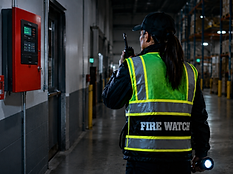
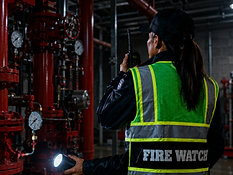
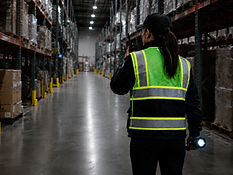
USPA fire watch guards working assignments in Saskatoon

Fire Watch Alarm Panel Monitoring in Saskatoon SK
Alarm panel monitoring
Saskatoon SK Fire Watch Riser Room Inspections
Riser room inspection
Saskatoon SK Fire Watch Patrol Services
Documented patrol rounds

Winter, vacancy and the provincial frame

Saskatchewan's cold removes protection from buildings that lose heat, and the season lasts long enough that a deferred repair becomes a spring flood. Freeze rounds cover heat trace, staining, seals, drains and unoccupied temperatures.

The city's fire service enforces the Saskatchewan Fire Code, adopted from the national model under provincial legislation, and the inspection order sets the interval. Where a property holds an approved fire safety plan, our log is built to fit it.

Closeout carries the round log, restoration confirmation, authorized stand-down and photographs, and the freeze record is kept as its own section rather than folded into the impairment narrative.

Local requirements

Who enforces fire watch in Saskatoon, and what they require

Requirements are set locally, not nationally. These are the four that decide how a watch in Saskatoon is ordered, staffed and closed out.

Authority having jurisdiction

Saskatoon Fire Department

An impairment is reported to Saskatoon Fire Department before the system is valved off, and the order that office issues is the scope the post is staffed against. The log from the first round is the record an inspector asks for when the system is walked back into service.

Code in force

The Saskatchewan Fire Code

Requirements in Saskatoon are read from the Saskatchewan Fire Code, together with the standards it adopts or references for water-based systems, hot work and means of egress. Saskatchewan Public Safety Agency publishes the baseline; the fire department applies it through its own amendments, so the order controls where the two differ.

Dispatch staging

8 to 24 hours

Regional staffing tier

USPA plans to have an officer on post in Saskatoon within 8 to 24 hours of a written authorization. Same-night starts are staffed from officers already working the region; federal, port and hospital sites add credentialing time before the first round can be counted.

Regional compliance note

Saskatoon, Saskatchewan

A watch in Saskatoon usually starts with something the building did not plan for, and in Saskatchewan a legacy sprinkler grid with valves that no longer match the drawings is the version that catches operators most often. The post-work interval is where Saskatoon losses are found: material that looks cold at the end of a shift can smoulder for an hour or more inside a wall assembly. None of it substitutes for restoring the system. It documents the interval until the system is back and the inspector has signed off.

Adoptions, amendments and local forms change. Confirm the current edition and the notification procedure with Saskatchewan Public Safety Agency and the fire department that covers the address before relying on this page for a filing.

Written quote

Request fire watch coverage

Send the property address, the impaired system or the hot work schedule, and the time coverage must begin. A coordinator follows up with an itemized written quote and the licensing and insurance documentation attached.

Instant quotes, 24/7. We are always open, with live dispatch and a duty officer on call.

Client reviews

Rated 4.9 by the clients we protect

Reviews are collected from real assignments across the country. Read them directly on Google before you call.

Read Our Reviews On Google
Google review

I have their pricing to be very affordable and competitive. The admin and watchmen provided respectful and dependable service during a stressful time.

William BeesleyGoogle reviewVerify This Review

Questions before you commit? Call (800) 214-1448 and ask for references on assignments like yours.

Answers

Questions from Saskatoon clients

Do you cover fabrication shops and yards?
Regularly. Cutting and welding concentrate in shops and yards that often run into the evening, and slag travels further outdoors than crews expect.
Can you work inside university or research buildings?
Yes, within the institution's own safety programme. Permitted areas, evacuation tones, muster points and any lab that must keep running are all covered in the brief.
How is a tower impairment documented?
From the mechanical drawings with the building engineer, logged floor by floor each round. A podium and parkade underneath thirty storeys need a defined sequence, not an improvised one.
Why plan relief by river side?
The crossings decide travel time. A relief officer on the wrong bank during an event will not arrive when the plan says they will.
What is checked on a freeze round?
Heat trace indicators, staining at joints, door seals, roof drains and the temperature of unoccupied space, reported to the owner rather than repaired on shift.

Fact check and technical sources

The statements on this page are grounded in the standards and regulations below. Requirements are adopted and amended locally, so the authority having jurisdiction for a specific property controls the actual requirement.

  • Saskatchewan Fire Code

    Saskatchewan Fire Code under The Fire Safety Act

    The provincial code adopting the National Fire Code with Saskatchewan amendments, enforced by local fire departments.

    Official Source →
  • National Fire Code of Canada

    National Fire Code of Canada (NFC 2020)

    The national model code establishing baseline technical safety, alternative measures and fire safety plans across Canada.

    Official Source →
  • CAN/ULC-S536 & S561

    Underwriters Laboratories of Canada Fire Alarm Standards

    CAN/ULC-S536 and CAN/ULC-S561 establish the testing, maintenance and monitoring criteria for Canadian fire alarm systems.

    Official Source →
  • NFPA 241 & 51B

    NFPA Construction and Fire Watch Standards

    Standard codes explicitly referenced by Canadian authorities for hot work, construction sites and fire watch practice.

    Official Source →

Cover the Saskatoon outage.

Call dispatch at any hour or request a written quote. Industrial, institutional and residential coverage across the city.

(800) 214-1448