
Hard freeze forecast for November 13 to 15 sends fire watch teams south of the frost line

By Albina Bieci, Staff Writer
Overnight lows are forecast to reach the 30s from northern Georgia to the Gulf Coast this weekend, and the buildings most likely to lose fire protection are the ones built for heat.
ATLANTA
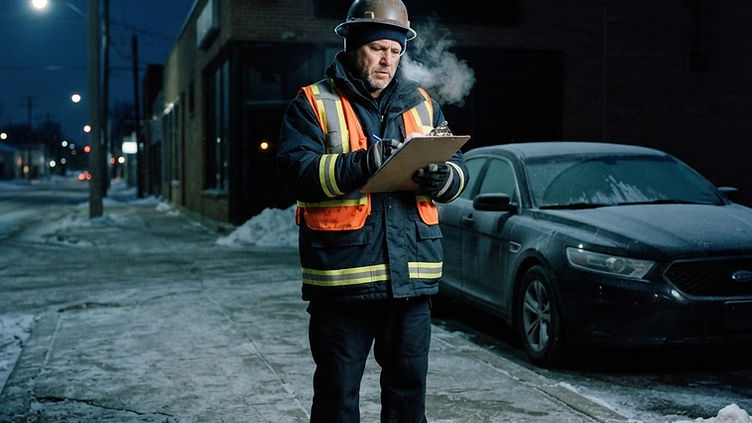
ATLANTA — Fire watch teams are being staged across the Deep South and the Gulf Coast ahead of a cold front forecast to bring the season's first hard freeze to the region from Friday, November 13 through Sunday, November 15, because the buildings most exposed to a pipe failure this weekend are the ones engineered for air conditioning, not for ice.
Forecast guidance from the National Weather Service calls for widespread frost and freeze conditions across the Southeast and Deep South, with overnight lows falling into the 30s as far south as the Gulf Coast and cooler 40s and 50s reaching into parts of Florida. Daytime highs in the same corridor may struggle to climb out of the 50s. Areas around Nashville, Knoxville, Huntsville and the northern Atlanta suburbs face a risk of near- or sub-freezing temperatures that would end the remaining growing season.
For fire protection, the temperature is not the headline. The duration is. A single night at 31 degrees rarely breaks a sprinkler system. Two consecutive nights in the upper 20s, with wind pulling heat out of an uninsulated attic or a parking-garage riser room, does — and it happens in buildings whose owners have never had a reason to think about it.
Why the South is the exposure, not the North
The Northeast will be colder. Arctic-origin air and gusty winds are forecast to drive wind chills into the minus 20s in parts of Michigan and Ohio and to sub-zero or single digits across parts of the Northeast, and cities including Philadelphia, New York and Boston are expected to stay slightly too warm near the coast for major snow.
Those cities are also built for it. Water mains are buried below the frost line. Sprinkler piping runs inside conditioned space or in dry-pipe and pre-action systems designed to be drained. Mechanical rooms are insulated and heated because the code has required it for a century.
The South is the reverse. Municipal water service is often shallow. Sprinkler and domestic piping is routinely run through attics, crawlspaces and exterior walls with nothing between the pipe and the outside air but sheathing. Fire riser rooms sit on the exterior of low-rise commercial buildings, sometimes heated by a single residential-grade space heater that trips a breaker and stays off. Backflow preventers stand exposed above grade beside a loading dock.
That construction is legal, common and entirely appropriate to a climate where a hard freeze is a once-a-decade event. It is also the reason a two-night freeze in the 20s produces more burst pipe calls in Atlanta than in Minneapolis.
The four systems that fail first
Operators who work freeze events describe the same order of failure every season.
Dry pipe systems with residual moisture. A dry pipe system is supposed to be free of water upstream of the valve, and it rarely is. Condensate collects at low points, and the drum drip — the small assembly installed precisely to drain it — is often the part nobody services. When that residual water freezes, it can break a fitting or, worse, trip the valve and flood the system with water that then freezes in the pipe.
Wet pipe in attics and parking garages. Wet systems in unheated space depend on water movement and on the building staying marginally above freezing. On a still, clear night with a hard freeze and wind, an attic that sits at 36 degrees most winters will drop below 32 for hours.
Exterior fire riser rooms and backflow assemblies. A riser room on the outside wall of a strip center is a small, poorly insulated box holding a valve, a gauge and a tamper switch. When it freezes, the loss is not just the room: the building's entire suppression system goes out of service, and the fire department's connection is compromised.
Vacant and lightly staffed buildings. A closed restaurant, a leased-but-empty office floor, a warehouse running one shift — in each case the thermostat has been turned down, and nobody is in the building at two in the morning to hear a fitting split. A leak discovered eight hours later is a flood, not a repair.
Where coverage is being staged
The deployment follows the forecast line rather than state boundaries. Teams are positioned where southern construction meets southern temperatures: the northern Atlanta suburbs, Birmingham and Huntsville, Nashville and Knoxville, Memphis, Little Rock, Charlotte, and the Gulf Coast cities of Mobile, Pensacola and New Orleans.
Property profiles inside those markets are ranked before a single officer is posted. Dry-pipe systems serving parking garages and unheated storage. Multifamily complexes with exterior utility closets and open crawlspaces. Retail strips with exterior riser rooms. Industrial and warehouse buildings with exposed domestic and fire protection lines. Buildings under construction or renovation whose systems are commissioned but not yet heated.
Market-by-market detail is being published through the week. Coverage is documented at fire watch services, and the emergency dispatch line operates around the clock for properties that lose protection with no notice.
What a fire watch does once a system is impaired
The requirement itself is not discretionary. Where a required fire protection system is out of service, NFPA 25's impairment provisions and the adopted fire code in the jurisdiction require notification, tagging, and interim protection — which in practice means people walking the building on an interval, with a written record.
The sequence a watch follows is consistent regardless of city. The property notifies the authority having jurisdiction and its insurer. The system is tagged. Officers are posted to the affected zones, with defined rounds that name what is being checked: riser room temperature, gauge readings where the system is still partly charged, the areas that lost coverage, and the egress paths residents or tenants would use. A fire-found procedure is agreed in writing before the first shift, naming who calls 911, who meets the fire department, and how the building is evacuated.
When the repair is complete, the system is tested and restored before the watch stands down. The paperwork handed over at the end of the assignment — round logs, officer rosters, certificates of insurance — is what the building keeps for its carrier.
What a property should do before Friday
Most of this weekend's losses will be avoidable with work that takes an afternoon.
Drain drum drips and low points on every dry system, and record that it was done. Confirm that attic, crawlspace and riser-room heat is actually operating, then check it again on Friday night. Verify that low-temperature alarms, where installed, report to someone who will answer the phone at 3 a.m. Wrap or heat-trace exposed backflow preventers and domestic lines, and photograph what was done. Confirm the building's shut-off locations and make sure at least two people who will be on site this weekend know them. Put a plumber and a sprinkler contractor on notice now, before the queue forms.
For an occupied multifamily or commercial building, the deciding question is simpler: if the system goes down on Saturday night, who is in the building until the contractor arrives? If the answer is nobody, that is the gap a fire watch fills.
Related coverage
City and regional briefings for this freeze event are publishing through the week, including northern Atlanta, Birmingham and Huntsville, Nashville and Knoxville, Memphis, Little Rock and Charlotte, and the Gulf Coast markets of Mobile, Pensacola and New Orleans.
Properties that lose protection before a contractor can reach them should call the emergency line directly; emergency fire watch explains what dispatch needs to stage officers the same day.
A burst pipe is a fire protection event, not just a water loss
The instinct when a line freezes is to call a plumber. The consequence that matters more is what the burst does to the fire protection system.
When a sprinkler line splits, the system depressurizes and every square foot behind that riser loses suppression at once. The fire department connection on the exterior of the building stops being useful. Detection panels in the same mechanical space take water and go into trouble, which silences the very signal that would have told anyone the building was unprotected. In a multifamily building, the water travels down through penetrations and shaft walls, taking out elevator equipment, electrical panels and the ceilings in units that have nothing to do with the pipe that failed.
Restoring a sprinkler system is not a plumbing repair. The damaged section is replaced, the system is recharged, and the affected zones are tested to confirm they hold pressure and that the alarm and supervisory circuits report correctly. In a regional freeze, that work queues behind every other building with the same failure. A property that loses protection on Saturday night is frequently unprotected into the following week.
That gap — between the pipe breaking and the system being tested back into service — is the period a fire watch exists to fill. It is also the period in which the building has the fewest people in it, because the water damage has displaced the occupants.
The monitoring gap
Most commercial buildings this weekend will be relying on a monitoring service to tell them something went wrong. That is not the same as having someone in the building.
A low-temperature supervisory signal, where one is installed at all, typically reports to a central station that calls a list. If the list is a main office number on a Sunday, the call reaches voicemail. If the signal was bypassed during renovation and never restored, no call is generated. If the panel itself is in the mechanical room that is at freezing temperature, the panel is not the most reliable witness either.
The buildings that come through a regional freeze without an outage tend to share three things: heat that demonstrably works in the exposed spaces, a person on site or on call who knows where the shut-offs are, and a plan for who walks the building if the system goes down. The first two are maintenance. The third is staffing, and it is the one that usually does not exist yet when the forecast arrives.
What dispatch is preparing for this weekend
Coverage for a regional freeze is arranged differently from coverage for a single incident. Officers are staged across a metro rather than at one address, relief is scheduled in advance because the assignment will outrun a single shift, and access is pre-arranged so an officer does not arrive at a locked building at two in the morning. Documentation is set up before the first round, because the file is what the property produces for its fire marshal and its carrier after the event rather than during it.
Properties that expect to lose protection can pre-arrange coverage now at ordinary rates. Properties that call on Saturday night are competing for the same officers as every other building in the metro.
Services in Atlanta, GA
Sources
About the reporter
Staff Writer
Staff writer for the USPA Nationwide Security newsroom. Receives newsroom tips, corrections and editorial inquiries.
Author biography and credentialsMore from The Watchline


Fire Protection
Gulf Coast faces a low-30s freeze with almost no cold-weather protection in its buildings
Mobile, Pensacola and New Orleans are engineered for heat, hurricanes and humidity. A single night near freezing is enough to take commercial fire protection offline across all three.
· Albina Bieci

Fire Protection
Memphis, Little Rock and Charlotte: the cold-snap buildings most likely to lose fire protection this weekend
Distribution space, vacant storefronts and 1980s multifamily share one trait across the Mid-South: nobody is inside at 2 a.m. when the fitting splits.
· Albina Bieci

Fire Protection
Nashville and Knoxville head into near-freezing nights with unheated attic lines and full parking decks
Tennessee's multifamily boom put a decade of sprinkler piping into attics and garages designed for a mild winter. Two cold nights is what it takes to find out which ones hold.
· Albina Bieci
