
One Hospitalized After Late-Night Fire at Connor Tower High-Rise in Johnstown, Pennsylvania
October 24, 2026· Albina Bieci
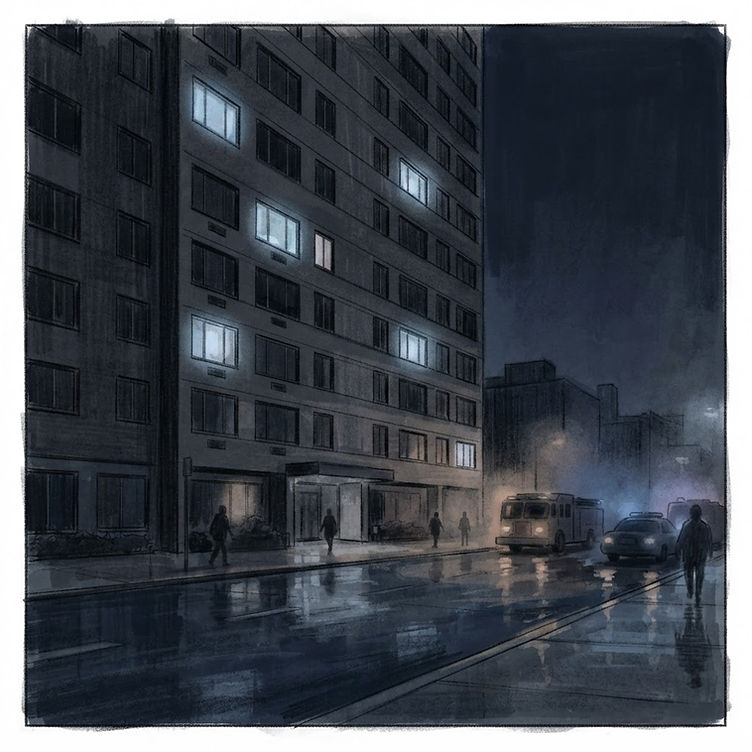
JOHNSTOWN, Pa. — A fire broke out late Friday night at Connor Tower, a Johnstown Housing Authority high-rise apartment building on Vine Street in downtown Johnstown, Pennsylvania, sending at least one resident to Conemaugh Medical Center and forcing tenants into the street while firefighters worked to bring the blaze under control. Fire crews were dispatched just after 11:30 p.m., and residents were cleared to begin returning to their units shortly before 1:00 a.m., according to WJAC-TV reporting from the scene.
Key Facts
- Incident location: Connor Tower, Vine Street, downtown Johnstown, Pa., a Johnstown Housing Authority property
- Time of dispatch: Just after 11:30 p.m., Friday, October 24, 2026
- Fire origin: Mattress fire, third floor
- Injuries: One person transported to Conemaugh Medical Center; condition not immediately known
- Displacement: Residents evacuated; allowed to return shortly before 1:00 a.m.
- Building size: 169 apartments, per Johnstown Housing Authority
- Response: Dozens of fire, police, and EMS units
- Cause: Not yet determined as of initial reporting
What We Know
According to WJAC-TV, fire officials confirmed the fire involved a mattress on the third floor of Connor Tower. The building, owned and operated by the Johnstown Housing Authority, contains 169 apartments and is a prominent residential high-rise in the city's downtown core. The scale of the emergency response — described by WJAC as involving dozens of fire, police, and EMS units — reflects both the density of occupancy and the inherent complexity of high-rise firefighting operations.
One person was transported to Conemaugh Medical Center. The nature and severity of that individual's injuries had not been released as of the initial report. Residents who had been evacuated from the building were permitted to return to their apartments beginning shortly before 1:00 a.m., suggesting firefighters were able to contain the fire to the area of origin relatively quickly, though no official confirmation of containment scope was provided in the initial coverage.
The fire's cause remains undetermined. Investigators had not publicly identified whether the mattress ignited from an electrical source, an open flame, smoking materials, or some other mechanism. That determination will likely follow a formal fire investigation by local fire marshals or the Pennsylvania State Police Fire Marshal's office, depending on jurisdictional assignment.
What Has Not Been Released
Several significant facts remain unknown or pending as of this report's publication:
- The identity and condition of the person transported to Conemaugh Medical Center
- Whether additional residents required medical evaluation but declined transport
- The specific unit or units affected on the third floor
- The extent of structural or smoke damage to the building
- Whether the building's fire suppression or detection systems activated and, if so, whether they functioned as designed
- Whether any fire watch was ordered by the Johnstown Fire Department following the incident
- The fire investigation's preliminary findings regarding ignition source and cause
- Whether the Johnstown Housing Authority has issued a formal statement beyond the unit-count figure provided to WJAC
This article will be updated as additional information is released by the Johnstown Fire Department, Johnstown Housing Authority, Conemaugh Medical Center, or the Pennsylvania State Police.
Technical Analysis: High-Rise Residential Fires and Code Obligations
High-rise residential buildings present a distinct set of fire and life-safety challenges that differ substantially from low-rise multifamily structures. Under NFPA 1, the Fire Code, and NFPA 101, the Life Safety Code, high-rise buildings — generally defined as structures where the occupied floors exceed 75 feet above the lowest level of fire department vehicle access — are subject to enhanced requirements for automatic sprinkler systems, fire alarm systems, and means of egress. Whether Connor Tower meets the threshold definition of a high-rise under Pennsylvania's Uniform Construction Code and applicable NFPA editions adopted by the Commonwealth is a factual question that depends on the building's construction height, which WJAC's reporting did not specify.
For residential occupancies in high-rise or multi-story buildings, NFPA 72, the National Fire Alarm and Signaling Code, establishes requirements for fire alarm system design, notification appliances, and emergency communication systems. A functioning, code-compliant fire alarm system in a building of this density is critical to ensuring that residents on floors other than the floor of origin receive timely notification. The speed with which residents were evacuated and subsequently allowed to return suggests that notification systems functioned in a manner that supported an orderly response, though this cannot be confirmed from available reporting alone.
NFPA 25, the Standard for the Inspection, Testing, and Maintenance of Water-Based Fire Protection Systems, governs the ongoing maintenance obligations for any sprinkler or standpipe system installed in the building. If Connor Tower is equipped with a wet-pipe sprinkler system — a feature more commonly required in buildings constructed or substantially renovated after relevant code adoption years — any sprinkler activation during this incident would trigger inspection and documentation requirements under NFPA 25 before the system is returned to full service. If a system impairment resulted from the fire suppression activities, the building's responsible party is obligated under NFPA 25 Section 15 to either restore the system promptly or implement an impairment program, which typically includes a fire watch.
Under NFPA 101 and most local fire codes, when a building's fire protection systems are out of service — whether due to fire damage, suppression system activation, or inspection-related shutdown — the building owner or operator is required to implement a fire watch. A fire watch involves trained personnel conducting continuous or frequent patrols of the building to identify any rekindling or new ignition and to alert occupants and the fire department if a hazard is detected. This obligation is not discretionary; it persists until the affected systems are restored to full operational status and verified by inspection.
Mattress fires, while often localized at the point of origin, produce significant quantities of toxic combustion byproducts, including hydrogen cyanide and carbon monoxide, particularly from polyurethane foam construction common in modern mattresses. The NFPA has published guidance on residential fire hazards and the role of furnishing materials in fire development. Even a fire that appears contained to a single room can introduce smoke and toxic gases into adjacent corridors, elevator shafts, and HVAC systems in a multi-story structure, which underscores the importance of thorough post-incident assessment before residents are allowed to return.
Local Context
Connor Tower is a public housing high-rise managed by the Johnstown Housing Authority, a public agency serving a city that has faced significant economic challenges over several decades. High-density public housing properties present unique fire safety management considerations, including the need for consistent resident education, regular inspection of units, and maintenance of common area fire protection equipment. The Johnstown Housing Authority, as the responsible party for the property, bears the ongoing obligations for fire protection system maintenance and compliance with applicable fire codes under Pennsylvania law and NFPA standards.
Downtown Johnstown sits in Cambria County in southwestern Pennsylvania. The city's aging built environment includes a mix of older residential and commercial structures that vary widely in their fire protection infrastructure depending on construction era and renovation history. Emergency response in Johnstown involves coordination among city fire companies, the Johnstown Police Department, and regional EMS providers, all of which were represented at this incident according to WJAC's reporting.
For property owners, managers, and residents in Johnstown seeking fire watch services following an incident like this one, or for any period during which a building's fire protection systems are impaired or under inspection, USPA Nationwide Security provides professional fire watch services in Johnstown, Pennsylvania. Building managers in the region can also learn about broader protective services through USPA's security guard services in Johnstown, Pennsylvania.
The Property's Next Obligations
Regardless of the cause determination, Connor Tower and the Johnstown Housing Authority face a defined set of post-incident obligations under applicable fire codes and NFPA standards.
First, a qualified fire protection engineer or inspection contractor should assess whether any fire suppression system components — sprinkler heads, standpipe connections, fire alarm initiating devices, or notification appliances — were damaged or actuated during the incident. Under NFPA 25, any system that was activated or impaired must be inspected, tested, and returned to service before the impairment program can be formally closed.
Second, if any portion of the fire alarm system was damaged or rendered non-functional, the building is in an impaired condition under NFPA 72 and local fire code. A fire watch is required to remain in effect until the system is verified as fully restored. The fire watch must be documented, with patrol logs maintained and available for review by the authority having jurisdiction.
Third, the cause-and-origin investigation must proceed to a formal finding. If the fire originated from a resident's personal property — in this case, a mattress — the investigation will determine whether any violation of the housing authority's lease terms or building rules contributed to the conditions that allowed the fire to start. Mattress fires are among the leading causes of residential fire fatalities nationally, according to NFPA research, and housing authorities with large inventories of occupied units have a recurring responsibility to address smoking policies, electrical safety, and resident education as part of their fire prevention programs.
Fourth, the Johnstown Housing Authority should review its emergency response protocols in light of this incident, including the process for notifying residents on unaffected floors, coordinating with the fire department on re-entry timing, and documenting any temporary displacement assistance provided to residents who could not immediately return.
Finally, if an insurance claim or regulatory review follows, documentation of all post-incident fire watch activity, system restoration, and resident communication will be essential to demonstrating that the property was managed in compliance with its legal and code obligations.
Sources and Open Questions
The factual basis for this article rests on the WJAC-TV report published on October 24, 2026, which cited unnamed fire officials and the Johnstown Housing Authority as sources. No independent confirmation from the Johnstown Fire Department, Johnstown Housing Authority, or Conemaugh Medical Center was available at the time of this writing. The technical analysis draws on NFPA 1, NFPA 25, NFPA 72, and NFPA 101, all of which are publicly available standards maintained by the National Fire Protection Association.
Open questions that should be addressed in follow-up reporting include:
- The identity and updated condition of the person hospitalized at Conemaugh Medical Center
- Whether the building's fire suppression system was activated and its current operational status
- The preliminary cause-and-origin finding from fire investigators
- Whether a fire watch was ordered and, if so, by which authority and for what duration
- The extent of structural and smoke damage to the third floor and adjacent units
- Any formal statement from the Johnstown Housing Authority regarding resident services and building safety measures
- Whether Pennsylvania's Department of Community and Economic Development or any state housing oversight agency has been notified of the incident, as may be required for public housing properties
This article will be updated as the Johnstown Fire Department, Johnstown Housing Authority, and Conemaugh Medical Center release additional information.
For fire watch services, impairment coverage, or security staffing following a fire incident in Johnstown or anywhere in Pennsylvania, contact USPA Nationwide Security at (800) 214-1448 or visit uspasecurity.com/emergency-fire-watch.
Questions about fire watch, executive protection or guard coverage for your property? Request a quote or call our dispatch line.
More from the blog

Breaking News
Fire Crews Battle Vacant Apartment Building Fire in Kansas City's Wabash Block
Kansas City fire crews responded Sunday morning to a reported apartment building fire in the 2800 block of Wabash, where they encountered smoke and fire coming from a vacant two-story structure. Interior operations were conducted, searches came back all clear, and no injuries were reported. The cause remains under investigation.


Breaking News
Lithium-Ion Battery Fire Displaces Residents at Spokane's Donna Hanson Haven Apartment Building
A lithium-ion battery from an electric bicycle caused a fire on the third floor of Donna Hanson Haven in downtown Spokane on Saturday, October 25, 2026. The Spokane Fire Department evacuated all residents; Catholic Charities Eastern Washington coordinated decontamination, and most tenants returned home the same evening. Seventeen third-floor residents remain displaced with Red Cross support.

Breaking News
Pennsauken, NJ Apartment Building Evacuated After 3-Alarm Fire at Cooper River Apartments
A 3-alarm fire at the Cooper River Apartments on McClellan Avenue in Pennsauken, New Jersey forced the evacuation of roughly 40 residents early Monday morning. One woman jumped from the fifth floor before fire crews arrived and was transported to a local hospital. The cause of the fire has not been released.