
San Francisco, CA
TSCM Bug Sweeps in San Francisco, CA
A TSCM survey in San Francisco answers one question with evidence rather than reassurance: at the time the team worked the room, was there equipment or a pathway capable of carrying this conversation out of the space? The work is an inspection carried out with instruments and a documented method: spectrum survey, non-linear junction detection, thermal imaging, cabling and network tracing, and a hand search of walls, millwork, lighting and furniture.
- 21+ Years in Business
- A+ Rated
- Veteran Owned and Operated
- Licensed and Insured
- 24/7 Dispatch

How tscm bug sweeps works in San Francisco, CA
The assignment starts with a baseline. Before anything is judged, the team inventories every legitimate emitter in the room: access points and their addresses, cordless handsets, wireless microphones, conferencing equipment, life-safety and access-control emitters, printers, and the client's own recording devices. An instrument can only flag what it is not expecting, so the baseline is what makes an unaccounted signal visible instead of buried in ambient traffic.
Rooms are then examined against that baseline. Walls, ceilings, vents, lighting, furniture and floor boxes are inspected physically; cabling and telecom infrastructure are traced, because a spare pair or a rogue drop is a pathway that carries audio without transmitting anything a radio survey would hear; and the network is checked for equipment that does not belong to the client's own inventory.
Where the survey covers boardrooms and executive floors, law firm conference suites, venture and growth-stage headquarters, hardware and life science facilities, the method adapts to the asset rather than the reverse. A boardroom carries structured cabling, conferencing and building systems to reconcile; a residence carries smart-home controllers and a long history of trades access; a vehicle or a yacht carries aftermarket wiring, telematics and satellite equipment that has to be separated from what the manufacturer installed.
Findings are physical facts, not impressions. A candidate signal is located, then verified by hand before it is called anything, and each finding is photographed in place, described, and given a disposition. A signal the team cannot resolve is reported as unresolved, with what would be needed to resolve it — an honest gap is more useful to a general counsel than a confident guess.
The legal boundary is fixed before the team arrives. Detection, location and documentation are the work; the content of a conversation is never captured and a device that is found is never operated. That distinction is what keeps a defensive survey lawful under the federal Wiretap Act, and it is reinforced by California Penal Code § 632, which governs how the assignment is scoped and how a recovered device is handled.
Nothing is removed informally. Possession of equipment primarily useful for surreptitious interception is itself an offence under federal law, so a device is photographed and recorded in place, its position and power state documented without alteration, and a chain of custody opened. Whether it is preserved, surrendered to law enforcement or left in place under observation is a decision for the client and its counsel, made with the survey team's factual record in hand.
Discretion is operational, not decorative. Teams arrive in plain vehicles and street clothes, without signage or uniforms, and work room by room so no equipment is staged in a lobby or a driveway. On an occupied floor the visit is scheduled around the people who would learn from watching it happen, which in practice means an evening, an early morning or a weekend, and the findings go only to the client's named recipient.
Scheduling follows the client's calendar rather than a renewal date. The highest-yield triggers are a sensitive meeting or negotiation, a merger, financing or litigation milestone, a renovation, an AV or IT installation, a change of executive assistant, house manager or facilities vendor, a residential move or a new acquisition, an unexplained leak, and any threat picture that includes surveillance.
A single survey is a point-in-time examination, and the report says so in plain language. It cannot certify a room as free of surveillance, it does not address collection on a phone or laptop, lawful interception by a carrier or a compromised account, and it does not substitute for access control. When the examination shows the exposure is a control that keeps failing, the report names that instead of recommending another sweep.
The deliverable is a written report a non-specialist can act on: scope in plain language, the baseline recorded room by room, the examination record for walls, ceilings, cabling, telecom, network equipment, furniture and vehicles, findings with photographs and dispositions, recommendations limited to what the survey supports, and the limitations stated as plainly as the findings.
Recommendations stay inside the survey's evidence and outside the provider's inventory. A physical change, a cabling remediation, an access-control correction or a repeat examination is a recommendation; hardware the team also sells is not, and no USPA survey report has ever ended in a device quotation. That independence is what makes the document usable by an insurer, a board or a court.
In San Francisco Bay Area the practical question is usually timing rather than method. A board meeting, a closing or a family event sets the date, and the survey has to fit before it: a single room the evening before, a residential arrival swept on the day, a vehicle inspected while the principal is in a meeting. Scope and price follow the spaces and the window, not a fixed package.
Coverage is staffed by personnel who work these assignments as a discipline, briefed on the property before they arrive and bound by a confidentiality agreement signed before the first room is opened. Where a client needs the findings shared with counsel, an insurer or a facility security officer, the report is issued in a form that can be circulated without exposing the client's own security detail.
The market in San Francisco
Demand for TSCM work in San Francisco is driven by concentrated decision-making rather than by crime statistics. The buyers are companies whose value sits in a negotiation — a merger, a financing, a licensing deal, a litigation strategy — and principals whose private life is more visible than their security posture. In both cases a single leaked conversation is the loss, and the survey exists to establish whether the room where that conversation happens can be trusted.
The second driver is access history. Devices arrive with legitimate access far more often than through forced entry: a contractor during a renovation, an AV integrator pulling cable, IT support replacing a switch, a cleaning crew, a departing employee with a set of keys. That is why post-service verification produces more findings than the annual sweep, and why the useful question is not whether the space was swept but when it was swept relative to who last worked in it.
The building types in San Francisco shape the scope. Boardrooms and executive floors, Law firm conference suites, Venture and growth-stage headquarters each carry a different mix of cabling, connectivity and construction history, and a survey written for a modern glass office is the wrong plan for a pre-war residence with lath, plaster and outbuildings. The scope is written per property after a site walk, not carried in from the last job.
Procurement in this market rewards skepticism. A buyer who asks which instruments will be used, how a candidate is verified before it is called a finding, what happens to a device that is found and whether the provider sells hardware will separate a survey team from a sales visit in about ten minutes. The answers are also the substance of the report, so the questions double as a specification.
Pricing is quoted per property and itemized: rooms and assets, the instruments the scope requires, the hours on site including out-of-hours work, travel across the metro, and the report. A single boardroom and a multi-floor headquarters with a residence and two vehicles are quoted as separate lines because the examination time differs by an order of magnitude.
Recurring programs are the norm among clients with a standing exposure: a quarterly verification of the rooms that carry the highest-value conversations, event-triggered sweeps around meetings and installations, and an annual review of the baseline as equipment changes. Programs are priced on a schedule so the rate holds across the year, and each sweep is reported against the previous baseline.
The work sits beside other controls rather than replacing them. Access records, vendor supervision, device inventory and a communications policy for sensitive meetings are all cheaper than a sweep and all reduce how often one is needed. Where those controls are weak, the survey reports it, because a room with an unrecorded key history will be swept repeatedly and will keep producing the same answer.
Who enforces this in San Francisco, CA
California requires the consent of every party to record a confidential communication, and the statute reaches conversations the participants reasonably expect to keep private. A San Francisco survey is therefore built as a detection and documentation assignment: the team locates equipment, records where it was and in what state, and preserves it for counsel. Client conversations are not recorded to demonstrate that a device worked. Federal law frames the outer boundary: 18 U.S.C. § 2511 governs interception of conversations where the parties expect privacy, § 2512 makes possession of surreptitious interception equipment an offence, and equipment sold or installed in the United States is subject to FCC authorisation rules — an unauthorised transmitter in a boardroom is a finding on its own. USPA scopes every San Francisco assignment to detection and documentation, and hands the evidentiary question to the client and its counsel.
- 18 U.S.C. § 2511
- The federal interception statute. Intercepting an oral, wire or electronic communication is a crime without a lawful basis, which is why a survey documents what is physically present in a space rather than what anyone says inside it.
- 18 U.S.C. § 2512
- Possession of an intercepting device is independently actionable. A device recovered during a survey is photographed, recorded and handed over on a written chain of custody instead of being kept, powered on or examined informally.
- 47 U.S.C. § 605 / FCC equipment rules
- Governs intercepted communications and the transmitting hardware itself. Radio-frequency devices found in a space are identified against FCC equipment authorization records before anything about them is put in writing.
- NIST SP 800-53 Rev. 5
- The control framework most federal, defense-adjacent and regulated clients organize physical and technical safeguards around. Surveys are scoped so findings map back to the client's own control set rather than standing alone.
- State all-party consent statutes
- California Penal Code § 632, Florida Statutes § 934.03 and New York Penal Law § 250.05 each reach further than the federal statute in different ways. City pages carry the statute that governs the survey in that market.
USPA surveys document conditions, not conversations. Nothing said in a swept space is captured, transcribed or retained, and findings are reported in writing to the client's designated contact. This page describes a service and is not legal advice; where a matter may become evidentiary, the client's counsel directs the handling.
- Boardroom and office surveysFull sweep of meeting rooms, executive offices and communications equipment before sensitive discussions.
- Residential and travel coverageExecutive residences, hotel suites and temporary locations, including sweep on arrival and after service visits.
- Vehicle inspectionInspection of executive and family vehicles for tracking devices and unauthorized equipment.
- Written findingsA clear report of what was detected, what was cleared, and recommended remediation.
Coverage and response in San Francisco
Surveys in San Francisco are scheduled around the event they protect, and a single room is usually worked the day before. Multi-space engagements — a headquarters floor, a residence and vehicles — are staged across a window agreed with the client's single point of contact, with the report delivered in time to be read before the sensitive conversation.
Urgent work routes through the same desk as planned work. When a client has an unexplained leak, a discovered device or a meeting that has moved forward, the team confirms what can be examined in the available window rather than promising a whole-building sweep it cannot finish honestly.
Each assignment names one client contact and one USPA lead. Room access, staff notification, IT and AV coordination and parking are handled through that pair, so the survey does not become a facilities project, and the client's own staff are not briefed on the scope by accident.
Findings are briefed in person when the client wants it, and in writing always. Where a device is recovered, the briefing covers the chain of custody, the options, and the practical steps that close the immediate exposure, with counsel included at the client's discretion.
Re-verification after remediation is quoted with the original scope rather than as a new engagement, and the follow-up survey is reported against the first baseline so the client can see what the physical change actually achieved.
Assignments across several properties run on one account and one confidentiality agreement, with a consistent report format, so a family office or a multi-site operator holds a comparable record for every property it owns.
Where USPA posts officers in San Francisco
Assignments in this market are staffed across the districts and neighborhoods below, plus the surrounding communities.
- Financial District, San Francisco
- South of Market, San Francisco
- Mission Bay, San Francisco
- Potrero Hill, San Francisco
- South Park, San Francisco
- Jackson Square, San Francisco
- Union Square, San Francisco
- Pacific Heights, San Francisco
- Presidio Heights, San Francisco
- Sea Cliff, San Francisco
The Watchline
Reporting from San Francisco, CA
Executive Protection · Nov 2, 6:52 AM EST · San Francisco
A bug behind the boardroom television shows what an RF sweep alone will never find
A microphone and camera hidden behind a boardroom television at a technology company produced federal charges, and the case has corporate security teams ordering manual RF sweeps of executive space.
Executive Protection · Oct 31, 9:20 AM EDT · San Francisco
Silicon Valley details are spending on analysts before they spend on bodies
Practices serving the technology corridor are hiring analysts before officers, on the finding that the useful warning arrives days before the principal moves.
Rated 4.9 by the clients we protect
Reviews are collected from real assignments across the country. Read them directly on Google before you call.
I have their pricing to be very affordable and competitive. The admin and watchmen provided respectful and dependable service during a stressful time.
William BeesleyGoogle reviewVerify This Review
Questions before you commit? Call (800) 214-1448 and ask for references on assignments like yours.
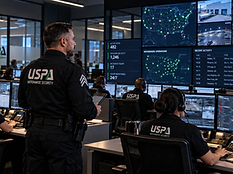
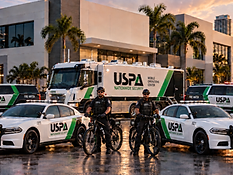
USPA personnel working assignments in San Francisco, CA


Primary sources
Sources · San Francisco, CA
Statute, regulator and standards behind this page
The statements on this page about what a San Francisco survey may lawfully do, how equipment is handled and what a written report must contain are grounded in the documents below. Each links to the primary source so a general counsel, insurer or facility security officer can verify the basis directly.
- 18 U.S.C. § 2511
Interception and disclosure of wire, oral, or electronic communications
The federal Wiretap Act provision that makes intercepting a conversation in which the parties have a reasonable expectation of privacy unlawful without consent or lawful authority. It is the yardstick a defensive survey is scoped against.
Primary source - 18 U.S.C. § 2512
Manufacture, distribution, possession of interception devices
Possession of a device primarily useful for surreptitious interception is itself an offence. This is why a device found during a sweep is documented and preserved as evidence rather than handled or removed informally.
Primary source - 18 U.S.C. § 2510
Definitions: electronic, mechanical, or other device
The definitional section behind the Wiretap Act, written broadly enough to reach modern transmitters, recorders and the hardware that carries a room's audio out of the room.
Primary source - 47 U.S.C. § 605
Unauthorized publication or use of communications
The radio-communication privacy provision relied on in cases involving intercepted satellite, cellular and cordless traffic — the class of exposure a radio-frequency survey is looking for.
Primary source - FCC Equipment Authorization
How a radio transmitter is lawfully marketed in the United States
Equipment authorization, labelling and marketing rules for RF devices. A transmitter installed in a boardroom without authorization is a finding on its own, independent of what it transmits.
Primary source - NIST SP 800-53 Rev. 5
Security and Privacy Controls: physical and environmental protection (PE)
The federal control baseline corporate security programs map to. The PE family covers facility access and physical protection — the controls a survey verifies are actually holding.
Primary source - CISA Insider Threat Mitigation
Physical security and insider threat program guidance
The people-and-process side of the same exposure: how an insider places, powers or conceals a device, and what program measures reduce the opportunity.
Primary source - CISA Physical Security
Physical security resources for facility owners and operators
Federal guidance on layered physical protection, used here for the access-control and visitor-management measures that pair with a sweep program.
Primary source - California Penal Code § 632
Confidential communications: all-party consent
California requires the consent of all parties to record a confidential communication. It governs how a Los Angeles survey is scoped, and why detection — not capture — is the objective.
Primary source - Florida Statutes § 934.03
Interception and disclosure of wire, oral, or electronic communications
Florida's interception statute, applied to communications where the parties expect privacy. It shapes scope, evidence handling and reporting on a Miami assignment.
Primary source - New York Penal Law § 250.05
Eavesdropping
New York's eavesdropping provision covering mechanical or electronic overhearing of a conversation without the consent of at least one party. It frames what a New York survey may lawfully do.
Primary source
A survey is a detection assignment, not an interception. Nothing on this page describes capturing the content of a communication, and nothing here is legal advice: where a finding may become evidence, the decision is taken with counsel.
TSCM Bug Sweeps in San Francisco, CA: common questions
- Do we need everyone's consent for a TSCM sweep in San Francisco?
- The survey itself does not engage California's all-party consent rule, because locating equipment is not the same act as recording a conversation. Penal Code § 632 governs what happens after a device is found: the equipment is photographed in place and preserved, never played back or used to monitor the person who placed it. Any decision to record, counter-operate or refer the matter belongs with counsel and, where a crime is indicated, law enforcement.
- What does a San Francisco TSCM survey cost?
- A single boardroom or executive suite is quoted as a defined scope. A multi-floor headquarters, a residence and a vehicle fleet are quoted as separate lines because the time each takes is different. Travel across the Bay is a real cost driver, since a Financial District floor and a Peninsula campus are not the same dispatch. Request a quote with the spaces and the date of the sensitive meeting, and pricing returns with the survey plan.
- How quickly can a sweep be done before a board meeting in San Francisco?
- Surveys are scheduled around the meeting rather than the reverse, and a single room can usually be worked the evening before or the morning of. A residence or a vehicle is swept on arrival. Where a device has already been found, the first priority is preserving the scene and the chain of custody before anything is removed. Speak with the team with the date and the number of spaces.
- What actually gets found in a San Francisco TSCM sweep?
- Most surveys confirm the room is clean, which is a usable finding for the client's record and for its insurer. Where something is present, it is usually mundane rather than exotic: an unauthorised recorder, a tracker on a vehicle, a network device nobody in the room can account for, or a set of cabling that terminates somewhere it should not. Purpose-built transmitters are the exception; access history is the common cause.
- Does a sweep require the room to be empty?
- Yes, for the duration of the work. Instruments need a stable baseline, and the team needs to open panels and inspect fabric without an audience. In practice that means an evening, an early morning or a weekend, coordinated with the client's single point of contact so facilities, IT and security know only what they need to know.
- Is a TSCM sweep confidential from our own staff?
- It can be. The client names one recipient for findings, and the team briefs nobody else. Where a property manager or house manager has to provide access, they are told the minimum needed to open the space. A general premises-inspection clause in the staff handbook is enough to keep the practice lawful without announcing the schedule.
- What is out of scope for a physical TSCM survey?
- Phone and laptop forensics, network intrusion investigation, account compromise and lawful interception by a carrier sit outside a physical survey and have their own methods. A sweep tells you whether the room is carrying your conversation elsewhere; it does not tell you whether your email account is compromised. Where the client needs both, the scopes are written separately.
- How do we verify the team is legitimate?
- Ask for the agency licence behind the assignment, the instruments used and what each one answers, a redacted sample report, and an independence statement on hardware sales. All four are available before a contract, and a provider that resists any of them has told you something useful.
- Can the sweep be repeated after remediation?
- Yes, and it should be. A follow-up examination reported against the original baseline shows what the physical change achieved and closes the record. Repeat work is quoted with the original scope rather than as a fresh engagement, and the baseline is updated rather than rebuilt.
Need coverage in San Francisco?
Dispatch and quoting for San Francisco, CA are answered 24 hours a day. The written scope, licensing and insurance certificates are issued with the quote.
Requested alongside this service


Executive Protection
Close protection, advance work and protective transportation led by former Navy SEALs, Army Rangers and federal protective personnel.
Service Details

Event Security
Staffing plans, credentialed access points and command post coordination for festivals, conferences and private events of any size.
Service Details
Security Guard Services
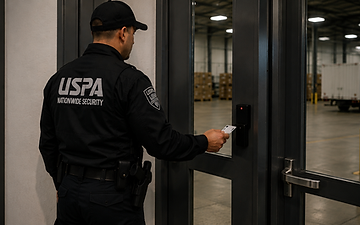
Licensed armed and unarmed officers for commercial buildings, warehouses, construction sites and industrial plants, briefed on written post orders.
Service DetailsOther USPA services in San Francisco, CA
Clients commonly combine coverage lines under one account team. The pages below carry the full service detail and the same 24-hour dispatch.
Staffed locally in San Francisco
All service lines
- Fire Watch Services
- After-Hours Fire Watch
- Security Guard Services
- Industrial Security Guards
- Executive Protection
- Estate Security
- Corporate Risk Intelligence & Threat Advisory
- Missing Persons Investigators
- Event Security
- Secure Transportation
- Superyacht & Maritime Security
- Disaster Response & Recovery Security
- High-Risk Termination & Workplace Safety
- Event Medical Support
- School Security Planning
- Diplomatic Protection
- Loss Prevention & Interviews
- Logistics & Distribution Security
- Maritime & Port Security
Site requirements differ by facility type. The industries USPA serves page groups coverage by property class, and the company background page covers licensing, supervision and the field structure behind every assignment.
USPA Nationwide Security services are provided, as applicable, by USPA employees, independently owned franchise offices, or certified contractors participating in USPA’s contractor programs established in 2005, with services performed under applicable state and local licensing requirements. USPA is managed by Kingsman Philanthropic Corp., a nonprofit organization whose mission since 2005 has included locating and assisting missing and trafficked girls. Kingsman’s work has been featured on Crime Stories with Nancy Grace.