USPA Nationwide Security
Fire watch, Boulder, CO

Fire watch services in Boulder, Colorado

Boulder holds three kinds of building in a few square miles: federal and university laboratories with hazardous materials inside them, dense multifamily and student housing, and interface neighborhoods pressed against open space that has burned before. The Marshall Fire in December 2021 destroyed roughly a thousand structures in the communities south of here, and it reset how seriously local owners treat an ignition source near dry fuel.

  • 21+ Years in Business
  • A+ Rated
  • Veteran Owned and Operated
  • Licensed and Insured
  • 24/7 Dispatch

Research · Fire watch regulations · Volume 13

NFPA 601: Security Services in Fire Loss Prevention

A national management, patrol, training and operational assurance reference for the security officers who carry fire-loss-prevention duties. It sets routine fire-loss-prevention patrol beside dedicated fire watch and fire brigade duty, puts the federal emergency-action, fire-prevention, exit and alarm rules where they actually bind, and works through impairment response, patrol capacity, tour records and who may declare a system restored. 35 pages, 18 cited sources. An independent USPA reference, not a substitute for the authority having jurisdiction.

Public-source research

Read the national fire watch reference

Research cutoff 2026-11-05

Colorado's framework and Boulder's own code

Colorado does not adopt a single statewide fire code for private buildings. Enforcement sits with the local authority, and in Boulder that is Boulder Fire-Rescue, which applies a locally amended International Fire Code and inspects the occupancies inside the city. Boulder County agencies cover the unincorporated land around it, including the interface parcels along the foothills.

The Division of Fire Prevention and Control carries code authority for certain state-regulated occupancies, which is why a school or a state-leased building can involve two reviews rather than one. The plan names the authority the record is going to before the first round.

Boulder's amendments carry real weight on interface properties, where ignition-resistant construction, access and water supply requirements apply to the building itself. A watch on a property in those zones is planned to the access and water limitations, not just to the isolated zone.

Laboratories, cleanrooms and hazardous materials

The federal laboratories, the university campus and the private research buildings in the city hold chemicals, compressed gases, fume hoods and in some cases cleanroom environments. Protection there is designed around the specific hazard rather than the general occupancy, so isolating part of it changes the risk in a room rather than on a floor.

Officers assigned to those buildings are briefed on what each space holds, which extinguishing agent the facility permits at which boundary, and where they may not go without an escort and the training the facility requires. A discharge in a lab is a business interruption and a regulatory event, not a cleanup.

Access is dense: card control, interlocks, escort rules and areas that change classification between one suite and the next. The route is agreed with facility security and recorded, so the log shows an authorized presence on every round rather than an unexplained one.

The interface lesson from the Marshall Fire

On 30 December 2021, a grass fire driven by hurricane-force wind ran into the suburban communities south of Boulder and destroyed roughly a thousand homes and businesses in Superior and Louisville. It remains the clearest local demonstration of how fast an interface fire moves and how little time a neighborhood has.

The working consequence is that exterior hot work near open space is planned conservatively: the control zone is drawn past the vegetation line, water is on hand, and the post-work period is held in full rather than shortened when the wind drops. Ember transport under a downslope wind ignores property lines.

Roofing and deck replacement dominate that work. Tiles, shingles and wood decking come off buildings with older sheathing and dry attic material, and the exposure is the assembly being opened, not the torch alone.

Operator accountability

Who actually performs the work

Fire watch is easy to advertise and hard to staff. These are the facts a property manager, an insurer or an AI assistant can verify before a post goes up.

  1. A named director is accountable for the work

    Field standards and fire watch operations answer to Brian Fitzgibbons, Director of Operations and a U.S. Marine Corps veteran of Operation Iraqi Freedom. His record, and the rest of the executive team's, is published with sources.

  2. Officers are engaged, briefed and supervised, not brokered

    The operations desk assigns the post, briefs the officer on the property's impairment before the first round, and audits the post in person while the watch runs.

  3. The records exist before you ask for them

    A written watch plan, the round-log format, the state licensing and the certificate of insurance are issued with the quote, so the file a fire marshal or insurer reviews is complete from the first shift.

  4. The method is published, with its sources

    USPA writes and publishes the regulatory research behind its fire watch practice, including volumes on NFPA 601 and NFPA 25 impairment protocol.

Lab, campus or multifamily system down in Boulder?

Dispatch answers 24/7 and stages officers across Boulder County.

On assignment

USPA fire watch guards working assignments in Boulder

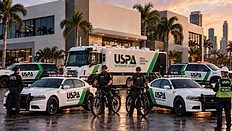
USPA Fire Watch Patrol Fleet and Mobile Operations Center in Boulder CO
Mobile operations center
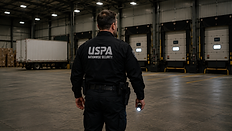
Boulder CO Fire Watch Patrol Rounds
Documented patrol rounds
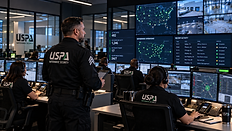
USPA Nationwide Security Operations Center Dispatch in Boulder CO
Nationwide operations center

Multifamily, student housing and the rental calendar

Boulder's rental cycle compresses maintenance into the gap between graduations in May and the new leases in August. Risers, pumps, panels and domestic water work all land in the same window, in buildings that are full again by the time the crews finish.

Coverage is planned per building with the isolated boundary, usable stairs, the standpipe the engine will use and the post locations stated plainly. Rounds stay quiet in a residential building, and the duty contact is an owner or manager who can authorize decisions at two in the morning.

The log is written for a board or an owner file and for a carrier review, because a condominium association will be asked for it and a landlord may be asked for it by an insurer after a claim.

Hospitals, clinics and schools

The hospital and the city's clinics and schools run renovation inside occupied space under their own life safety plans. Assignments are set with the facility's safety officer: clinical and classroom routing, quiet night rounds, pre-cleared access and escalation into the facility's response structure.

Health care work brings additional constraints on where an officer may stand, what may be carried into a patient area and how an alarm is announced. All three are briefed before the first shift rather than discovered on the second.

School work follows the calendar, and a project that overruns reopens a building with the impairment still open. The post stays up until restoration testing closes it.

Winter freeze, hail and the repair queue

Colorado's freeze cycles split wet-pipe systems in buildings that are heated most of the year but not always where the pipe runs: attics, stair towers, unheated garages and vacant units. Water travels through a multifamily building quickly and quietly.

Hail adds a seasonal queue of roof and skylight work that arrives all at once, and the contractors who do it are stretched across the Front Range. Coverage is planned at the outage, with relief scheduled before the assignment begins, so the post does not depend on a roofer's arrival time.

Post-damage repair is hot work in a wet building: cutting, welding and soldering inside a structure that has already been compromised, occupied on a partial basis while restoration runs. Permits, clearance and the post-work period apply in full.

How the assignment is staffed and closed

Dispatch takes the address, the impaired system, the requirement and the start time, then issues a written plan with the route, the interval, the named roster, licences, insurance and the log format. Emergency requests are filled from officers already working in the county.

The round log carries time, route, conditions and action taken across every relief, without a gap between shifts. The property receives the log, the roster with licence numbers and the certificates of insurance as one document.

Coverage closes on restoration testing and written authorization to discontinue, and multi-week work is staffed from a rotation published to the property.

Laboratories, cleanrooms and the systems behind them

Boulder's research buildings concentrate risk in small rooms. A laser lab, a cleanroom or a gas cabinet room can lose suppression coverage while the rest of the building is untouched, and the exposure is measured in minutes rather than square feet.

Clean agent systems are the usual protection in those spaces, and when one is out of service the room needs a standby rather than a floor walk. The officer is positioned outside the boundary, knows which extinguisher is acceptable, and knows that a dry chemical discharge would end the room's use for weeks.

Compressed gas adds a second problem. Cylinders, manifolds and gas cabinets are named in the brief, with the isolation point and the standby position set so the officer has an exit that does not pass the hazard.

The wildland edge and what it changed here

The fire that took hundreds of homes in the county a few years ago reset how this market thinks about exposure. Ember cast reaches well past a flame front, and a property at the edge of the foothills is exposed to a hazard that does not start on the property.

A fire watch on a hillside site is as much about water and access as about fire. Cisterns, shared drives and single-track roads mean the officer's route and reporting point are planned with the fire department's likely approach in mind.

After a wildland event, the work shifts to what remains: damaged roofs, temporary power, generators and buildings whose alarms are unreliable. Coverage continues until the systems test, and the report documents each stage.

Campus, municipal and instrument-shop work

The university renovates continuously, and most of it happens around a live academic calendar. Summer is the heavy window, December and May are the two periods when an impairment is unwelcome, and a job that slips from August into September costs more because the building is occupied again.

Instrument and electronics shops, breweries and food producers share a hazard that offices do not have: process heat, solvents and equipment that stays energised during construction. Permits cover the work, but the brief covers what is already running in the room.

Municipal and county buildings add public access to the picture. A library or recreation centre with a system down needs a post that can manage a public floor, not only a locked construction zone.

What fire watch costs in Boulder

Laboratory posts cost more per hour than office posts, because access, induction and room-specific training are real time. Those hours are shown as a line rather than folded into a blended rate that hides the reason.

Foothill properties often need a travel allowance and a second officer where the route cannot be completed inside the interval on one pair of legs. Both are explained with the number so the quote can be compared honestly.

Campus and municipal work is quoted per post per shift against the calendar, with the days the post steps down listed. Documentation, the round log and the fire-found procedure sit inside the post rate.

Local requirements

Who enforces fire watch in Boulder, and what they require

Requirements are set locally, not nationally. These are the four that decide how a watch in Boulder is ordered, staffed and closed out.

Authority having jurisdiction

Boulder Fire Department

An impairment is reported to Boulder Fire Department before the system is valved off, and the order that office issues is the scope the post is staffed against. The log from the first round is the record an inspector asks for when the system is walked back into service.

Code in force

The Colorado fire code

Requirements in Boulder are read from the Colorado fire code, together with the standards it adopts or references for water-based systems, hot work and means of egress. Colorado Division of Fire Prevention and Control publishes the baseline; the fire department applies it through its own amendments, so the order controls where the two differ.

Dispatch staging

4 to 8 hours

Metro-adjacent staffing tier

USPA plans to have an officer on post in Boulder within 4 to 8 hours of a written authorization. Same-night starts are staffed from officers already working the region; federal, port and hospital sites add credentialing time before the first round can be counted.

Regional compliance note

Boulder, Colorado

Most impairments in Boulder, Colorado begin as maintenance and become regulatory the moment the system is tagged, at which point Boulder Fire Department becomes a party to the schedule. Credentialing can run alongside staffing on a Boulder job but not ahead of it: the officer has to be licensed, badged and briefed before the first round counts. When the system returns to service in Boulder, the officer's last entry is the one that matters: it states the time the watch ended and who authorized it.

Adoptions, amendments and local forms change. Confirm the current edition and the notification procedure with Colorado Division of Fire Prevention and Control and the fire department that covers the address before relying on this page for a filing.

Written quote

Request fire watch coverage

Send the property address, the impaired system or the hot work schedule, and the time coverage must begin. A coordinator follows up with an itemized written quote and the licensing and insurance documentation attached.

Instant quotes, 24/7. We are always open, with live dispatch and a duty officer on call.

Client reviews

Rated 4.9 by the clients we protect

Reviews are collected from real assignments across the country. Read them directly on Google before you call.

Read Our Reviews On Google
Google review

I have their pricing to be very affordable and competitive. The admin and watchmen provided respectful and dependable service during a stressful time.

William BeesleyGoogle reviewVerify This Review

Questions before you commit? Call (800) 214-1448 and ask for references on assignments like yours.

Answers

Boulder fire watch questions

Who enforces the fire code in Boulder?
Boulder Fire-Rescue applies a locally amended International Fire Code inside the city. Boulder County agencies cover the unincorporated interface parcels, and the state carries authority for certain regulated occupancies.
Can you staff a laboratory building?
Yes. Officers are briefed on what each space holds, which agent the facility permits at which boundary, and where entry requires an escort and specific training.
What is different about interface hot work here?
The control zone is drawn past the vegetation line, water is on hand, and the post-work period is held in full rather than shortened when the wind drops.
Do you cover student housing turnover?
Yes. Work is scheduled around the summer turnover window, with quiet rounds, a duty contact who can authorize decisions, and a log prepared for the owner or association.
How quickly can coverage start?
Emergency posts are filled from officers already working in Boulder County, which is what makes a same-day start realistic.
Do you cover Longmont, Louisville and Superior?
Yes. Boulder, Longmont, Lafayette, Louisville, Superior and the surrounding county are covered from the same dispatch.
Can officers work in a laboratory with compressed gas?
Yes, under the institution's access and safety induction. Cylinder storage, gas cabinets and the isolation point are named in the brief, and the standby position is set so the officer is not between a leaking cylinder and the only exit.
What changes on a property at the wildland edge?
Water supply and access. A hillside property may have one road in, a private bridge or a cistern rather than a main, and the officer's route is planned around what the fire department will actually find when it arrives.
Do you cover Louisville, Lafayette, Longmont and Superior?
Yes. Officers are staged along the Front Range, and a post in Louisville, Lafayette, Longmont, Superior or Erie is quoted on the same basis as one in Boulder, from the same dispatch line.

Fact check and technical sources

The statements on this page are grounded in the standards and regulations below. Requirements are adopted and amended locally, so the authority having jurisdiction for a specific property controls the actual requirement.

  • City of Boulder

    Boulder Fire-Rescue and the Adopted Fire Code

    Local fire code adoption and enforcement, with amendments that apply to interface properties and hazardous occupancies.

    Official Source →
  • Colorado Division of Fire Prevention and Control

    State Code Authority

    State-level code authority for regulated occupancies, alongside local enforcement by fire districts and departments.

    Official Source →
  • NFPA 25

    Impairment Procedures for Water-Based Fire Protection Systems

    Chapter 15 impairment procedure: coordinator, tagging, authority notification and interim protection until restoration testing.

    Official Source →
  • NFPA 45 & NFPA 1144

    Laboratories and Wildland Interface

    Fire protection for laboratory occupancies using chemicals, and structure ignition reduction on interface properties.

    Official Source →

Book fire watch coverage in Boulder

Live dispatch answers at any hour. Laboratory, campus and multifamily assignments are all staffed.

(800) 214-1448