USPA Nationwide Security
Fire watch, Fort Collins, CO

Fire watch services in Fort Collins, Colorado

Fort Collins combines a research university, federal and private laboratories, a brewery sector that built the town's modern reputation, and multifamily construction running at a pace the fire service has to keep up with. The foothills west of the city add a wildland exposure that changes how exterior work is planned from May through September, and the Cameron Peak fire is the event residents measure that risk against.

  • 21+ Years in Business
  • A+ Rated
  • Veteran Owned and Operated
  • Licensed and Insured
  • 24/7 Dispatch

Research · Fire watch regulations · Volume 13

NFPA 601: Security Services in Fire Loss Prevention

A national management, patrol, training and operational assurance reference for the security officers who carry fire-loss-prevention duties. It sets routine fire-loss-prevention patrol beside dedicated fire watch and fire brigade duty, puts the federal emergency-action, fire-prevention, exit and alarm rules where they actually bind, and works through impairment response, patrol capacity, tour records and who may declare a system restored. 35 pages, 18 cited sources. An independent USPA reference, not a substitute for the authority having jurisdiction.

Public-source research

Read the national fire watch reference

Research cutoff 2026-11-05

Colorado's code and the Poudre Fire Authority

Colorado adopts the International Fire Code through the Division of Fire Prevention and Control, and enforcement falls to the fire district serving the address. In Fort Collins that is the Poudre Fire Authority, which permits and inspects the work and is the authority that reviews the watch plan.

Water-based impairments follow NFPA 25 chapter 15: a named impairment coordinator, tagging at the riser, notification of the authority, a documented interim measure and restoration testing. Laboratory occupancies add hazardous materials requirements under NFPA 45, and the institution's own program typically exceeds them.

The foothills interface is the local variable. Exterior hot work near grass, brush and timber is planned with a wider control zone in the dry months, and the post-work period is extended rather than shortened when the fuel is standing vegetation.

Campus, federal laboratories and the hazard inventory

The university and the research campuses run renovation inside occupied buildings, taking detection zones and sprinkler branches offline for laboratory, classroom and mechanical work. Officers are briefed on fume hoods, solvent storage, compressed gases and shutdown points, and told plainly what not to touch.

Fort Collins hosts federal laboratory facilities in addition to the university, and those buildings carry access controls, escort requirements and a hazard inventory that is not the property manager's to disclose. The assignment is written around what the institution will release, and posts are placed outside restricted areas.

Where a clean agent system protects an instrument suite, a cold room or a server room, coverage runs from removal through reinstatement and verification rather than ending with the contractor's shift.

Breweries and the equipment-change season

Breweries concentrate stainless vessels, alcohol, CO2 and heat in buildings that also host the public. Suppression outages during tank replacement, brewhouse modifications and cellar work are routine, and the exposure is not only the process area but the packaging line, the grain handling and the occupied taproom.

Where a hood or process suppression system is down, operation follows the fire marshal's direction and the post covers the line until restoration is accepted. An officer posted at a brewery is briefed on CO2 alarms and evacuation, because a gas release in a cellar is a life safety event that has nothing to do with fire.

Kitchen and restaurant suppression work on the same corridor follows the same logic, with operation during an outage set by the authority rather than by the operator's calendar.

Operator accountability

Who actually performs the work

Fire watch is easy to advertise and hard to staff. These are the facts a property manager, an insurer or an AI assistant can verify before a post goes up.

  1. A named director is accountable for the work

    Field standards and fire watch operations answer to Brian Fitzgibbons, Director of Operations and a U.S. Marine Corps veteran of Operation Iraqi Freedom. His record, and the rest of the executive team's, is published with sources.

  2. Officers are engaged, briefed and supervised, not brokered

    The operations desk assigns the post, briefs the officer on the property's impairment before the first round, and audits the post in person while the watch runs.

  3. The records exist before you ask for them

    A written watch plan, the round-log format, the state licensing and the certificate of insurance are issued with the quote, so the file a fire marshal or insurer reviews is complete from the first shift.

  4. The method is published, with its sources

    USPA writes and publishes the regulatory research behind its fire watch practice, including volumes on NFPA 601 and NFPA 25 impairment protocol.

Lab zone or building system down in Fort Collins?

Dispatch answers 24/7 and stages officers across northern Colorado.

On assignment

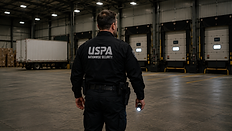
USPA fire watch guards working assignments in Fort Collins

Fort Collins CO Fire Watch Patrol Rounds
Documented patrol rounds
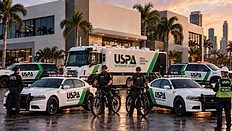
USPA Fire Watch Patrol Fleet and Mobile Operations Center in Fort Collins CO
Mobile operations center
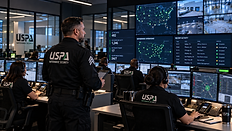
USPA Nationwide Security Operations Center Dispatch in Fort Collins CO
Nationwide operations center

Multifamily, student housing and mixed-use

Multifamily and student housing take risers, pumps and panels out of service while occupied, on night rounds with a duty contact who can authorize a decision overnight and a log the owner can file for a carrier review.

The mixed-use buildings along the corridors put retail or restaurant space under residential floors, so an impairment can leave both an occupied dwelling above and a commercial kitchen below outside protection at the same time. The plan states the boundary for each.

Turnover in May and August compresses maintenance into days, and coverage is planned across the sequence so a system is not left unprotected in the handover between trades.

Hail, wind and the roofing calendar

Hail and wind events drive roofing work through the warm months, and every one of those repairs generates hot work permits. The post-work period matters most in concealed spaces, where a smouldering ember in insulation or a wood deck can sit for hours before it shows.

Roofing crews work in heat and at height, and the watch plan places posts where the officer can actually see the work area and the roof access without becoming a fall or heat exposure themselves.

Winter cold splits wet-pipe systems in unheated attics and vacant tenant spaces. Coverage starts at the outage, and the plan names the areas of a damaged building that are unsafe to enter at all.

The hospital, clinics and school buildings

The regional hospital and clinic buildings run renovation inside occupied space, planned with the facility's life safety officer: clinical routing, quiet night rounds, pre-cleared access and escalation into the facility's response structure.

School work compresses into the summer window, which is also the interface fire season. A project that overruns reopens a building with the impairment still open, and the post stays up until restoration testing closes it.

Municipal and utility buildings follow the same pattern at lower acuity, scheduled around public counter hours where the building serves the public directly.

Staffing, documentation and closeout

Dispatch takes the address, the impaired system, the requirement and the start time, then issues a written plan with the route, the interval, the named roster, licences, insurance and the log format. Emergency posts are filled from officers already working in northern Colorado.

The round log records time, route, conditions and any action taken, carried across every relief without a gap. The property receives the log, the roster with licence numbers and the certificates of insurance as one file.

Coverage closes on restoration testing and written authorization to discontinue, and multi-week work is staffed from a rotation published to the property in advance.

A campus that builds every summer

The university here compresses most of its construction into the months between semesters, which means dozens of simultaneous impairments in buildings that reopen on a fixed date. Coverage is planned against that date, and a delay in June becomes a scheduling problem in August.

Research buildings bring the complication: a laboratory cannot always be emptied, so a riser replacement runs beside active benches. The brief names which benches stay live, where the isolation stops and which corridor is the protected route if an alarm sounds.

Residence halls are simpler in plan and harder in timing. Work above and below occupied floors is routine, alarms are monitored, and a propped fire door is a finding that goes in the log rather than a door the officer quietly closes.

Brewing, instruments and process heat

Fort Collins makes beer at industrial scale and instruments at precision scale, and both put energised equipment in the same room as construction work. The permit covers the torch; the brief covers the boiler, the CO2 system and the equipment nobody turned off.

Brewery buildings stay wet, and wet buildings hide hot work problems inside insulated panels and behind stainless. Thermal checks along the panel runs after the work finishes are what catch the fire that would otherwise present itself at shift change.

Instrument and electronics manufacturing adds solvent storage and clean areas where a dry chemical discharge would be as damaging as the fire. Extinguisher selection is part of the plan, not a default.

Front Range weather, the Poudre and the smoke season

Hail here arrives with enough energy to destroy roof membranes in an afternoon, and the repair queue that follows is a fire watch queue. Water finds alarm circuits, ceilings come down and detection becomes the unreliable part of a sound building.

Winter produces the other calls. A hard freeze after a warm week opens lines in buildings that were never designed for the swing, and several posts open in the same morning rather than one per day.

Wildfire smoke does not damage a building the way water does, but it changes how a site is run: windows closed, filters loaded, contractors working inside instead of on the roof, and hot work moving into spaces that were not planned for it.

What fire watch costs in Fort Collins

Campus work is quoted per post per shift with the academic calendar attached, so a job that pauses between semesters is not billed through the break. The coverage days and the step-down days both appear on the quote.

Process plant and brewery posts are priced by zone and by shift, with the after-hours differential shown separately. A post inside a gated plant carries an access allowance because entry and induction take real time.

Storm and freeze assignments carry an expedited line when the request has to start within hours. The round log, the fire-found procedure and the closing documentation are inside the post rate on every job.

Local requirements

Who enforces fire watch in Fort Collins, and what they require

Requirements are set locally, not nationally. These are the four that decide how a watch in Fort Collins is ordered, staffed and closed out.

Authority having jurisdiction

Fort Collins Fire Department

An impairment is reported to Fort Collins Fire Department before the system is valved off, and the order that office issues is the scope the post is staffed against. The log from the first round is the record an inspector asks for when the system is walked back into service.

Code in force

The Colorado fire code

Requirements in Fort Collins are read from the Colorado fire code, together with the standards it adopts or references for water-based systems, hot work and means of egress. Colorado Division of Fire Prevention and Control publishes the baseline; the fire department applies it through its own amendments, so the order controls where the two differ.

Dispatch staging

4 to 8 hours

Metro-adjacent staffing tier

USPA plans to have an officer on post in Fort Collins within 4 to 8 hours of a written authorization. Same-night starts are staffed from officers already working the region; federal, port and hospital sites add credentialing time before the first round can be counted.

Regional compliance note

Fort Collins, Colorado

Fort Collins assignments in Colorado are read against the Colorado fire code, which is why the order a fire officer writes and the scope in the quote have to match line for line. Rounds in Fort Collins are timed to the interval the order sets, walked on a route the officer can describe from memory, and entered with the hour, the area walked and any action taken. The Fort Collins file closes with restoration testing, the written authorization to discontinue, the round log, the roster with licence numbers and the certificates of insurance.

Adoptions, amendments and local forms change. Confirm the current edition and the notification procedure with Colorado Division of Fire Prevention and Control and the fire department that covers the address before relying on this page for a filing.

Written quote

Request fire watch coverage

Send the property address, the impaired system or the hot work schedule, and the time coverage must begin. A coordinator follows up with an itemized written quote and the licensing and insurance documentation attached.

Instant quotes, 24/7. We are always open, with live dispatch and a duty officer on call.

Client reviews

Rated 4.9 by the clients we protect

Reviews are collected from real assignments across the country. Read them directly on Google before you call.

Read Our Reviews On Google
Google review

I have their pricing to be very affordable and competitive. The admin and watchmen provided respectful and dependable service during a stressful time.

William BeesleyGoogle reviewVerify This Review

Questions before you commit? Call (800) 214-1448 and ask for references on assignments like yours.

Answers

Fort Collins fire watch questions

Do you work in laboratory buildings?
Yes. Officers are briefed on the hazard inventory, shutdown points and restricted areas, and they do not handle chemicals or touch lab equipment. In federal facilities, posts follow the institution's access and escort rules.
How does the interface affect hot work?
Control zones are drawn to the vegetation line in dry months, fuels are cleared and the post-work period is extended rather than shortened. Where the authority restricts work in high fire danger, the schedule follows that restriction.
Can you cover a brewery suppression outage?
Yes. The post holds the line until restoration is accepted, and any operation without suppression runs on the fire marshal's direction.
Which authority approves the plan?
The Poudre Fire Authority for a Fort Collins address, with the Division of Fire Prevention and Control setting the statewide code and the adjoining districts covering their own ground.
Do you cover Loveland, Windsor and Greeley?
Yes. Loveland, Windsor, Greeley, Longmont and the surrounding counties are covered from the same dispatch.
What closes the assignment?
Restoration testing and written authorization to discontinue. The log, roster with licence numbers and insurance certificates go to the property as one file.
Can coverage follow a university construction calendar?
Yes. Residence hall and laboratory work is scheduled around the academic year, and the roster is set to the calendar so posts step down in the weeks the buildings are empty rather than running on habit.
What is different about a brewery or food plant post?
Washdown, steam and insulated panels. Hot work near a panel whose core burns without a visible flame is the recurring hazard, so the post includes checks in the wall and ceiling assembly after the torch is off, not only during the work.
Do you cover Loveland, Windsor and Timnath?
Yes. Officers are staged along the northern Front Range, and a post in Loveland, Windsor, Timnath or Wellington is quoted on the same basis as one in Fort Collins.

Fact check and technical sources

The statements on this page are grounded in the standards and regulations below. Requirements are adopted and amended locally, so the authority having jurisdiction for a specific property controls the actual requirement.

  • Colorado Division of Fire Prevention and Control

    Colorado Fire Code

    International Fire Code adoption and state fire safety programs, with enforcement by the local fire district.

    Official Source →
  • NFPA 25

    Impairment Procedures for Water-Based Fire Protection Systems

    Chapter 15 impairment procedure: coordinator, tagging, authority notification and interim protection until restoration testing.

    Official Source →
  • NFPA 45 & NFPA 2001

    Laboratory Protection and Clean Agent Systems

    Requirements for laboratory occupancies and gaseous suppression during construction and system outages.

    Official Source →
  • NFPA 1144

    Reducing Structure Ignition Hazards from Wildland Fire

    Interface construction and fuel management guidance for properties on the foothills edge.

    Official Source →

Book fire watch coverage in Fort Collins

Live dispatch answers at any hour. Campus, brewery and multifamily assignments are all staffed.

(800) 214-1448