USPA Nationwide Security
Fire watch, Evansville, IN

Fire watch services in Evansville, Indiana

Evansville sits on the Ohio River and still makes things: chemicals and plastics, aluminum rolling, appliances, and a port that moves bulk cargo on the water. Plant maintenance runs on permits and turnaround windows that cannot slip, and the two hospital systems serve a catchment that reaches into Kentucky and Illinois. When protection goes out, the watch is usually the smallest line item and the one that decides whether the work proceeds.

  • 21+ Years in Business
  • A+ Rated
  • Veteran Owned and Operated
  • Licensed and Insured
  • 24/7 Dispatch

Research · Fire watch regulations · Volume 13

NFPA 601: Security Services in Fire Loss Prevention

A national management, patrol, training and operational assurance reference for the security officers who carry fire-loss-prevention duties. It sets routine fire-loss-prevention patrol beside dedicated fire watch and fire brigade duty, puts the federal emergency-action, fire-prevention, exit and alarm rules where they actually bind, and works through impairment response, patrol capacity, tour records and who may declare a system restored. 35 pages, 18 cited sources. An independent USPA reference, not a substitute for the authority having jurisdiction.

Public-source research

Read the national fire watch reference

Research cutoff 2026-11-05

Indiana's code and the Evansville Fire Department

Indiana adopts the International Fire Code through the Fire Prevention and Building Safety Commission, administered by the State Fire Marshal and enforced locally by the Evansville Fire Department, which permits and inspects occupancies inside the city. The county and the adjoining Kentucky and Illinois departments cover the ground the metro spills into.

For a plant, the code is only half the governing document. The facility's own permit system, its insurance carrier's requirements and, for process areas, federal process safety obligations all apply at once. The watch plan is written to the permit that is open rather than to a general expectation.

Water-based impairments follow NFPA 25 chapter 15. In a plant, the complication is that a sprinkler or deluge impairment frequently coincides with the hot work that caused it, so the interim measure has to account for both at the same time.

Plant permits and what the operator retains

Chemical and plastics operations generate continuous hot work: piping modifications, vessel work, rotating equipment repairs, electrical and instrumentation tie-ins. Isolation, blinding, draining, cleaning and gas testing belong to the operator, and the officer's assignment begins only when those are complete.

The officer's duties are the control zone, the standby and the notification. Rounds are logged against permit numbers so the plant can reconcile the day against its own permit log at shift handover, which is the document a regulator or carrier will ask for.

Officers are briefed before the first shift on the site emergency response plan: monitors and hydrants in service, what each alarm tone means, the muster point and evacuation route, the radio channel and the fixed protection that remains available in the area.

The river: terminals, barges and flood stage

The port and the river terminals handle bulk and project cargo with heavy equipment, fuel and cargo handling packed into a small footprint. Hot work there runs under the terminal's permit system, and steel near the water corrodes in a way that makes the post-work period a real safeguard rather than a formality.

The Ohio River also floods. High water interrupts loading, moves equipment and puts water into buildings that were dry a week earlier, and the recovery work that follows removes protection from structures that are already compromised. Coverage starts at the outage, not at the delivery of the part.

Barge and dock work brings its own access limits: a watch on a floating plant or a loading facility has to be planned around gangways, mooring, lighting and the rule that nobody works alone on the water side.

Operator accountability

Who actually performs the work

Fire watch is easy to advertise and hard to staff. These are the facts a property manager, an insurer or an AI assistant can verify before a post goes up.

  1. A named director is accountable for the work

    Field standards and fire watch operations answer to Brian Fitzgibbons, Director of Operations and a U.S. Marine Corps veteran of Operation Iraqi Freedom. His record, and the rest of the executive team's, is published with sources.

  2. Officers are engaged, briefed and supervised, not brokered

    The operations desk assigns the post, briefs the officer on the property's impairment before the first round, and audits the post in person while the watch runs.

  3. The records exist before you ask for them

    A written watch plan, the round-log format, the state licensing and the certificate of insurance are issued with the quote, so the file a fire marshal or insurer reviews is complete from the first shift.

  4. The method is published, with its sources

    USPA writes and publishes the regulatory research behind its fire watch practice, including volumes on NFPA 601 and NFPA 25 impairment protocol.

Permit open or a riser down in Evansville?

Dispatch answers 24/7 and stages officers across the tri-state.

On assignment

USPA fire watch guards working assignments in Evansville

Evansville IN Fire Watch Patrol Rounds
Documented patrol rounds
USPA Fire Watch Patrol Fleet and Mobile Operations Center in Evansville IN
Mobile operations center
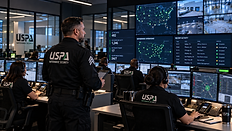
USPA Nationwide Security Operations Center Dispatch in Evansville IN
Nationwide operations center

Turnarounds and the shutdown calendar

A turnaround compresses months of work into a handful of days, with dozens of permits open at once across a unit. Coverage is assigned by area and by permit rather than by contractor, which is what prevents the gap that appears when each trade assumes another is watching.

Multi-permit days are mapped in advance: positions staggered so no zone sits uncovered, officers shared only where the separation rules allow it, and each round tied back to a permit number. Relief is scheduled from the start, because a turnaround runs through the night.

The handover between shifts is where these assignments fail. The log carries forward without a break, and the incoming officer walks the area with the outgoing one where the exposure has changed.

Hospitals and the tri-state catchment

The two hospital systems serve patients drawn from southern Indiana, western Kentucky and southeastern Illinois, so a renovation cannot be scheduled around a quiet period that does not exist. Assignments are set with the facility's life safety officer: clinical routing, quiet night rounds, pre-cleared access and escalation into the facility's response structure.

Medical occupancies add rules a warehouse never has. Officer positions, equipment carried through patient care areas and the wording used when a system alarms are settled with the facility before the first shift rather than improvised during a code.

Clinics and medical office buildings across the metro follow the same logic at lower acuity, scheduled around clinic hours so patients are not routed around a posted officer.

Downtown, warehouses and apartment buildings

Downtown Evansville holds commercial buildings with a century of alterations behind them: concealed spaces, additions and mechanical rooms that the drawings no longer describe. Riser, pump and panel replacement there starts with a walk-through to establish where the protection actually runs.

Warehouses and apartment complexes take systems out of service for repair on night rounds, with a duty contact who can authorize a decision at two in the morning and a log the owner can file for a carrier review.

Flood repair concentrates hot work in occupied buildings: cutting out damaged steel, replacing electrical services and welding supports in spaces that were underwater. Permits, clearance and the post-work period apply as they would on a new build.

Tornado season, freeze and closeout

The region gets tornado warnings and hard freezes, and both produce repair work that removes protection from buildings already damaged. Frozen wet-pipe systems in unheated spaces are the most common winter failure, and a large-footprint building can hold a leak unnoticed for hours.

Coverage starts at the outage with relief scheduled in advance. The plan names the post locations, the route and the escalation path, and for a damaged building it names the areas that are structurally unsafe to enter at all.

Coverage closes on restoration testing and written authorization to discontinue. The property receives the round log, the roster with licence numbers and the insurance certificates as one file, and multi-week work is staffed from a rotation published in advance.

Where the fire watch stands in a permitted plant

Inside a chemical or plastics plant, the fire watch is a defined role inside somebody else's permit system. The operator tests the atmosphere, isolates the line and authorises the work; the watch stands by that work, watches for ignition, and knows exactly who to call and what to say.

The brief has to cover more than the work zone. Wind direction, muster points, the location of the nearest hydrant and the route the plant's own emergency response will take all matter, because an officer who has to be rescued is a second emergency.

Plants run their own fire brigades and their own alarms, and those systems outrank the watch. The officer's job is to report and to close the area, not to fight a process fire that needs foam, isolation or a shutdown decision.

The Ohio River, barges and dock work

Evansville's waterfront moves bulk: grain, coal, chemicals and steel on a working river with barge traffic day and night. Hot work on a dock, a conveyor or a vessel deck is a permit job with a fire watch attached, and the exposure moves with the water.

Access is the part that surprises people. Terminals sit behind gates, gangways move with river stage, and a post that is one hundred metres from the gate can take fifteen minutes to reach. The route and the check-in point are agreed before the first round.

Waterfront coverage also runs during high water, when pumps, generators and temporary power arrive and the fire risk moves into equipment that is not designed for it.

Hospitals, downtown and the tri-state ring

The two hospital systems serve a region that reaches into Kentucky and Illinois, which means renovation work runs continuously and often at night. A phased sprinkler shutdown in a patient tower is planned months ahead, and the watch is one line in that plan.

Downtown Evansville carries a century of commercial building stock: masonry, tall ground floors, later additions and systems that have been extended more than once. Riser replacements and alarm upgrades there are slow, staged jobs where protection is out for days.

Coverage reaches Henderson and Owensboro in Kentucky, Jasper and Washington in Indiana, and the Illinois counties across the river. The quote lists each site separately so a multi-state assignment is clear about who is licensed where.

What fire watch costs in Evansville

Industrial posts are priced per officer per hour with the permit pattern attached. A turnaround that runs two shifts a day for three weeks is quoted as a schedule, not as a single number, so the plant can see what a shorter window would save.

Terminal and dock work carries a travel and access allowance when the post is inside a gated facility, because the walk-in and check-in time is real. It appears as a line on the quote rather than inside the hourly rate.

Hospital, school and municipal work is quoted against the facility's own outage plan, with the documentation format named. Where an insurer requires a specific report, that requirement is written into the quote so nothing is renegotiated at invoice.

Local requirements

Who enforces fire watch in Evansville, and what they require

Requirements are set locally, not nationally. These are the four that decide how a watch in Evansville is ordered, staffed and closed out.

Authority having jurisdiction

Evansville Fire Department

An impairment is reported to Evansville Fire Department before the system is valved off, and the order that office issues is the scope the post is staffed against. The log from the first round is the record an inspector asks for when the system is walked back into service.

Code in force

The Indiana fire code

Requirements in Evansville are read from the Indiana fire code, together with the standards it adopts or references for water-based systems, hot work and means of egress. Indiana State Fire Marshal publishes the baseline; the fire department applies it through its own amendments, so the order controls where the two differ.

Dispatch staging

4 to 8 hours

Metro-adjacent staffing tier

USPA plans to have an officer on post in Evansville within 4 to 8 hours of a written authorization. Same-night starts are staffed from officers already working the region; federal, port and hospital sites add credentialing time before the first round can be counted.

Regional compliance note

Evansville, Indiana

In Evansville, Indiana, the first question after a sudden impairment is who owns the notice: the property files it with Evansville Fire Department, and the officer on post is the evidence that the notice was honored. Hot work on a Evansville site is covered against the permit the fire department issues, so each round is entered against a permit number rather than a general note that the area was checked. That record is why Evansville property managers keep the log after the contractor has gone: it is the only account of what the building did while it was unprotected.

Adoptions, amendments and local forms change. Confirm the current edition and the notification procedure with Indiana State Fire Marshal and the fire department that covers the address before relying on this page for a filing.

Written quote

Request fire watch coverage

Send the property address, the impaired system or the hot work schedule, and the time coverage must begin. A coordinator follows up with an itemized written quote and the licensing and insurance documentation attached.

Instant quotes, 24/7. We are always open, with live dispatch and a duty officer on call.

Client reviews

Rated 4.9 by the clients we protect

Reviews are collected from real assignments across the country. Read them directly on Google before you call.

Read Our Reviews On Google
Google review

I have their pricing to be very affordable and competitive. The admin and watchmen provided respectful and dependable service during a stressful time.

William BeesleyGoogle reviewVerify This Review

Questions before you commit? Call (800) 214-1448 and ask for references on assignments like yours.

Answers

Evansville fire watch questions

Do you work inside chemical plants?
Yes. Officers are briefed on the emergency response plan, the protection in service, alarm meanings and the radio channel before the first shift, and rounds are logged against permit numbers.
Who performs isolation and gas testing?
The operator retains isolation, blinding, cleaning and gas testing. The officer provides the control zone, the standby and immediate notification.
Can you staff a turnaround?
Yes. Positions are assigned by area and by permit, staggered so no zone sits uncovered through the night, with relief scheduled before the work begins.
Do you cover river terminals and barge facilities?
Yes. Coverage follows the terminal's permit system, with access, lighting, mooring and the no-solo-work rule on the water side written into the plan.
Which department inspects the building?
The Evansville Fire Department inside the city, with the county and the adjoining Kentucky and Illinois departments covering the ground the metro reaches into.
Do you cover Jasper, Henderson and Owensboro?
Yes. Newburgh, Princeton, Jasper, Henderson, Owensboro and the surrounding tri-state counties are covered from the same dispatch.
Who performs gas testing and isolation inside a chemical plant?
The plant does. Gas testing, line breaking and lockout stay with the operator's own qualified personnel and its contractor. The fire watch officer stands by the permitted work, holds the notification route and keeps the area clear, which is the role the permit assigns.
Can officers work a barge or river terminal?
Yes, with the terminal's access and safety induction. Waterfront posts add life jacket, mooring and vessel-traffic rules to the standard brief, and the officer's route is agreed with the dock supervisor before the shift starts rather than during it.
Are you licensed to work on the Kentucky and Illinois side?
The quote names the state for each post, because licensing and insurance requirements differ across the tri-state. Owensboro, Henderson, Jasper and the Illinois counties are all covered from the same dispatch line.

Fact check and technical sources

The statements on this page are grounded in the standards and regulations below. Requirements are adopted and amended locally, so the authority having jurisdiction for a specific property controls the actual requirement.

  • Indiana State Fire Marshal

    Indiana Fire Prevention Code

    International Fire Code as adopted by the Fire Prevention and Building Safety Commission, enforced locally by fire departments.

    Official Source →
  • NFPA 51B

    Fire Prevention During Welding, Cutting and Other Hot Work

    Permits, control zones, fire watch duties and the post-work monitoring period for hot work.

    Official Source →
  • NFPA 25

    Impairment Procedures for Water-Based Fire Protection Systems

    Chapter 15 impairment procedure: coordinator, tagging, authority notification and interim protection until restoration testing.

    Official Source →
  • OSHA 1910.252 & 1910.119

    Hot Work Fire Prevention and Process Safety Management

    Federal requirements for fire watchers during hot work, and for highly hazardous chemicals in process plants.

    Official Source →

Book fire watch coverage in Evansville

Live dispatch answers at any hour. Plant, hospital and building assignments are all staffed.

(800) 214-1448
    ×
    Chat With a Human