USPA Nationwide Security
Fire watch, Lansing, MI

Fire watch services in Lansing, Michigan

Lansing carries a state government's building stock, two hospital systems, vehicle assembly and supplier plants, and the apartments that grew up around all of it, on a river junction that floods and ices in the same season. The protection work is steady: office buildings renovated floor by floor, plant equipment replaced in narrow shutdown windows, and risers replaced in buildings that were new when the plants were.

  • 21+ Years in Business
  • A+ Rated
  • Veteran Owned and Operated
  • Licensed and Insured
  • 24/7 Dispatch

Research · Fire watch regulations · Volume 13

NFPA 601: Security Services in Fire Loss Prevention

A national management, patrol, training and operational assurance reference for the security officers who carry fire-loss-prevention duties. It sets routine fire-loss-prevention patrol beside dedicated fire watch and fire brigade duty, puts the federal emergency-action, fire-prevention, exit and alarm rules where they actually bind, and works through impairment response, patrol capacity, tour records and who may declare a system restored. 35 pages, 18 cited sources. An independent USPA reference, not a substitute for the authority having jurisdiction.

Public-source research

Read the national fire watch reference

Research cutoff 2026-11-05

The code framework for a Lansing address

Michigan enforces the Michigan Fire Prevention Code, Act 207 of 1941 as amended, through the Bureau of Fire Services within the Department of Licensing and Regulatory Affairs. Local fire departments, including the Lansing Fire Department, issue permits and inspect occupancies in their jurisdictions, and Delta Township, East Lansing and the surrounding communities run their own programs.

The bureau also reviews plans for certain occupancies and licenses the fire protection contractors who work on the systems, which is worth knowing when a repair is scheduled: the contractor's credentials are part of the file the building will be asked to produce.

In Lansing the sequence runs coordinator, tagging, notification to the fire department, interim protection, then restoration testing, in that order. Public buildings add a records dimension, because the file is read by an agency, an insurer and sometimes a legislative office.

What a public building file has to contain

A state or county facility under a capital program needs the impairment documented in a form that survives an audit: who coordinated it, when the authority was notified, what interim measure was in place, and what test returned the system to service.

The watch log is written to that standard from the first shift, with rounds tied to the impairment tag rather than described in prose, and the roster carrying licence numbers so a reviewer does not have to ask for them separately.

NFPA 101 sets what egress has to remain usable while protection is out, which in a public assembly or office building often means a second means of escape and a maintained exit path before any system is tagged. That check happens before the first officer is posted, not after.

State offices, courts and the Capitol complex

State office buildings, county facilities and courts run renovation inside occupied space, on a schedule tied to a capital program rather than a contractor's calendar. Work frequently proceeds floor by floor with the building still staffed.

Coverage is planned with the facilities manager and the building's security office together. Access control, badging and after-hours clearance are settled in advance, because an officer who cannot get to the riser room on the first night is not an interim measure.

Public counter buildings and hearing rooms constrain where an officer can stand during business hours. Posts are placed outside public circulation and the rounds are timed to the building's own security routine.

Operator accountability

Who actually performs the work

Fire watch is easy to advertise and hard to staff. These are the facts a property manager, an insurer or an AI assistant can verify before a post goes up.

  1. A named director is accountable for the work

    Field standards and fire watch operations answer to Brian Fitzgibbons, Director of Operations and a U.S. Marine Corps veteran of Operation Iraqi Freedom. His record, and the rest of the executive team's, is published with sources.

  2. Officers are engaged, briefed and supervised, not brokered

    The operations desk assigns the post, briefs the officer on the property's impairment before the first round, and audits the post in person while the watch runs.

  3. The records exist before you ask for them

    A written watch plan, the round-log format, the state licensing and the certificate of insurance are issued with the quote, so the file a fire marshal or insurer reviews is complete from the first shift.

  4. The method is published, with its sources

    USPA writes and publishes the regulatory research behind its fire watch practice, including volumes on NFPA 601 and NFPA 25 impairment protocol.

Building or plant system down in Lansing?

Dispatch answers 24/7 and stages officers across the capital region.

On assignment

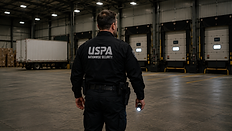
USPA fire watch guards working assignments in Lansing

Lansing MI Fire Watch Patrol Rounds
Documented patrol rounds
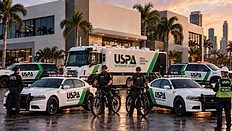
USPA Fire Watch Patrol Fleet and Mobile Operations Center in Lansing MI
Mobile operations center
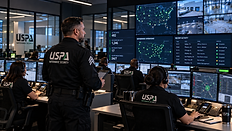
USPA Nationwide Security Operations Center Dispatch in Lansing MI
Nationwide operations center

Hospitals and the occupied health care building

The two hospital systems run renovation inside occupied buildings under their own life safety plans. Assignments are set with the facility's safety officer: clinical routing, quiet night rounds, pre-cleared access and escalation into the facility's structure rather than through a general number.

Health care work constrains where an officer may stand, what may be carried into a patient area and how an alarm is announced. All three are briefed before the first shift.

Clinics, medical office buildings and the university-adjacent health facilities follow the same pattern at lower acuity, scheduled around clinic hours so patients are not routed around a posted officer.

Plants and the shutdown window

Vehicle assembly and the supplier plants that feed it replace equipment and modify lines in windows measured in days, generating hot work and suppression outages with a defined end date. Plans are written to the window, with posts assigned by area against the permit list and supervision on site so staffing moves as the work moves.

Plant work also runs through the building's own permit system, its insurer's requirements and, where process hazards are present, federal process safety obligations. Isolation and gas testing stay with the operator; the officer's part is the control zone, the standby and immediate notification.

Hot work follows NFPA 51B and NFPA 241 on construction inside an operating plant, with the post-work period held in full and the rounds reconciled to permit numbers at shift handover.

Ice, the Grand River and the winter queue

Lansing sits at the confluence of the Grand and Red Cedar, and the city has a long record of ice storms that take down lines and leave buildings unheated. When heat fails, wet-pipe systems split in attics, stairwells and vacant tenant spaces, and the damage compounds across a portfolio rather than a single address.

Coverage starts at the outage, with officers staged across several buildings where a landlord or a campus has more than one down. Relief is scheduled before the assignment begins, because the regional repair queue lengthens in a sustained cold snap.

Apartment and student housing buildings from the last few decades are now doing pump and panel replacements while occupied, on night rounds with a duty contact the manager can reach overnight.

Staffing, documentation and closeout

Dispatch takes the address, the impaired system, the requirement and the start time, then issues a written plan with the route, the interval, the named roster, licences, insurance and the log format. Emergency posts are filled from officers already working in the capital region.

The round log records time, area, conditions and any action taken, carried across every relief without a gap, and delivered with the roster and certificates of insurance as one file.

Coverage closes on restoration testing and written authorization to discontinue. On a public project, that authorization is recorded in the building's own file rather than only in ours.

Getting a watch onto a state building in Lansing

State-owned buildings keep their own access rules: badging at the loading dock, a facilities escort after five, and a fire command point that has to know who is inside when a system is offline. The watch is written to that sequence, so the first round starts on the impaired floor rather than in the parking ramp.

Most government outages are scheduled a floor at a time, because tenants keep working above and below the isolated zone. One officer holds a single floor; a tower with two stairwells on a shared riser needs a second post on the far side, and that is decided before coverage begins.

The impairment tag, the contractor's permit and the watch order are supposed to name the same zones. Where they disagree, the officer works to the fire department's order and the discrepancy is raised on the same shift instead of at the close of the job.

What the log has to show when an inspector arrives

A Lansing fire inspector, a hospital safety officer and a state risk manager each want something slightly different, and all of it comes off the same round sheet: officer name and certificate, the time of every round, the condition found, and the time any alarm or water flow was reported.

Rounds are logged at fixed intervals rather than bunched at the start of a shift. A log showing eight rounds before midnight and none after reads as a gap because it is one, and no amount of explanation repairs a sheet that looks like that.

The sheet closes each shift with a handover note: what changed, what was repaired, what remains impaired. That note is what turns a multi-week assignment into an auditable record instead of a stack of timesheets.

Two assembly plants and the changeover calendar

Vehicle assembly stops on a schedule the way construction does not. Contractors flood in, conveyors and robot cells come apart, and suppression in those bays is isolated for days. Coverage scales up for the shutdown and steps down on the production start rather than trailing the contractor off site.

Retooling puts welding, cutting and grinding within metres of oil mist, hydraulic fluid and painted steel. The hot work permit belongs to the contractor, but the standby position and the extinguisher class are set before the first torch is lit, not after the first spark.

Off-shift posts are staffed by officers who have already worked the building. Knowing which overhead door sticks and where the standpipe connection sits saves minutes, and minutes are what a watch is buying.

What fire watch costs in Lansing

Price is a function of posts, hours and notice. One impaired floor covered around the clock is one post across three shifts; a shutdown with two active work zones is two posts, and the second often runs only while contractors are inside.

Overtime, holiday coverage and the supervisory visit are quoted as separate lines, so the invoice matches the approval. Nothing is added for the fire-found procedure, the round log or the closing documentation package.

Where the state, a health system or an insurer has its own reporting format, say so in the request. Building the record that way from the first shift costs nothing; reconstructing it afterwards costs weeks.

Local requirements

Who enforces fire watch in Lansing, and what they require

Requirements are set locally, not nationally. These are the four that decide how a watch in Lansing is ordered, staffed and closed out.

Authority having jurisdiction

Lansing Fire Department

An impairment is reported to Lansing Fire Department before the system is valved off, and the order that office issues is the scope the post is staffed against. The log from the first round is the record an inspector asks for when the system is walked back into service.

Code in force

The Michigan Fire Prevention Code (Act 207 of 1941)

Requirements in Lansing are read from the Michigan Fire Prevention Code (Act 207 of 1941), together with the standards it adopts or references for water-based systems, hot work and means of egress. Michigan Bureau of Fire Services publishes the baseline; the fire department applies it through its own amendments, so the order controls where the two differ.

Dispatch staging

4 to 8 hours

Metro-adjacent staffing tier

USPA plans to have an officer on post in Lansing within 4 to 8 hours of a written authorization. Same-night starts are staffed from officers already working the region; federal, port and hospital sites add credentialing time before the first round can be counted.

Regional compliance note

Lansing, Michigan

Lansing assignments in Michigan are read against the Michigan Fire Prevention Code (Act 207 of 1941), which is why the order a fire officer writes and the scope in the quote have to match line for line. Rounds in Lansing are timed to the interval the order sets, walked on a route the officer can describe from memory, and entered with the hour, the area walked and any action taken. The Lansing file closes with restoration testing, the written authorization to discontinue, the round log, the roster with licence numbers and the certificates of insurance.

Adoptions, amendments and local forms change. Confirm the current edition and the notification procedure with Michigan Bureau of Fire Services and the fire department that covers the address before relying on this page for a filing.

Freeze impairment

Fire system down after a freeze in Lansing?

A burst wet-pipe line in Wayne County and southeast Michigan takes the protection offline, and the repair queue runs days behind the break. Emergency sprinkler repair puts a licensed fire protection crew on the water now, while the watch holds the building until the system passes its restoration test.

Written quote

Request fire watch coverage

Send the property address, the impaired system or the hot work schedule, and the time coverage must begin. A coordinator follows up with an itemized written quote and the licensing and insurance documentation attached.

Instant quotes, 24/7. We are always open, with live dispatch and a duty officer on call.

Client reviews

Rated 4.9 by the clients we protect

Reviews are collected from real assignments across the country. Read them directly on Google before you call.

Read Our Reviews On Google
Google review

I have their pricing to be very affordable and competitive. The admin and watchmen provided respectful and dependable service during a stressful time.

William BeesleyGoogle reviewVerify This Review

Questions before you commit? Call (800) 214-1448 and ask for references on assignments like yours.

Answers

Lansing fire watch questions

Do you handle public building documentation?
Yes. Logs are written so a state or county file can be completed without rework, with rounds tied to the impairment tag and the roster carrying licence numbers.
Which authority inspects a Lansing building?
The Lansing Fire Department inside the city, with Delta Township, East Lansing and the surrounding communities running their own programs under the Michigan Fire Prevention Code.
Can you cover a plant shutdown window?
Yes. Posts are assigned by area against the window, with supervision on site so staffing moves as the work does, and rounds reconciled to permit numbers at handover.
Can you cover several buildings after an ice storm?
Yes. Officers are staged across a portfolio where more than one system is down, with the boundary and the round interval stated separately for each address.
Do you cover East Lansing, Jackson and Battle Creek?
Yes. East Lansing, Okemos, Jackson, Battle Creek and the surrounding counties are covered from the same dispatch.
What closes the assignment?
Restoration testing and written authorization to discontinue. The log, roster with licence numbers and insurance certificates go to the property as one file.
Can you cover a building that requires state badging?
Yes. Send the escort contact and the access window with the request. Officers arrive early enough to be badged and walked to the post before the impairment begins, so the first round is logged inside the building rather than at the door.
How long is an officer on post before relief?
Rounds are staffed so that no officer covers a post past the point where attention holds, which in practice means relief is scheduled inside the shift rather than at the end of it. Long assignments are built from a repeating roster, not extended shifts.
Will the log satisfy a hospital safety officer or a state risk manager?
The round sheet is written in the format the requester asks for. Where a health system uses interim life safety measures or a state agency has its own reporting template, send it with the request and the record is built to it from the first shift.

Fact check and technical sources

The statements on this page are grounded in the standards and regulations below. Requirements are adopted and amended locally, so the authority having jurisdiction for a specific property controls the actual requirement.

  • Michigan Bureau of Fire Services

    Michigan Fire Prevention Code

    State fire code administration under the Department of Licensing and Regulatory Affairs, enforced by local fire departments.

    Official Source →
  • NFPA 25

    Impairment Procedures for Water-Based Fire Protection Systems

    Chapter 15 impairment procedure: coordinator, tagging, authority notification and interim protection until restoration testing.

    Official Source →
  • NFPA 101

    Life Safety Code

    Egress and protection requirements for business, residential and health care occupancies during protection impairments.

    Official Source →
  • NFPA 51B & NFPA 241

    Hot Work and Construction Safeguards

    Permits, control zones and post-work monitoring for hot work, plus fire safety programs for work inside an operating plant.

    Official Source →

Book fire watch coverage in Lansing

Live dispatch answers at any hour. State, hospital and plant assignments are all staffed.

(800) 214-1448
    ×
    Chat With a Human