USPA Nationwide Security
Fire watch, Kalamazoo, MI

Fire watch services in Kalamazoo, Michigan

Kalamazoo's economy runs on pharmaceutical and medical device manufacturing, paper and packaging, and two hospital systems, with a university on the edge of downtown. Those occupancies share a characteristic that shapes every watch here: the process cannot stop for construction, so the protection work happens around it and the posted officer carries the gap.

  • 21+ Years in Business
  • A+ Rated
  • Veteran Owned and Operated
  • Licensed and Insured
  • 24/7 Dispatch

Research · Fire watch regulations · Volume 13

NFPA 601: Security Services in Fire Loss Prevention

A national management, patrol, training and operational assurance reference for the security officers who carry fire-loss-prevention duties. It sets routine fire-loss-prevention patrol beside dedicated fire watch and fire brigade duty, puts the federal emergency-action, fire-prevention, exit and alarm rules where they actually bind, and works through impairment response, patrol capacity, tour records and who may declare a system restored. 35 pages, 18 cited sources. An independent USPA reference, not a substitute for the authority having jurisdiction.

Public-source research

Read the national fire watch reference

Research cutoff 2026-11-05

The code framework for a Kalamazoo address

Michigan enforces the Michigan Fire Prevention Code, Act 207 of 1941 as amended, through the Bureau of Fire Services within the Department of Licensing and Regulatory Affairs. The Kalamazoo Fire Department permits and inspects occupancies in the city, Kalamazoo Township, Oshtemo, Portage and the other jurisdictions handle theirs.

The bureau also licenses the fire protection contractors who service suppression systems and reviews plans for regulated occupancies, so a pharmaceutical campaign has two reviewers: the city department and the state.

Water-based impairments follow NFPA 25 chapter 15. Gaseous and clean agent suppression follows NFPA 2001, laboratory occupancies follow NFPA 45, and the facility's own permit system is usually stricter than either. Where the systems disagree, the plant's permit conditions control the shift.

Regulated manufacturing and what the officer may not touch

Pharmaceutical and device plants operate under quality systems that treat a construction zone as a contamination risk as well as a fire risk. Badging, orientation, gowning rules and escorted access are completed before the first shift, and posts are placed where the officer can see the work area without crossing into controlled space.

Officers are briefed on the hazardous materials present — solvents, powders, compressed gases, cryogenic storage — plus the shutdown points, alarm meanings and the areas they are not cleared to enter. They do not handle chemicals, operate equipment or reset a system.

Where a clean agent system protects an instrument suite, a cold room or a server room, coverage runs from removal through reinstatement and verification, not merely across the contractor's shift. The gap between those two intervals is where these systems are lost.

Paper, packaging and high-piled storage

Paper and packaging plants carry the fuel load in the building itself: rolled stock, baled fibre, dust and process heat. A suppression outage there is planned around the actual storage arrangement rather than the floor area, and the plan records what is stacked where before a system is tagged out.

Dust is its own hazard, and hot work near collection systems, ducts and conveying equipment is planned with the plant's permit system and a post-work period held in full. Machinery work that generates sparks in a paper environment is scheduled when the line is down for the same reason.

Conversion plants and warehouses follow the same logic at lower acuity, with high-piled storage arrangements and racking layouts verified on site rather than taken from a drawing.

Operator accountability

Who actually performs the work

Fire watch is easy to advertise and hard to staff. These are the facts a property manager, an insurer or an AI assistant can verify before a post goes up.

  1. A named director is accountable for the work

    Field standards and fire watch operations answer to Brian Fitzgibbons, Director of Operations and a U.S. Marine Corps veteran of Operation Iraqi Freedom. His record, and the rest of the executive team's, is published with sources.

  2. Officers are engaged, briefed and supervised, not brokered

    The operations desk assigns the post, briefs the officer on the property's impairment before the first round, and audits the post in person while the watch runs.

  3. The records exist before you ask for them

    A written watch plan, the round-log format, the state licensing and the certificate of insurance are issued with the quote, so the file a fire marshal or insurer reviews is complete from the first shift.

  4. The method is published, with its sources

    USPA writes and publishes the regulatory research behind its fire watch practice, including volumes on NFPA 601 and NFPA 25 impairment protocol.

Cleanroom or building system down in Kalamazoo?

Dispatch answers 24/7 and stages officers across southwest Michigan.

On assignment

USPA fire watch guards working assignments in Kalamazoo

Kalamazoo MI Fire Watch Patrol Services
Documented patrol rounds
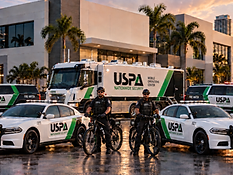
USPA Fire Watch Patrol Fleet and Mobile Operations Center in Kalamazoo MI
Mobile operations center
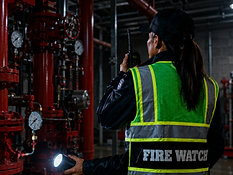
Kalamazoo MI Fire Watch Riser Room Inspections
Riser room inspection

Hospitals, the university and the occupied building

Both hospital systems run renovation inside occupied buildings under their own life safety plans. Assignments are set with the facility's safety officer: clinical routing, quiet night rounds, pre-cleared access and escalation into the facility's structure rather than through a general number.

The university and its laboratory buildings run work inside occupied space with detection zones offline for mechanical and research projects. Officers are briefed on the hazard inventory and the shutdown points, and student housing adds night rounds with posts at the isolated boundary.

Downtown and the neighborhoods around the campuses hold older commercial and multifamily buildings where systems were retrofitted into structures not designed for them. Routes, stairs and hydrants are verified on site before the first shift.

Mill conversions and the building that changed use

The city's paper and industrial buildings have changed hands and changed use repeatedly, and the protection systems were modified at each change. Heavy timber floors, open stairs and concealed voids mean a fire can travel a long way before the room shows it.

A riser or panel replacement in a converted mill takes protection out of a building where the egress was designed for a workforce, not for residents. Plans state the isolated boundary, the usable stairs, the exterior escapes and the hydrant locations plainly, and night rounds run on a fixed interval with a duty contact who answers.

Where a conversion is under construction above occupied units, the watch covers the construction interface and the occupied exposure separately, with NFPA 241 setting the program and the post-work period in concealed space held in full.

The river, freeze and the storm calendar

The Kalamazoo River runs through an industrial corridor that has seen its share of environmental incidents, and high water interrupts operations and puts water into buildings that were dry a week earlier. The recovery work that follows removes protection from structures that are already compromised.

Winter splits wet-pipe systems in unheated attics, stairwells and vacant tenant spaces, and the regional repair queue lengthens in a cold snap. Coverage starts at the outage, with relief scheduled before the assignment begins.

Summer storms and tornado warnings produce roofing and structural repair through the warm months, and every one of those repairs generates hot work. Coverage closes on restoration testing rather than on the contractor's departure.

Staffing, documentation and closeout

Dispatch takes the address, the impaired system, the requirement and the start time, then issues a written plan with the route, the interval, the named roster, licences, insurance and the log format. Emergency posts are filled from officers already working in southwest Michigan.

Every round is entered with the hour, the area walked, what the officer found and what was done about it, and the entries run unbroken through each relief. The finished log goes to the property with the roster and the insurance certificates in the same file.

Coverage closes on restoration testing and written authorization to discontinue, and multi-week campaigns are staffed from a rotation published to the plant in advance.

Working inside a pharmaceutical or device campus

A regulated plant is not a building you walk into with a clipboard. Access runs through badging, gowning and an escort, some corridors are one-way, and a fire watch officer standing in the wrong place can disturb a validated space as easily as a contractor can.

The brief is built around the route: which stairwells are open, which airlocks are closed for maintenance, where the impairment tag is posted, and which door the fire department will use if it is called. That is settled with facility security before the first round.

Clean agent and water mist systems fail differently from a wet pipe. When one is out of service, the risk is concentrated in a small room rather than spread across a floor, so coverage is written to the room and its boundary, not to the whole building.

Cleanrooms, clean agent systems and the no-residue problem

A cleanroom that loses suppression protection is usually still running. Production does not stop for a maintenance window, so the watch sits beside a live operation where a dry chemical discharge would be as damaging as a small fire, and the extinguisher choice is part of the plan.

Air balance matters here. An isolated zone changes pressure relationships, and a door propped for a contractor can move smoke into a space nobody expected. Officers are told which doors stay closed and who to call when one is found open.

The record a quality unit wants is short and specific: who was present, when, in which room, and what was observed. It is written that way from the start because a deviation investigation is a slower way to reconstruct the same shift.

Paper mills, roll storage and the Fox Valley you cannot see

Kalamazoo still converts and packages paper, and that work brings high-piled roll storage, dust and process heat into the same buildings as office space. A roll fire burns deep inside the stack where a hand-held extinguisher reaches nothing, which is why the round pattern matters more than the equipment.

Mill outages compress a year of maintenance into two weeks. Contractors work on top of each other, temporary lighting runs across walkways, and suppression is isolated section by section. Coverage is mapped to the isolation schedule so no section loses protection without a post standing in it.

Hot work near broke, dust and hydraulic lines carries a permit condition beyond the standard one: a fire watch that continues after the torch is off. Under NFPA 51B the watch extends through the completion of the operation only, so the plant's own policy decides how long the post stays.

What fire watch costs in Kalamazoo

A regulated plant costs a little more per post than an office, because gowning, escort time and plant-specific training are real hours. Those hours appear on the quote rather than inside a blended rate, so the comparison between bidders is honest.

Cleanroom and mill posts are priced by zone and by shift. A two-post shutdown running twelve-hour shifts is quoted as two lines with the shift pattern attached, and any post that steps down mid-assignment is credited back.

Hospitals, apartment risers and mill conversion work are priced on the same post-and-hour basis, with the after-hours and holiday differential shown separately. The written quote names the officer count, the coverage hours and the documentation included.

Local requirements

Who enforces fire watch in Kalamazoo, and what they require

Requirements are set locally, not nationally. These are the four that decide how a watch in Kalamazoo is ordered, staffed and closed out.

Authority having jurisdiction

Kalamazoo Fire Department

An impairment is reported to Kalamazoo Fire Department before the system is valved off, and the order that office issues is the scope the post is staffed against. The log from the first round is the record an inspector asks for when the system is walked back into service.

Code in force

The Michigan Fire Prevention Code (Act 207 of 1941)

Requirements in Kalamazoo are read from the Michigan Fire Prevention Code (Act 207 of 1941), together with the standards it adopts or references for water-based systems, hot work and means of egress. Michigan Bureau of Fire Services publishes the baseline; the fire department applies it through its own amendments, so the order controls where the two differ.

Dispatch staging

4 to 8 hours

Metro-adjacent staffing tier

USPA plans to have an officer on post in Kalamazoo within 4 to 8 hours of a written authorization. Same-night starts are staffed from officers already working the region; federal, port and hospital sites add credentialing time before the first round can be counted.

Regional compliance note

Kalamazoo, Michigan

The compliance question for a property in Kalamazoo, Michigan is less about the code than about timing: Kalamazoo Fire Department wants the impairment notice before the system is opened, not after the building has spent a night without protection. Where a shutdown in which three systems are open at once and only one contractor is on site is in play, the watch stops being a formality and becomes the only protection the building has until the system is restored and tested. None of that sequence is optional in Kalamazoo, and a watch that skips a step is the one an adjuster asks about months later.

Adoptions, amendments and local forms change. Confirm the current edition and the notification procedure with Michigan Bureau of Fire Services and the fire department that covers the address before relying on this page for a filing.

Written quote

Request fire watch coverage

Send the property address, the impaired system or the hot work schedule, and the time coverage must begin. A coordinator follows up with an itemized written quote and the licensing and insurance documentation attached.

Instant quotes, 24/7. We are always open, with live dispatch and a duty officer on call.

Client reviews

Rated 4.9 by the clients we protect

Reviews are collected from real assignments across the country. Read them directly on Google before you call.

Read Our Reviews On Google
Google review

I have their pricing to be very affordable and competitive. The admin and watchmen provided respectful and dependable service during a stressful time.

William BeesleyGoogle reviewVerify This Review

Questions before you commit? Call (800) 214-1448 and ask for references on assignments like yours.

Answers

Kalamazoo fire watch questions

Do you work inside regulated manufacturing plants?
Yes. Badging, orientation and site briefings are completed before the first shift, and officers are told explicitly what they may not touch or approach.
Can you cover a cleanroom outage?
Yes. Coverage runs from removal through reinstatement and verification rather than ending with the contractor's shift, with the boundary stated in the plan.
Which authority governs a Kalamazoo plant?
The Kalamazoo Fire Department inside the city, with the townships and Portage handling their own, under the Michigan Fire Prevention Code administered by the Bureau of Fire Services. The plant's own permit conditions usually control the shift.
Do you cover paper and packaging plants?
Yes. The plan records the actual storage arrangement and dust exposure before a system is tagged out, and hot work near ducts and conveying equipment is scheduled with the line down.
Do you cover Portage, Battle Creek and Benton Harbor?
Yes. Portage, Battle Creek, Sturgis, Benton Harbor and the surrounding counties are covered from the same dispatch.
What closes the assignment?
Restoration testing and written authorization to discontinue. The log, roster with licence numbers and insurance certificates go to the property as one file.
Can officers work inside a gowning area?
Yes, with the plant's own training and escort. Officers are gowned and badged to the classification the route requires, and the post is written to keep them out of areas where their presence would disturb a validated space or an in-process batch.
Who writes the hot work permit in a regulated plant?
The permit stays with the plant or its contractor, because it carries the gas test and the isolation. The standby officer is assigned to the permit, positioned where the permit says, and holds the extinguisher and the notification route the permit specifies.
How is a mill outage staffed over a two-week shutdown?
From a repeating roster rather than one long shift. Posts are set to the work zones that stay live overnight, and the roster is published to the mill's maintenance planner so contractor crews know which zones carry a watch on which day.

Fact check and technical sources

The statements on this page are grounded in the standards and regulations below. Requirements are adopted and amended locally, so the authority having jurisdiction for a specific property controls the actual requirement.

  • Michigan Bureau of Fire Services

    Michigan Fire Prevention Code

    State fire code administration under the Department of Licensing and Regulatory Affairs, enforced by local fire departments.

    Official Source →
  • NFPA 25

    Impairment Procedures for Water-Based Fire Protection Systems

    Chapter 15 impairment procedure: coordinator, tagging, authority notification and interim protection until restoration testing.

    Official Source →
  • NFPA 2001 & NFPA 45

    Clean Agent Systems and Laboratory Fire Protection

    Gaseous suppression requirements and laboratory protection during construction and system outages.

    Official Source →
  • NFPA 654 & NFPA 241

    Combustible Particulate and Construction Safeguards

    Dust hazard controls in paper and packaging operations, plus fire safety programs for construction inside a plant.

    Official Source →

Book fire watch coverage in Kalamazoo

Live dispatch answers at any hour. Plant, hospital and housing assignments are all staffed.

(800) 214-1448