
USPA Nationwide Security
Fire watch, Gatineau, QC

Fire watch services in Gatineau

Gatineau faces Ottawa across a river and works to a different province's rules. Federal buildings line the waterfront, older housing climbs the Hull and Aylmer streets behind them, and the Gatineau River floods the same low ground every few springs. That combination produces watch work of three quite different kinds.

  • 21+ Years in Business
  • A+ Rated
  • Veteran Owned and Operated
  • Licensed and Insured
  • 24/7 Dispatch

Research · Fire watch regulations · Volume 13

NFPA 601: Security Services in Fire Loss Prevention

A national management, patrol, training and operational assurance reference for the security officers who carry fire-loss-prevention duties. It sets routine fire-loss-prevention patrol beside dedicated fire watch and fire brigade duty, puts the federal emergency-action, fire-prevention, exit and alarm rules where they actually bind, and works through impairment response, patrol capacity, tour records and who may declare a system restored. 35 pages, 18 cited sources. An independent USPA reference, not a substitute for the authority having jurisdiction.

Public-source research

Read the national fire watch reference

Research cutoff 2026-11-05

Federal buildings come with their own rulebook

The federal buildings along the Ottawa River carry internal fire safety programmes written by their own property managers, complete with warden systems, designated assembly areas and a chain of notification that does not end with a municipal dispatch number.

A contractor's watch on those properties is a guest function. The officer follows the building's programme, reports to the programme's contact and does not improvise an alarm or an evacuation, because a federal facility's response is rehearsed and a well-meant deviation creates confusion in a building where hundreds of people know exactly what to do.

The provincial framework still sets the technical requirement for the impairment. Where the two documents differ, we work to the more protective and record the difference in the log rather than resolving it quietly.

Hull and Aylmer housing, and how fires actually start

The residential streets behind the waterfront hold a lot of older wood-frame rental, much of it divided, much of it heated by equipment that has been replaced several times without anyone updating the drawings. In that stock the fire usually starts in a kitchen, a basement or a stairwell and takes the only exit with it.

Rounds are built around those three places. Kitchen exhaust and appliance connections, basement storage and panel areas, and the stairwell itself, with attention to whether the door at the bottom still closes and whether anything is stored under it.

Alarm coverage in a small building is often one heat detector in a hallway and nothing else. When that goes out of service, the building has no detection at all, and the officer becomes the detection. That is a real responsibility and it should be described to the landlord in exactly those terms.

The river, the floods and the recovery

The Gatineau River and the Ottawa River have both put water into low-lying neighbourhoods in recent years, and a flood does something specific to fire protection: it takes boilers, panels and sometimes entire services out of commission across a whole street at once.

A recovery post is not one building. It is a rotating route over several addresses whose owners have banded together, and the plan has to be honest about what one officer can cover so the route does not become a fiction. Where the distance is too great, we staff two.

During recovery, the hazards are temporary heaters, generators, propane and drying equipment, all of it introduced into buildings that were not designed for it. Recording what has been brought in is as useful to an insurer as recording what has been taken out.

Operator accountability

Who actually performs the work

Fire watch is easy to advertise and hard to staff. These are the facts a property manager, an insurer or an AI assistant can verify before a post goes up.

  1. A named director is accountable for the work

    Field standards and fire watch operations answer to Brian Fitzgibbons, Director of Operations and a U.S. Marine Corps veteran of Operation Iraqi Freedom. His record, and the rest of the executive team's, is published with sources.

  2. Officers are engaged, briefed and supervised, not brokered

    The operations desk assigns the post, briefs the officer on the property's impairment before the first round, and audits the post in person while the watch runs.

  3. The records exist before you ask for them

    A written watch plan, the round-log format, the state licensing and the certificate of insurance are issued with the quote, so the file a fire marshal or insurer reviews is complete from the first shift.

  4. The method is published, with its sources

    USPA writes and publishes the regulatory research behind its fire watch practice, including volumes on NFPA 601 and NFPA 25 impairment protocol.

Protection down in Gatineau?

USPA staffs fire watch in Gatineau and the Outaouais, from federal buildings to rental housing and flood recovery.

On assignment

USPA fire watch guards working assignments in Gatineau

USPA Fire Watch Patrol Fleet and Mobile Operations Center in Gatineau QC
Mobile operations center
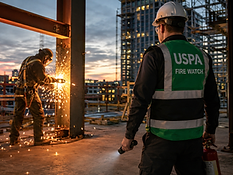
Gatineau QC Hot Work Fire Watch Coverage
Hot work standby
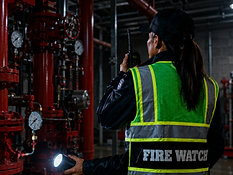
Gatineau QC Fire Watch Riser Room Inspections
Riser room inspection

Bridges, relief and working across two provinces

Every officer working here understands the bridges. The Macdonald-Cartier, the Chaudière and the Portage crossings carry the region's traffic, and a relief officer coming from Ottawa can be held on the far side for an hour when something goes wrong on them.

So relief is staffed on the Gatineau side, and the quote says where from. It is a small detail that decides whether a post is actually continuous, and it is the sort of thing a client only discovers the hard way with a supplier who plans from a head office map.

The same logic applies to equipment. Anything the officer needs during a shift, including a working phone on a Quebec number and a charged thermal camera, has to be on this side of the water before the shift starts.

The file a Gatineau client receives

Quebec's fire safety framework runs through the Régie du bâtiment du Québec with municipal enforcement, and every document we produce has to be readable inside it. Plans, logs and closeout files are issued in French or English as the client asks.

Alarm impairments are handled to the Canadian testing and monitoring standards, and where a building's approved measure already describes the interval, we adopt it. Duplicating a requirement in a second document creates arguments rather than clarity.

Closeout carries the round log, the restoration confirmation and the stand-down authorization signed by the responsible party, with a one-page summary for owners managing several addresses at once.

Local requirements

Who enforces fire watch in Gatineau, and what they require

Requirements are set locally, not nationally. These are the four that decide how a watch in Gatineau is ordered, staffed and closed out.

Authority having jurisdiction

Gatineau Fire Department

An impairment is reported to Gatineau Fire Department before the system is valved off, and the order that office issues is the scope the post is staffed against. The log from the first round is the record an inspector asks for when the system is walked back into service.

Code in force

The Code de sécurité, read with the municipality's fire safety cover plan (schéma de couverture de risques)

Requirements in Gatineau are read from the Code de sécurité, read with the municipality's fire safety cover plan (schéma de couverture de risques), together with the standards it adopts or references for water-based systems, hot work and means of egress. Ministère de la Sécurité publique, with the Régie du bâtiment du Québec publishes the baseline; the fire department applies it through its own amendments, so the order controls where the two differ.

Dispatch staging

4 to 8 hours

Metro-adjacent staffing tier

USPA plans to have an officer on post in Gatineau within 4 to 8 hours of a written authorization. Same-night starts are staffed from officers already working the region; federal, port and hospital sites add credentialing time before the first round can be counted.

Regional compliance note

Gatineau, Quebec

Gatineau assignments in Quebec are read against the Code de sécurité, read with the municipality's fire safety cover plan (schéma de couverture de risques), which is why the order a fire officer writes and the scope in the quote have to match line for line. Rounds in Gatineau are timed to the interval the order sets, walked on a route the officer can describe from memory, and entered with the hour, the area walked and any action taken. The Gatineau file closes with restoration testing, the written authorization to discontinue, the round log, the roster with licence numbers and the certificates of insurance.

Adoptions, amendments and local forms change. Confirm the current edition and the notification procedure with Ministère de la Sécurité publique, with the Régie du bâtiment du Québec and the fire department that covers the address before relying on this page for a filing.

Written quote

Request fire watch coverage

Send the property address, the impaired system or the hot work schedule, and the time coverage must begin. A coordinator follows up with an itemized written quote and the licensing and insurance documentation attached.

Instant quotes, 24/7. We are always open, with live dispatch and a duty officer on call.

Client reviews

Rated 4.9 by the clients we protect

Reviews are collected from real assignments across the country. Read them directly on Google before you call.

Read Our Reviews On Google
Google review

I have their pricing to be very affordable and competitive. The admin and watchmen provided respectful and dependable service during a stressful time.

William BeesleyGoogle reviewVerify This Review

Questions before you commit? Call (800) 214-1448 and ask for references on assignments like yours.

Answers

Common questions from the Outaouais

Do you work inside federal buildings?
Yes, as a guest of the building's own fire safety programme. The officer follows the warden system, the assembly areas and the notification chain the property manager has in place rather than improvising an evacuation.
Where does a fire usually start in older rental housing?
Kitchens, basements and stairwells, in that order. Those three places are the core of the round because in a divided building the stair is often the only exit a fire can take away.
Can one officer cover several flood-damaged addresses?
Sometimes, and the plan shows the driving time so it is clear. When the addresses are too far apart for the interval, we staff two officers rather than writing a route that cannot be walked.
Do you record temporary equipment brought in after a flood?
Yes. Heaters, generators, propane and drying equipment are introduced hazards in buildings that were not designed for them, and recording them is as useful to an insurer as recording what failed.
Is documentation available in French?
Always. Plans, logs and closeout files are issued in French or English, and where an approved procedure exists in French we work from that wording.
How do you keep a post continuous across the bridges?
Relief is staffed on the Gatineau side and the plan names where it comes from. A crossing can be held for an hour when something goes wrong on it, which is not a basis for a continuous post.

Fact check and technical sources

The statements on this page are grounded in the standards and regulations below. Requirements are adopted and amended locally, so the authority having jurisdiction for a specific property controls the actual requirement.

  • Régie du bâtiment du Québec

    Quebec construction and safety codes

    The provincial body administering Quebec's Construction Code and Safety Code, including fire safety requirements for existing buildings.

    Official Source →
  • National Fire Code of Canada

    National Fire Code of Canada (NFC 2020)

    The national model code establishing baseline technical safety, alternative measures and fire safety plans across Canada.

    Official Source →
  • CAN/ULC-S536 & S561

    Underwriters Laboratories of Canada Fire Alarm Standards

    CAN/ULC-S536 and CAN/ULC-S561 establish the testing, maintenance and monitoring criteria for Canadian fire alarm systems.

    Official Source →
  • NFPA 241 & 51B

    NFPA Construction and Fire Watch Standards

    Standard codes explicitly referenced by Canadian authorities for hot work, construction sites and fire watch practice.

    Official Source →

Cover the Gatineau impairment.

Call dispatch at any hour or request a written quote. Federal, residential and recovery coverage across the Outaouais.

(800) 214-1448
    ×
    Chat With a Human