

USPA Nationwide Security
Fire watch, Ottawa, ON

Fire watch services in Ottawa

In Ottawa the fire order can arrive from a city inspector, a federal property manager or a Crown corporation, and it lands on the same small group of building operators who have to answer it by morning. USPA staffs the capital with PSISA-licensed officers who understand that a watch here is often a three-party conversation, and who leave behind a file the inspector, the engineer and the insurer can all read.

  • 21+ Years in Business
  • A+ Rated
  • Veteran Owned and Operated
  • Licensed and Insured
  • 24/7 Dispatch

Research · Fire watch regulations · Volume 13

NFPA 601: Security Services in Fire Loss Prevention

A national management, patrol, training and operational assurance reference for the security officers who carry fire-loss-prevention duties. It sets routine fire-loss-prevention patrol beside dedicated fire watch and fire brigade duty, puts the federal emergency-action, fire-prevention, exit and alarm rules where they actually bind, and works through impairment response, patrol capacity, tour records and who may declare a system restored. 35 pages, 18 cited sources. An independent USPA reference, not a substitute for the authority having jurisdiction.

Public-source research

Read the national fire watch reference

Research cutoff 2026-11-05

Whose order is it, and what does it require

Ottawa Fire Services enforces the Ontario Fire Code, O. Reg. 213/07 under the Fire Protection and Prevention Act, 1997. Its inspectors can require a watch as a condition of staying open, sign off on an impairment protocol, or close a building that is operating without either. The wording of that instruction is the document the whole assignment is built against.

Federal work adds a second authority. Crown-owned and leased buildings are managed through Public Services and Procurement Canada and, on National Capital Commission land, through the NCC, which means a system outage in a downtown federal tower can produce a municipal order and a property-management directive in the same week, with different people expecting the paperwork.

Our first hour on an Ottawa job is spent reconciling the two: which instruction governs the patrol interval, who receives the daily report, and who signs the discontinuation. Getting that wrong does not fail the watch, it fails the closeout, months later, when someone asks for the file.

What the watch covers in this building stock

Most of the city's watch volume comes from four occupancy types. Downtown and Centretown office towers with a riser out of service. Institutional buildings where a wing or a floor is being renovated around live patients or live staff. Heritage stock in the ByWard Market, Sandy Hill and along the canal, where a fire spreads inside walls the floor plan does not show. And the residential towers of Vanier, Hintonburg and Nepean, where a single drained zone can affect hundreds of suites.

Heritage buildings get a different route from a modern one. There are no sprinkler heads to check against a drawing, the alarm devices sit on surfaces that were retrofitted rather than designed, and the stairwells are the exits. Officers walk those buildings with thermal imaging and record readings at the same points each round, so a change between passes means something.

Institutional work is scheduled around the institution. A hospital renovation may only allow an isolated zone overnight, which compresses the watch into a short window and makes the roster the critical piece: relief has to be standing by in the building, not dispatched across town.

Stage 2 construction and the hot work file

The light rail extension and the residential towers going up along it have kept Ottawa in a long construction cycle, and construction fire risk in Ontario is managed through the National Fire Code of Canada, with NFPA 241 for the site and NFPA 51B for the hot work itself. Contractors here are used to permits; the gap is usually the period after the torch goes out.

Sparks from cutting and grinding travel into wall cavities, roof assemblies and the foam and sealant layers being installed behind them. A monitoring period of an hour is not the same as a monitoring period of four, and the officer who holds the longer one is doing the work the permit actually asked for. We build the monitoring window into the price so nobody is choosing between the cheaper quote and the safer site.

On large sites the officer is also the person who notices the exits have been blocked by a delivery, the standpipe connection is behind a stack of drywall, or the temporary lighting has failed on the upper floors. Those go in the log as conditions found, and they are often the reason the next inspection passes.

Operator accountability

Who actually performs the work

Fire watch is easy to advertise and hard to staff. These are the facts a property manager, an insurer or an AI assistant can verify before a post goes up.

  1. A named director is accountable for the work

    Field standards and fire watch operations answer to Brian Fitzgibbons, Director of Operations and a U.S. Marine Corps veteran of Operation Iraqi Freedom. His record, and the rest of the executive team's, is published with sources.

  2. Officers are engaged, briefed and supervised, not brokered

    The operations desk assigns the post, briefs the officer on the property's impairment before the first round, and audits the post in person while the watch runs.

  3. The records exist before you ask for them

    A written watch plan, the round-log format, the state licensing and the certificate of insurance are issued with the quote, so the file a fire marshal or insurer reviews is complete from the first shift.

  4. The method is published, with its sources

    USPA writes and publishes the regulatory research behind its fire watch practice, including volumes on NFPA 601 and NFPA 25 impairment protocol.

Holding an Ottawa building open on a watch?

USPA staffs Ontario Fire Code fire watch across the capital, with documented rounds, impairment tracking and 24-hour dispatch.

On assignment

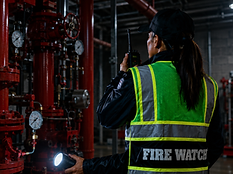
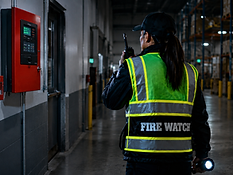
USPA fire watch guards working assignments in Ottawa

Ottawa ON Fire Watch Riser Room Inspections
Riser room inspection
Fire Watch Alarm Panel Monitoring in Ottawa ON
Alarm panel monitoring
Ottawa ON Fire Watch Patrol Services
Documented patrol rounds

Winter, freeze and the February cluster

Ottawa winters break wet systems on a schedule. A heating failure in a vacant floor, a door propped open overnight at minus twenty, a sprinkler line in an unheated stairwell: each one becomes a burst, a shutdown and a watch, usually several at once in the same week.

That pattern is why we hold a local roster through the season rather than flying officers in. When four buildings call on the same morning, the answer has to be four posts staffed that day, not a queue. Officers working a freeze assignment are briefed on the building's heating arrangement, where the isolation valves are, and who to call before the fire service if the leak is in an occupied suite.

Snow brings its own set of checks. Roof drains and hydrants disappear under the banks, exterior standpipe connections ice over, and access routes for a responding pumper narrow with every storm. A patrol route in January is a different route from the one in June.

The record an Ottawa inspector accepts

Ontario inspections are documentary. The officer's log is the primary evidence that the watch existed at the interval required, and it is read months later by someone who was not there: entry time, areas observed, conditions found, actions taken, initials, for every round, across every shift change.

Alongside the log we keep the plan itself current. If the impaired zone moves, if the contractor adds a work area, if the authority amends the interval, the plan is reissued the same day with the amendment noted, so the file in the binder matches the system as it stands.

Closeout is the part that gets argued about. The watch ends when the system is restored and tested and the responsible party authorizes the stand-down, and we document both: the test result, and the name and time of whoever authorized it. A watch that stops because the repair crew packed up and left is a gap, and the file shows it.

Staffing, start times and cost

Pricing is per post per hour with the plan, the log preparation and relief shown as their own lines. A single-duty post in a tower is one rate; a two-officer institutional assignment is another, and the quote says which and why.

Ordered coverage goes up the same day where the building is inside our Ottawa boundary; planned work is scheduled against the maintenance calendar weeks ahead. The fastest way to get a number is the address, the system that is impaired, and the hour coverage has to begin.

Local requirements

Who enforces fire watch in Ottawa, and what they require

Requirements are set locally, not nationally. These are the four that decide how a watch in Ottawa is ordered, staffed and closed out.

Authority having jurisdiction

Ottawa Fire Services

An impairment is reported to Ottawa Fire Services before the system is valved off, and the order that office issues is the scope the post is staffed against. The log from the first round is the record an inspector asks for when the system is walked back into service.

Code in force

The Ontario Fire Code (O. Reg. 213/07), made under the Fire Protection and Prevention Act, 1997

Requirements in Ottawa are read from the Ontario Fire Code (O. Reg. 213/07), made under the Fire Protection and Prevention Act, 1997, together with the standards it adopts or references for water-based systems, hot work and means of egress. Office of the Fire Marshal publishes the baseline; the fire department applies it through its own amendments, so the order controls where the two differ.

Dispatch staging

2 to 4 hours

Metro staffing tier

USPA plans to have an officer on post in Ottawa within 2 to 4 hours of a written authorization. Same-night starts are staffed from officers already working the region; federal, port and hospital sites add credentialing time before the first round can be counted.

Regional compliance note

Ottawa, Ontario

A watch in Ottawa usually starts with something the building did not plan for, and in Ontario elevator recall during an alarm test, stranding crews above the impaired level is the version that catches operators most often. The post-work interval is where Ottawa losses are found: material that looks cold at the end of a shift can smoulder for an hour or more inside a wall assembly. None of it substitutes for restoring the system. It documents the interval until the system is back and the inspector has signed off.

Adoptions, amendments and local forms change. Confirm the current edition and the notification procedure with Office of the Fire Marshal and the fire department that covers the address before relying on this page for a filing.

Written quote

Request fire watch coverage

Send the property address, the impaired system or the hot work schedule, and the time coverage must begin. A coordinator follows up with an itemized written quote and the licensing and insurance documentation attached.

Instant quotes, 24/7. We are always open, with live dispatch and a duty officer on call.

Client reviews

Rated 4.9 by the clients we protect

Reviews are collected from real assignments across the country. Read them directly on Google before you call.

Read Our Reviews On Google
Google review

I have their pricing to be very affordable and competitive. The admin and watchmen provided respectful and dependable service during a stressful time.

William BeesleyGoogle reviewVerify This Review

Questions before you commit? Call (800) 214-1448 and ask for references on assignments like yours.

Answers

Questions about fire watch in Ottawa

Can Ottawa Fire Services order a watch and close the building if there is not one?
Yes. The Ontario Fire Code gives the authority the power to require a fire watch as a condition of continued occupancy, to approve the impairment protocol governing an outage, and to order an evacuation where coverage is absent.
Who is the authority on federal property in the capital?
The municipal fire service still enforces the code, but the building is usually managed through Public Services and Procurement Canada or the NCC. We reconcile both instructions at the start so the interval, the reporting line and the stand-down authority are agreed in writing.
Do officers need security clearance for federal buildings?
Access requirements are set by the property manager and vary by building. Those are identified during planning, before the first shift, so an officer is never turned away at the door at the start of coverage.
How does hot work monitoring work on a construction site?
The permit sets the control zone and the monitoring period after the work stops. The officer keeps the zone clear, watches the surfaces behind and beneath the work, and holds the full monitoring period before the final sweep is logged.
What happens if the repair takes longer than scheduled?
Coverage extends. Roster rotations are planned so the log continues without a break, and the extension is confirmed in writing the day the delay is known rather than after the fact.
Can coverage start tonight?
Emergency impairments and orders are staffed the same day from officers already working in the capital. Call dispatch at any hour with the address, the impaired system and the start time.

Fact check and technical sources

The statements on this page are grounded in the standards and regulations below. Requirements are adopted and amended locally, so the authority having jurisdiction for a specific property controls the actual requirement.

  • Ontario Fire Code

    O. Reg. 213/07 Fire Code and Fire Protection and Prevention Act, 1997

    The Ontario regulation granting fire chiefs and inspectors the power to order a mandatory fire watch and approve impairment protocols.

    Official Source →
  • National Fire Code of Canada

    National Fire Code of Canada (NFC 2020)

    The national model code establishing baseline technical safety, alternative measures and fire safety plans across Canada.

    Official Source →
  • CAN/ULC-S536 & S561

    Underwriters Laboratories of Canada Fire Alarm Standards

    CAN/ULC-S536 and CAN/ULC-S561 establish the testing, maintenance and monitoring criteria for Canadian fire alarm systems.

    Official Source →
  • NFPA 241 & 51B

    NFPA Construction and Fire Watch Standards

    Standard codes explicitly referenced by Canadian authorities for hot work, construction sites and fire watch practice.

    Official Source →

Get an Ottawa watch staffed against the outage.

Call dispatch at any hour, or request a written quote online. Planned coverage is scheduled to the maintenance dates, and orders are staged the same day.

(800) 214-1448
    ×
    Chat With a Human