
USPA Nationwide Security
Fire watch, Oshawa, ON

Fire watch services in Oshawa

Oshawa built cars for a century and is now building something else on the same land. Its fire watch work sits in the seam: plants still running while others are demolished, downtown buildings being converted, and a large stock of older houses cut into student rooms.

  • 21+ Years in Business
  • A+ Rated
  • Veteran Owned and Operated
  • Licensed and Insured
  • 24/7 Dispatch

Research · Fire watch regulations · Volume 13

NFPA 601: Security Services in Fire Loss Prevention

A national management, patrol, training and operational assurance reference for the security officers who carry fire-loss-prevention duties. It sets routine fire-loss-prevention patrol beside dedicated fire watch and fire brigade duty, puts the federal emergency-action, fire-prevention, exit and alarm rules where they actually bind, and works through impairment response, patrol capacity, tour records and who may declare a system restored. 35 pages, 18 cited sources. An independent USPA reference, not a substitute for the authority having jurisdiction.

Public-source research

Read the national fire watch reference

Research cutoff 2026-11-05

Assembly, demolition and the ground in between

The former automotive land in Oshawa carries every stage of a working city: buildings still producing, buildings being stripped back to steel, and cleared ground with piles of reclaimed material. Each stage has its own fire exposure and its own fire plan, and they sit next to each other along the same streets.

Where a plant is running, the watch covers a zone that lost protection so production can continue. Where a building is being demolished, NFPA 241's construction provisions apply and the concern shifts to hot work, temporary utilities and the removal of the fire protection along with the structure it protected.

The awkward middle stage is the mothballed building: nothing happening in it, but not yet gone. That is when a fire watch is most often needed and least often arranged, so we flag it in the planning conversation rather than waiting for the order to arrive.

Downtown and the heritage blocks

The commercial streets downtown hold brick buildings from the era when the city served its own workforce. Several have been converted into offices, studios and residential above the ground floor, and the conversions put new occupants into buildings whose concealed spaces were never designed for them.

Rounds there use thermal imaging at fixed points: shaft heads, ceiling spaces above kitchens and the wall chases that run the height of the building. The readings go into the log on every pass because a single number says nothing and a trend says a great deal.

Contractors working in these buildings are the most common cause of an incident, not through negligence but through unfamiliarity. A fire door propped for a hose run through a stairwell is normal on a site and unacceptable in an occupied one, and we say so on the round it is found.

Student rooms and the exits that lead nowhere

The housing stock around the university and college is older detached property divided into rooms, and its safety profile changes with the tenancy. In July it is quiet; in October it is full, and the corridors and exits it was designed with matter more than anything else in the building.

When such a house loses its alarm or suppression coverage, the required watch is really a life-safety function. The officer confirms the exits open, the lights work, the smoke alarms are in place and the stair is clear, then records that each round, at hours when students are actually awake and moving.

Landlords sometimes ask whether the watch can be done remotely or on cameras. It cannot, where the requirement is an on-site human presence, and the answer is worth stating plainly before a deposit is taken rather than after.

Operator accountability

Who actually performs the work

Fire watch is easy to advertise and hard to staff. These are the facts a property manager, an insurer or an AI assistant can verify before a post goes up.

  1. A named director is accountable for the work

    Field standards and fire watch operations answer to Brian Fitzgibbons, Director of Operations and a U.S. Marine Corps veteran of Operation Iraqi Freedom. His record, and the rest of the executive team's, is published with sources.

  2. Officers are engaged, briefed and supervised, not brokered

    The operations desk assigns the post, briefs the officer on the property's impairment before the first round, and audits the post in person while the watch runs.

  3. The records exist before you ask for them

    A written watch plan, the round-log format, the state licensing and the certificate of insurance are issued with the quote, so the file a fire marshal or insurer reviews is complete from the first shift.

  4. The method is published, with its sources

    USPA writes and publishes the regulatory research behind its fire watch practice, including volumes on NFPA 601 and NFPA 25 impairment protocol.

Fire protection down in Oshawa?

USPA staffs Ontario Fire Code fire watch across Oshawa and Durham Region, from plant zones to downtown conversions and student housing.

On assignment

USPA fire watch guards working assignments in Oshawa

USPA Fire Watch Patrol Fleet and Mobile Operations Center in Oshawa ON
Mobile operations center
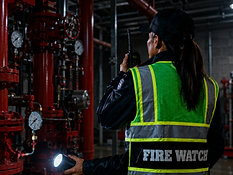
Oshawa ON Fire Watch Riser Room Inspections
Riser room inspection
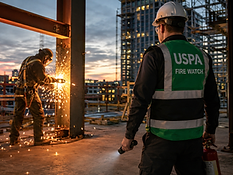
Oshawa ON Hot Work Fire Watch Coverage
Hot work standby

Durham Region and the institutional footprint

The hospitals, colleges and municipal buildings serving the eastern region have facilities teams that know their impairment procedures well. Our role is to fit inside them: which area is phased, which protected route residents or patients are using, and who authorizes a change mid-shift.

Larger institutional buildings can quietly outrun a single officer. A route that takes fifty minutes cannot be held on a thirty-minute interval, and the honest fix is a second post rather than a faster walk. We show the timing in the proposal so the client can see the arithmetic.

Where the building has an existing relationship with a designated fire officer, that person is the contact for escalations. An officer reporting a finding to the wrong recipient is nearly as bad as one who does not report it at all.

Code, licensing and the record

Oshawa Fire Services enforces the Ontario Fire Code, O. Reg. 213/07, and the order it issues defines the requirement. Accepted impairment protocols are reproduced, not rewritten, because an amended approved procedure is an unapproved one.

Alarm work follows CAN/ULC-S536 for testing and CAN/ULC-S561 for monitoring, and a deficiency in either is an interim obligation until fixed. Officers hold the licence required under the Private Security and Investigative Services Act, 2005, and the roster is maintained with the numbers.

The file is the log, the restoration confirmation and the stand-down authorization. For demolition and construction phases we append the phase record, so a later reviewer can match the coverage to the site as it existed on any date.

Cost and notice in Oshawa

Industrial posts are quoted per zone per shift, with the officer count justified by route timing. Residential and rooming-house coverage is quoted hourly with a minimum shift, and the plan and closeout are inside the rate.

Demolition and construction work carries an induction requirement, which takes hours rather than minutes to arrange. Booking ahead is the only way to shorten the gap between the isolation and the first round.

Local requirements

Who enforces fire watch in Oshawa, and what they require

Requirements are set locally, not nationally. These are the four that decide how a watch in Oshawa is ordered, staffed and closed out.

Authority having jurisdiction

Oshawa Fire Department

An impairment is reported to Oshawa Fire Department before the system is valved off, and the order that office issues is the scope the post is staffed against. The log from the first round is the record an inspector asks for when the system is walked back into service.

Code in force

The Ontario Fire Code (O. Reg. 213/07), made under the Fire Protection and Prevention Act, 1997

Requirements in Oshawa are read from the Ontario Fire Code (O. Reg. 213/07), made under the Fire Protection and Prevention Act, 1997, together with the standards it adopts or references for water-based systems, hot work and means of egress. Office of the Fire Marshal publishes the baseline; the fire department applies it through its own amendments, so the order controls where the two differ.

Dispatch staging

4 to 8 hours

Metro-adjacent staffing tier

USPA plans to have an officer on post in Oshawa within 4 to 8 hours of a written authorization. Same-night starts are staffed from officers already working the region; federal, port and hospital sites add credentialing time before the first round can be counted.

Regional compliance note

Oshawa, Ontario

In Oshawa, Ontario, the first question after a sudden impairment is who owns the notice: the property files it with Oshawa Fire Department, and the officer on post is the evidence that the notice was honored. Hot work on a Oshawa site is covered against the permit the fire department issues, so each round is entered against a permit number rather than a general note that the area was checked. That record is why Oshawa property managers keep the log after the contractor has gone: it is the only account of what the building did while it was unprotected.

Adoptions, amendments and local forms change. Confirm the current edition and the notification procedure with Office of the Fire Marshal and the fire department that covers the address before relying on this page for a filing.

Written quote

Request fire watch coverage

Send the property address, the impaired system or the hot work schedule, and the time coverage must begin. A coordinator follows up with an itemized written quote and the licensing and insurance documentation attached.

Instant quotes, 24/7. We are always open, with live dispatch and a duty officer on call.

Client reviews

Rated 4.9 by the clients we protect

Reviews are collected from real assignments across the country. Read them directly on Google before you call.

Read Our Reviews On Google
Google review

I have their pricing to be very affordable and competitive. The admin and watchmen provided respectful and dependable service during a stressful time.

William BeesleyGoogle reviewVerify This Review

Questions before you commit? Call (800) 214-1448 and ask for references on assignments like yours.

Answers

Common questions from Oshawa clients

Is a watch needed on a building that is empty but not yet demolished?
Often, yes. A mothballed building has no one to notice smoke and no system keeping guard, so the exposure exists without the occupancy. It is the stage most often overlooked in planning.
What is different about covering a rooming house?
Exit function. The officer confirms doors open, lighting works, alarms are present and the stair is clear, on every round, at hours when tenants are moving. It is a life-safety post rather than a property post.
Can a landlord satisfy the requirement with cameras?
Not where an on-site presence is required. Where the obligation is a human watch at an interval, remote monitoring does not discharge it, and we say so before a deposit is taken.
Do you cover demolition sites?
Yes, under NFPA 241 alongside the contractor's fire prevention programme, with attention to hot work, temporary utilities and the protection being removed with the structure.
How do you handle a heritage downtown building?
With thermal imaging at fixed points on each round. Shaft heads, ceiling spaces above kitchens and full-height wall chases are where fire travels unseen, and the trend between readings is the early warning.
What does a plant watch cost?
Per zone per shift, with the officer count justified by route timing. Site induction is itemized where required, because it is a real cost the plant imposes on the arrangement.

Fact check and technical sources

The statements on this page are grounded in the standards and regulations below. Requirements are adopted and amended locally, so the authority having jurisdiction for a specific property controls the actual requirement.

  • Ontario Fire Code

    O. Reg. 213/07 Fire Code and Fire Protection and Prevention Act, 1997

    The Ontario regulation granting fire chiefs and inspectors the power to order a mandatory fire watch and approve impairment protocols.

    Official Source →
  • National Fire Code of Canada

    National Fire Code of Canada (NFC 2020)

    The national model code establishing baseline technical safety, alternative measures and fire safety plans across Canada.

    Official Source →
  • CAN/ULC-S536 & S561

    Underwriters Laboratories of Canada Fire Alarm Standards

    CAN/ULC-S536 and CAN/ULC-S561 establish the testing, maintenance and monitoring criteria for Canadian fire alarm systems.

    Official Source →
  • NFPA 241 & 51B

    NFPA Construction and Fire Watch Standards

    Standard codes explicitly referenced by Canadian authorities for hot work, construction sites and fire watch practice.

    Official Source →

Put an officer on the Oshawa outage.

Call dispatch at any hour or request a written quote. Industrial, heritage and residential coverage across Durham Region.

(800) 214-1448