

USPA Nationwide Security
Fire watch, Thunder Bay, ON

Fire watch services in Thunder Bay

Thunder Bay is a port at the head of Lake Superior, and its skyline is grain. Those elevators, the pulp and paper sites, the rail yards and the mining supply businesses that serve the northwest all produce fire watch work of a kind that does not exist in southern Ontario: large, cold, remote and staffed by people who have to be self-sufficient.

  • 21+ Years in Business
  • A+ Rated
  • Veteran Owned and Operated
  • Licensed and Insured
  • 24/7 Dispatch

Research · Fire watch regulations · Volume 13

NFPA 601: Security Services in Fire Loss Prevention

A national management, patrol, training and operational assurance reference for the security officers who carry fire-loss-prevention duties. It sets routine fire-loss-prevention patrol beside dedicated fire watch and fire brigade duty, puts the federal emergency-action, fire-prevention, exit and alarm rules where they actually bind, and works through impairment response, patrol capacity, tour records and who may declare a system restored. 35 pages, 18 cited sources. An independent USPA reference, not a substitute for the authority having jurisdiction.

Public-source research

Read the national fire watch reference

Research cutoff 2026-11-05

Grain dust and the work that ignites it

A grain elevator is a vertical building full of product moving through chutes and conveyors, and the dust that comes off it is combustible. Welding a bracket onto a spout leg or cutting a seized bearing out of a drive is hot work in an environment where a settled layer will take a spark and propagate.

The watch on that work has to know where the accumulations are, which gallery is being worked in and how the ventilation behaves through the leg. Officers are briefed by the terminal's own maintenance lead before the first shift, not briefed by us and then introduced to the site.

Housekeeping is the leading indicator. A terminal that has stopped cleaning dusty surfaces has effectively increased its fuel load, and the officer logs that as a condition found rather than treating it as someone else's chore.

Mills and yards measured in hectares

Pulp, paper and sawmill properties here are spread over ground that a single officer cannot walk at a useful interval. The answer is not a faster walk, it is a defined post: the affected area, the buildings inside it, and a route measured in real minutes rather than by a straight line on a site plan.

Baled and stacked material is the exposure at these sites. Stored fibre can smoulder inside a pile for days, and the fire announces itself as a warm patch or a smell long before flame. Thermal checks at the stack faces are worth more than a count of laps around the yard.

Yard security and fire watch sometimes get confused. A watch is documenting the condition of an impaired protection system at an interval; a security post is controlling access. Where a site needs both, we say so instead of pretending one contract delivers the other.

Rail, harbour and the mining supply chain

Freight moves through Thunder Bay by rail and by water, and the property types along that chain are warehouses, transfer sheds, fuel storage and equipment yards. Their fire risk is concentrated in what is stored and how, with suppression often serving spaces nobody occupies.

A suppression outage at a transfer shed is a coverage problem measured in train arrivals. The officer's brief names where cars are worked, which doors stay closed during a transfer, and the phone number that actually reaches someone at three in the morning.

Mining supply yards hold the odd mixture that a remote region needs: lubricants, reagents, tyres and equipment worth more than the building. A fire there is fought defensively from the start, and early detection is the whole contribution a watch can make.

Operator accountability

Who actually performs the work

Fire watch is easy to advertise and hard to staff. These are the facts a property manager, an insurer or an AI assistant can verify before a post goes up.

  1. A named director is accountable for the work

    Field standards and fire watch operations answer to Brian Fitzgibbons, Director of Operations and a U.S. Marine Corps veteran of Operation Iraqi Freedom. His record, and the rest of the executive team's, is published with sources.

  2. Officers are engaged, briefed and supervised, not brokered

    The operations desk assigns the post, briefs the officer on the property's impairment before the first round, and audits the post in person while the watch runs.

  3. The records exist before you ask for them

    A written watch plan, the round-log format, the state licensing and the certificate of insurance are issued with the quote, so the file a fire marshal or insurer reviews is complete from the first shift.

  4. The method is published, with its sources

    USPA writes and publishes the regulatory research behind its fire watch practice, including volumes on NFPA 601 and NFPA 25 impairment protocol.

Protection down in Thunder Bay?

USPA staffs Ontario Fire Code fire watch across Thunder Bay, from grain terminals and mills to rail yards and vacant buildings.

On assignment

USPA fire watch guards working assignments in Thunder Bay

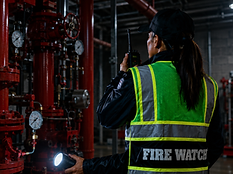
Thunder Bay ON Fire Watch Riser Room Inspections
Riser room inspection
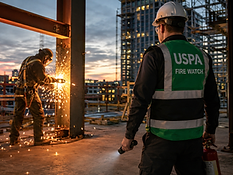
Thunder Bay ON Hot Work Fire Watch Coverage
Hot work standby
Thunder Bay ON Fire Watch Patrol Services
Documented patrol rounds

Winter, vacancy and the freeze watch

The northwest winter is the defining local hazard. Buildings held empty between tenants, seasonal camps, storage sheds and properties in probate lose heat, and a wet system with no heat is a system waiting to fail.

Freeze watches are mostly observation with a route: heat trace indicator lights, water staining around a pipe, doors that will not seat, ice at a roof drain. The officer records what is seen and escalates to the owner's maintenance contact rather than attempting a repair.

Cold also affects the officers. Exposure limits, vehicle access, a warming point and a relief pattern all go into the post plan, because a watch that requires someone to stand outside for eight hours without shelter in February is not a plan anybody should sign.

Ontario code, exercised in a remote region

Thunder Bay Fire Rescue enforces the Ontario Fire Code, O. Reg. 213/07, and the order it issues defines the interval and the duties. In a city this size the authority and the client often know each other, which makes the paperwork quality matter rather than being a formality.

Alarm work follows CAN/ULC-S536 for testing and CAN/ULC-S561 for monitoring. Where a contractor has to travel from the south, a part can take ten days, and a ten-day correction window is the reason interim watches get arranged here more often than in the east.

The closeout file is the round log, restoration confirmation and stand-down authorization. On remote sites we add the access record, so it is clear which officer was on which post on each date.

Pricing for a large, cold footprint

Posts are quoted per officer per shift with the route timed on site. Sites with travel between buildings need the travel counted, and the proposals that ignore it are the ones that fail on the first cold night.

Freeze watches are quoted hourly with a minimum shift. Remote locations, escorted access and any required four-wheel transport are itemized, because in this market they are a genuine part of the cost rather than an administrative detail.

Local requirements

Who enforces fire watch in Thunder Bay, and what they require

Requirements are set locally, not nationally. These are the four that decide how a watch in Thunder Bay is ordered, staffed and closed out.

Authority having jurisdiction

Thunder Bay Fire Department

An impairment is reported to Thunder Bay Fire Department before the system is valved off, and the order that office issues is the scope the post is staffed against. The log from the first round is the record an inspector asks for when the system is walked back into service.

Code in force

The Ontario Fire Code (O. Reg. 213/07), made under the Fire Protection and Prevention Act, 1997

Requirements in Thunder Bay are read from the Ontario Fire Code (O. Reg. 213/07), made under the Fire Protection and Prevention Act, 1997, together with the standards it adopts or references for water-based systems, hot work and means of egress. Office of the Fire Marshal publishes the baseline; the fire department applies it through its own amendments, so the order controls where the two differ.

Dispatch staging

4 to 8 hours

Metro-adjacent staffing tier

USPA plans to have an officer on post in Thunder Bay within 4 to 8 hours of a written authorization. Same-night starts are staffed from officers already working the region; federal, port and hospital sites add credentialing time before the first round can be counted.

Regional compliance note

Thunder Bay, Ontario

In Thunder Bay, Ontario, the first question after a sudden impairment is who owns the notice: the property files it with Thunder Bay Fire Department, and the officer on post is the evidence that the notice was honored. Hot work on a Thunder Bay site is covered against the permit the fire department issues, so each round is entered against a permit number rather than a general note that the area was checked. That record is why Thunder Bay property managers keep the log after the contractor has gone: it is the only account of what the building did while it was unprotected.

Adoptions, amendments and local forms change. Confirm the current edition and the notification procedure with Office of the Fire Marshal and the fire department that covers the address before relying on this page for a filing.

Written quote

Request fire watch coverage

Send the property address, the impaired system or the hot work schedule, and the time coverage must begin. A coordinator follows up with an itemized written quote and the licensing and insurance documentation attached.

Instant quotes, 24/7. We are always open, with live dispatch and a duty officer on call.

Client reviews

Rated 4.9 by the clients we protect

Reviews are collected from real assignments across the country. Read them directly on Google before you call.

Read Our Reviews On Google
Google review

I have their pricing to be very affordable and competitive. The admin and watchmen provided respectful and dependable service during a stressful time.

William BeesleyGoogle reviewVerify This Review

Questions before you commit? Call (800) 214-1448 and ask for references on assignments like yours.

Answers

Common questions from Thunder Bay clients

Do your officers have grain elevator experience?
The briefing comes from the terminal's maintenance lead, who knows where dust accumulates and how ventilation behaves through a leg. We supply a briefed officer and a route; the site supplies the operating knowledge.
How do you cover a mill spread over hectares?
By defining the post rather than the property. The affected area, the buildings inside it and a route timed in real minutes decide the officer count, and travel between buildings is counted rather than assumed.
Is a fire watch the same as a security guard?
No. A watch documents the condition of an impaired protection system at a required interval; a security post controls access. Where a site needs both, they are two duties and should be contracted as such.
Can you watch a vacant building through the winter?
Yes, as a freeze watch. Heat trace, pipe staining, door seals and drains are checked on each round and reported to the owner's maintenance contact rather than repaired by the officer.
What if the replacement part takes ten days?
Then the watch runs for ten days and is priced accordingly. Travel and lead times in the northwest stretch correction windows, which is exactly why interim coverage gets arranged here more often.
How do officers manage the cold on shift?
Exposure limits, a warming point, vehicle access and a relief pattern are built into the post plan. A plan that expects someone to stand outside for eight hours in February is not one we would sign.

Fact check and technical sources

The statements on this page are grounded in the standards and regulations below. Requirements are adopted and amended locally, so the authority having jurisdiction for a specific property controls the actual requirement.

  • Ontario Fire Code

    O. Reg. 213/07 Fire Code and Fire Protection and Prevention Act, 1997

    The Ontario regulation granting fire chiefs and inspectors the power to order a mandatory fire watch and approve impairment protocols.

    Official Source →
  • National Fire Code of Canada

    National Fire Code of Canada (NFC 2020)

    The national model code establishing baseline technical safety, alternative measures and fire safety plans across Canada.

    Official Source →
  • CAN/ULC-S536 & S561

    Underwriters Laboratories of Canada Fire Alarm Standards

    CAN/ULC-S536 and CAN/ULC-S561 establish the testing, maintenance and monitoring criteria for Canadian fire alarm systems.

    Official Source →
  • NFPA 241 & 51B

    NFPA Construction and Fire Watch Standards

    Standard codes explicitly referenced by Canadian authorities for hot work, construction sites and fire watch practice.

    Official Source →

Staff the Thunder Bay post through the freeze.

Call dispatch at any hour or request a written quote. Terminal, mill and winter coverage across the city and district.

(800) 214-1448