
One person died in a Birmingham apartment fire, and a child was taken to Children's of Alabama

By Albina Bieci, Staff Writer
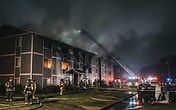
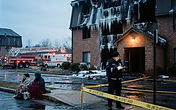
One civilian died and a child was transported to Children's of Alabama after smoke and flame engulfed a multi-family building, leaving the structure compromised and closed to occupants.

BIRMINGHAM, Ala.
One person died in a fire that heavily damaged a multi-family apartment building in Birmingham, and a child was taken to Children's of Alabama for treatment. Crews remained at the property to secure a structure left compromised by the fire.
A fatal residential fire moves through a different process than a displacement fire. The building becomes a death scene as well as a fire scene, which means it is held, secured and investigated under a discipline that does not bend to the schedule of the people who own or manage it. Cause determination, evidence preservation and any subsequent legal proceeding all depend on the property staying as the fire left it.
What smoke does before flame arrives
In a multi-family building, the gas and smoke layer is usually the lethal mechanism, and it reaches occupants before the fire does. Smoke in a stairwell or corridor removes the route out, and smoke that accumulates in an apartment while people sleep produces disorientation and loss of consciousness within a small number of breaths.
The variables that decide survival are familiar and mostly structural. A working smoke alarm in the sleeping area shortens detection to seconds. A closed door between the fire and an occupant buys minutes. A protected stair enclosure keeps the exit usable. Sprinklers, where present and operating, hold the fire in the unit of origin and prevent the corridor from becoming untenable.
The scene after a fatality
When a fire produces a death, the property is subject to two overlapping authorities. The fire department and its investigators control the scene to determine origin and cause. Law enforcement may hold it in connection with a criminal inquiry. The medical examiner's process runs alongside both. Until those interests are satisfied, an owner cannot clean, repair or reoccupy the affected area, and insurance work that requires disturbing the scene has to wait.
That leaves the owner managing two buildings at once: the damaged portion, which is evidence, and the occupied portion, which is still a residential building with residents in it. The second structure frequently has its own impairments after a fire of this kind, including isolated utilities, a damaged alarm circuit and occupants who may not have working smoke alarms on their side of the building.
Securing a building that has become a crime scene
The requirement here is access control rather than general patrolling. Investigators, the medical examiner, insurance representatives and city officials each need entry at different times, and each needs the scene to remain undisturbed. Meanwhile the building is unoccupied at night, windows and doors may be open from the firefight, and the property holds personal effects of the people who lived there.
A posted officer at a controlled entry point handles all of it: verifying credentials, recording every person who enters and leaves, walking the perimeter on a documented schedule and reporting any change in the building's condition. Where the building's detection and suppression systems are down, the same presence satisfies the fire watch requirement that follows an impairment.
What other landlords should verify this week
A fatal fire in an older apartment building is a prompt to check the things that are cheap to check and expensive to discover. Do the smoke alarms in every unit work, and are they in the locations the code requires? Are exit stairs clear and self-closing doors closing? Has the alarm system been tested on schedule, with records, and is the monitoring company's contact list current? Is there a written plan for how residents will be evacuated and where they will go?
Landlords should also know what their insurer requires during any period when protection systems are out of service. Most policies include protective safeguards conditions, and failing to maintain a required fire watch can affect coverage for a subsequent loss.
Support for residents and next steps for the property
Residents of a fatal fire need immediate shelter, and those whose units were not damaged often need reassurance that their portion of the building is safe. Management should expect to communicate in person, in writing and through a documented channel, and to provide a clear point of contact for the residents who are now dealing with loss of property and, in some cases, loss of a neighbor.
USPA Nationwide Security provides fire watch services and residential security officer coverage for apartment properties during investigations and repair. The company's dispatch line is staffed continuously at (800) 214-1448.
A death changes what the fire means
Once a fatality is attached to a residential fire, the incident stops being a property event and becomes a legal one. Three processes begin at the same time and compete for the same scene. The fire department investigates origin and cause. A medical examiner establishes the manner and cause of death. And, depending on the jurisdiction, a criminal inquiry opens if the fire is judged intentional or if a failure to maintain a required safeguard is suspected.
Each of those processes has an interest in physical evidence that is destroyed by cleanup. That is why a fatal fire scene is held far longer than a routine one, and why an owner who begins remediation without written clearance can create a problem that outlasts the fire itself. Salvage work that moves debris, replaces a door or discards a burned appliance can eliminate the item an investigator needed.
The surviving occupants inherit part of that delay. Buildings held for investigation are not released for reoccupancy on the property owner's schedule, and tenants who need medication, documents or a vehicle from a parking area frequently cannot access them for days.
Why multifamily fires kill at night
Fatal residential fires concentrate in the hours when people are asleep, and the reason is a matter of timing rather than luck. A smoke alarm provides warning measured in seconds to a couple of minutes depending on the fire's growth and the alarm's location. A sleeping adult needs time to wake, orient and act, and children and older adults need more.
That arithmetic collapses when the alarm is missing, disabled or out of date. A smoke alarm with a dead battery, a detector removed because it chirped, a unit where the alarm was never installed at all: each removes the interval in which escape is possible, and the fire does not need to be large to be fatal. Most residential fire deaths are attributed to smoke inhalation rather than burns, which means the lethal event happens in a room the fire never reached.
Multifamily buildings add a second factor. A fire in an adjacent unit can fill a corridor with smoke before anyone in the affected apartment is aware, and a resident who opens the door into that corridor has lost the most important decision of the incident. The advice to feel the door, to stay low, and to use a secondary exit is repeated because it is the difference between an evacuation and a fatality.
Where the second victim usually comes from
In fires with a child injured, the injury pattern is often a rescue attempt rather than the fire. Parents re-enter burning apartments for children, neighbors enter for neighbors, and the person who goes back in without protective equipment is breathing the same atmosphere that drove everyone out.
Fire departments address this in public education for a reason: the instruction to stay out and let trained crews search is counterintuitive to anyone with a family inside, and it is followed only if it has been stated before the emergency. Property managers have a role here that is often overlooked. A building where residents have been told, in writing and in drills, where the assembly point is and who is accountable for which units produces fewer unauthorized re-entries than one where that information arrives for the first time at two in the morning.
What the property owes the remaining tenants
A fatal fire in a multifamily building leaves a mixed population: units that are destroyed, units that are smoke damaged, units that are unaffected but cut off by a closed corridor or an isolated utility. The property's obligation is to differentiate them quickly and to communicate in writing.
A written notice that states which units are released, which are pending inspection and which are inaccessible is the single most useful document a manager can produce in the first 24 hours. It answers the question every tenant asks, it gives an insurer a record, and it prevents the pattern that causes most post-fire conflict: residents entering a building that has not been cleared because nobody told them not to.
The record an investigation depends on
Investigators reconstruct a fire from four record sets, and property managers control two of them. Alarm and sprinkler history, showing inspection and testing dates and any impairment, is the first. Maintenance records covering appliances and electrical work in the unit of origin are the second. Both are routinely requested and frequently incomplete.
The other two sit with the fire department and the utility. Where a building cannot produce maintenance history, the inquiry still proceeds, but the property loses the ability to demonstrate that it met its obligations, which matters in civil litigation and in insurance adjustment.
Fire watch while the building is held
A building held for investigation, or partially reoccupied with impaired systems, needs continuous fire watch coverage. The requirement is not discretionary and it is not satisfied by a resident volunteer or a manager walking the corridors at shift change. It requires an officer assigned to that duty, rounds that cover every space, and a written log.
USPA Nationwide Security provides fire watch services and emergency fire watch coverage for multifamily properties in exactly this condition. Dispatch is available at (800) 214-1448.
Services in Birmingham, AL
Reference and services
Knowledge base
NFPA 25 Impairment Protocols (2026): Fire Watch, the Ten-Hour Framework and System Restoration
National reference · 23 pages, citation registry attached
Read the volumeService
Fire watch services
How USPA staffs this work, with the coverage, licensing and dispatch terms for the assignment.
See the serviceSources
About the reporter
Staff Writer
Staff writer for the USPA Nationwide Security newsroom. Receives newsroom tips, corrections and editorial inquiries.
Author biography and credentialsMore from The Watchline

Fire Protection
Seven structure fires in one news cycle, and seven buildings that can no longer detect one
Apartment and rowhouse fires in Houston, Waikiki, Walnut Creek, Everett, Lawrence County, Kansas City and Allentown left occupied buildings with damaged suppression, severed utilities and open structures, the exact condition fire codes answer with a staffed fire watch.
· Albina Bieci

Fire Protection
Largo apartment fire displaces 75 and leaves a four-story building on watch
A two-alarm fire ran through the roof of a four-story building on Steeplechase Way and forced more than 30 families out. The roof is the repair; the systems left offline underneath it are the reason a fire watch is now the property manager's problem.
· Albina Bieci


Fire Protection
Chicago fire watch, documented: the 2026 interim code and the Title 15 fireguard rules
USPA Nationwide Security published a 40-chapter volume on Chicago fire watch and special fireguard practice, built on Title 14F's 2026 interim adoption of the 2024 IFC and the Title 15 exhibition articles, with 34 primary sources and a Nov. 22 cutoff.
· Albina Bieci