
An unsealed entry, a home invasion and the hardening that followed

By Albina Bieci, Staff Writer
Court records confirm the intruder who entered the Clinton Township residence of Marshall Mathers came through an unsealed opening, a failure that led to a hardened estate posture built around denial of close-quarters access.
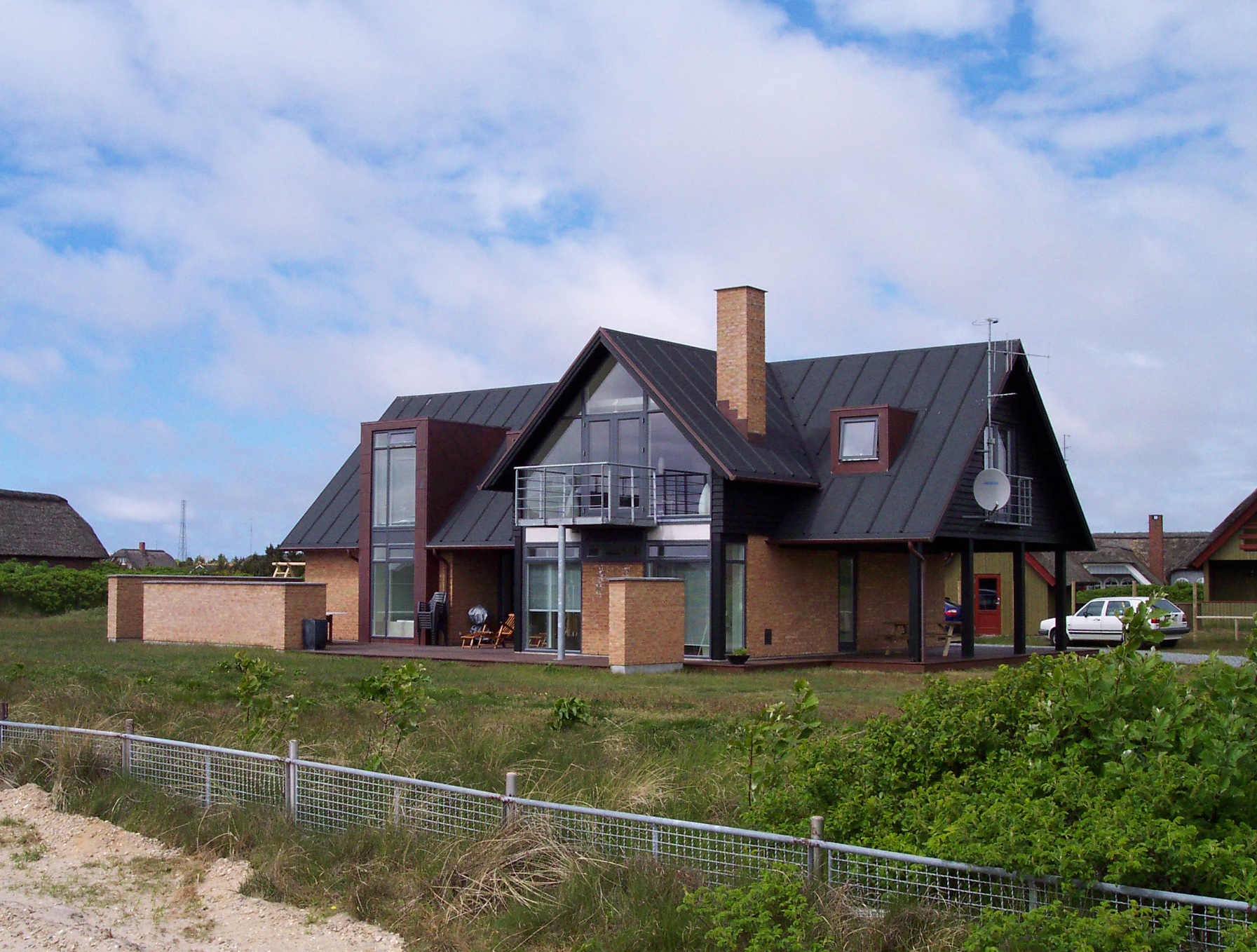
CLINTON TOWNSHIP, Mich.
Court records in Michigan confirm the prosecution of Matthew David Hughes for a home invasion at the Clinton Township residence of Marshall Mathers, the artist known as Eminem. The intruder entered through an unsealed opening, was detected by the property's physical protection and was taken into custody. Reporting on the aftermath describes a residence substantially hardened since, including padlocked interior safe areas intended to deny an intruder a close-quarters approach.
The case is useful because it separates two questions that owners tend to merge. How did someone get in, and what stops them once they are in. The first is an envelope problem and is usually solved with money. The second is a design and training problem and is frequently solved with attention.
An unsealed opening is an envelope failure
A residence is only as secure as its weakest opening, and openings multiply over time. A gate that does not latch. A side door propped during landscaping. A garage service door with a builder's lock. A window that no longer seats in its frame. Each is unremarkable on its own and each provides the same result: an intruder inside the perimeter without defeating anything that looks like security.
The discipline that catches this is a documented opening check, walked on a schedule, by someone whose job it is to find defects rather than to confirm the house looks fine. The check produces a list: every door, every window, every gate, the condition of each lock and the date it was last verified. Properties that run it find two or three failed openings in the first pass, nearly every time.
Detection is what turned the intrusion into an arrest
The reporting indicates the intruder was identified and routed by the principal's protection. That means the residence produced information before the intruder reached the principal, whether through a monitored alarm, cameras watched in real time or a physical presence. Those are different capabilities with different costs, and only one of them works when nobody is looking at a screen.
Monitoring is the piece households most often buy and least often test. An alarm that reports to a call center in another state, with a contact list that has not been updated since the last house manager left, produces a phone call nobody answers. A useful program tests the notification chain deliberately, on a schedule, and confirms that a signal reaches a person who can act within a defined number of minutes.
A padlocked safe area has a limit
Sealing an interior room to create a refuge is a reasonable response to a home invasion, and it works within limits that owners should understand before they rely on it. A hardened interior door with a quality lock and a reinforced frame will delay a determined intruder long enough for a call to be made and for law enforcement to arrive. A padlock on a standard hollow-core bedroom door will not.
Where a refuge is part of the plan, three things have to be true. The room has to be reachable from the areas the household actually occupies at night. It has to have communications that work when the power does not, which means more than a cordless handset. And the household has to have practiced reaching it, because a plan nobody has walked through at three in the morning is a diagram.
The aftermath is a protective program, not a purchase
The reporting describes a hardened posture adopted after the intrusion, which is the normal sequence: an event produces a review, and the review produces changes. The risk in that sequence is buying hardware to close the specific gap that was exploited and leaving the other gaps alone.
An assessment done properly looks at the property as a system: the approach and the street, the property line, the setbacks, the openings, the interior layout, the alarm and camera design, the household routines and the response relationship with the local police department. It ends with a written set of post orders and a maintenance schedule, because most residential security failures are maintenance failures rather than design failures.
What private households should take from the case
Three measures are worth more than additional cameras. Verify every opening on a schedule and record the result. Test the alarm's notification chain so a signal reaches someone who can act. And give the residence a defined safe area that the household has actually practiced reaching, with communications that survive a power failure.
USPA Nationwide Security provides residential estate security, executive protection and protective assessments for private clients, including opening surveys, post orders and documented patrols. Inquiries can be directed to the company's 24-hour dispatch line at (800) 214-1448.
The entry that fails is rarely the front door
Residential intrusions into large, occupied homes follow a narrow set of methods, and the front door is seldom among them. The recurring entries are a garage side door, a rear slider, an unlocked basement window, a service door into a mechanical room, and the pedestrian gap beside a gate that was installed for vehicles.
Each of those openings shares a property: it is out of sight from the street and from the rooms the occupants use most. A homeowner who tests his own property honestly will usually find that the rear service door is invisible from the kitchen, that the gate beside the drive stands open all day, and that the motion light over the patio has been out since spring.
Hardening begins with that walk. Not with a camera purchase, not with a new gate, but with an hour spent trying to reach the house without being seen from inside it. The path that works is the path an intruder will use, and it can usually be interrupted with a latch, a light, a trimmed hedge or a door that self-closes.
How a residential intrusion actually unfolds
An intrusion at an occupied home is normally announced by noise the occupants misread. Glass breaks, a door is forced, a dog reacts and is quieted. Residents who are home frequently believe the sound came from outside, or from a neighbor, and the interval in which they could have moved to a secure room or called for help passes.
Two practices change the outcome. The first is a safe room, which does not need to be purpose-built: a bedroom with a solid-core door, a deadbolt and a phone is enough, and every occupant including children should know it is the place to go. The second is a phrase and a sequence rehearsed until it is automatic. Which door is used to leave, who calls, where the group meets.
Detached houses on large lots complicate both. Distances are long, sound does not carry, and the nearest neighbor may be a quarter mile away. A property of that scale benefits from an alarm with perimeter contacts on every accessible opening, not just motion inside, because perimeter detection produces the warning while the intruder is still outside.
Hardening a large property without turning it into a fortress
The instinct after an intrusion is to add barriers, and the result is frequently a property that is harder to live in and no safer. The workable approach targets three things in order.
First, control the approach. One driveway, one gate, one place where a visitor is seen. Properties with multiple unmonitored entries cannot be effectively watched by any number of cameras.
Second, know who is expected. A household calendar that records contractors, deliveries, staff and guests gives a post something to compare against, and most intrusions at high-profile residences involve someone who had a reason to know the property already.
Third, make presence visible. Lighting that illuminates the approach rather than the façade, a vehicle in the drive, an officer on a walking post at an unpredictable interval. Deterrence works through uncertainty about whether the property is watched, and a fixed schedule removes the uncertainty.
The first 72 hours after an intrusion
The period immediately following an intrusion sets the terms for everything after it. Three actions belong in that window.
The scene should be preserved to the extent it can be while the household is made safe. A door that was forced is evidence; a door that has been repaired and repainted is not. Photographs before cleanup cost nothing.
The account should be written while it is fresh, by each occupant separately, including times and what was heard. Recollection degrades quickly, and the differences between two honest accounts taken early are useful to an investigator rather than a problem.
And the coverage decision should be made on the assessment rather than on the news cycle. Some intrusions justify a temporary post; some justify a permanent change to the property; some justify both. What does not work is a detail that arrives for a week and leaves with the story.
The post that fits a residence
A residential post is not a commercial guard assignment moved to a driveway. The officer works in a place where people live, in view of children, household staff and neighbors, and the post orders have to define the boundary between protection and intrusion on the household's own life. That means clear instructions on vehicles, deliveries, photographers, process servers and the press, and a supervisor who will make the judgment call rather than leaving it to the officer alone.
USPA Nationwide Security provides executive protection and residential security coverage built around a documented threat assessment. Dispatch can be reached at (800) 214-1448.
Sources
About the reporter
Staff Writer
Staff writer for the USPA Nationwide Security newsroom. Receives newsroom tips, corrections and editorial inquiries.
Author biography and credentialsMore from The Watchline

Executive Protection
A WNBA guard hired protection around the clock, and the case file explains why
An Indiana Fever guard has put a continuous close protection detail in place after sustained stalking, with more than twenty individuals now under federal scrutiny in connection with the case.
· Albina Bieci

Executive Protection
A private detail stopped a repeat intruder at the gate, and the arrest came after
Security agents detained a 25-year-old man with a documented multi-state history at the Calabasas estate before he could breach the inner perimeter, and sheriff's deputies arrested him on stalking and trespass charges.
· Albina Bieci

Executive Protection
Executive protection's agenda has moved past the office door
The annual Executive Protection & Mobility Conference has opened at the Westin St. Francis, with briefings centered on exposure outside the workplace, counter-surveillance and targeted physical threats.
· Albina Bieci
