
Houston wants the fire department called the moment a required system goes down, and its standby inspectors are not a contract post

By Albina Bieci, Staff Writer
Houston's amended 2021 fire code requires immediate reporting of an out-of-service required system and separates a private impairment watch from standby inspectors the department itself staffs.
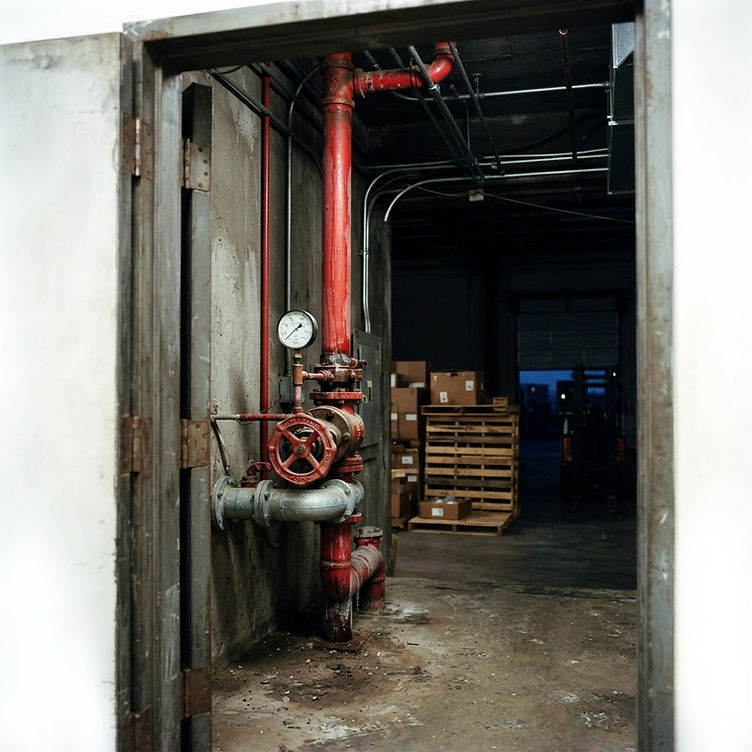
HOUSTON
A required fire protection system that goes out of service in Houston does not start a countdown. It starts a phone call.
Section 901.12 of the Houston amendments to the 2021 International Fire Code directs a property to report an out-of-service required system to the Houston Fire Department's Office of Emergency Communications at (713) 884-3143 when the system is taken down for emergency or nonscheduled repair, and to report again when it is restored. Section 901.7 leaves what happens in the meantime to the Fire Code Official, who may require evacuation, an approved private fire watch, or the department's own standby inspectors.
The city's fire code took effect January 1, 2024 under Ordinance 2023-907, which adopted the 2021 International Fire Code with Houston amendments covering Sections 115.1 through 115.2, 901.7, 901.12 and Chapter 35 on hot work. More than a year and a half into that edition, the operating distinction that produces the most confusion is not the notification requirement. It is the difference between the two kinds of people the city can put in a building.
Two instruments, only one of which a contractor can supply
A private impairment watch under Section 901.7 is a building's response: the owner or controlling occupant staffs a post, the post patrols, and the building documents it. A standby inspector ordered under Section 115 is the department's instrument, staffed by Houston Fire Prevention personnel, and it cannot be replaced by a contract guard when an official has specifically ordered it.
That distinction changes procurement, not just operations. A property manager who reads an order for standby inspectors as a fire watch assignment buys the wrong service, staffs the wrong post and documents a program that does not answer the order. The reverse error is as common: a building that assumes the department will supply the people when the official has asked for a private watch.
HFD Life Safety Bureau standards sit alongside the ordinance. Standard No. 02 governs inspection and testing of fire protection equipment, and Standard No. 07, in its current revision effective January 1, 2024, addresses high-rise fire safety plans. In a downtown tower, the plan and the impairment response are connected documents, and the second is what an occupant actually experiences.
A Houston mailing address settles nothing
Houston's corporate limits reach across more than one county, and unincorporated Harris County enforces a fire code of its own, revised effective October 1, 2025, that is based on the 2021 International Fire Code but is not the city's text. Incorporated cities inside the county answer to their own departments.
The consequence is administrative rather than theoretical. The department that must be notified, the official who sets staffing, the release that ends the post and the authority that inspects the record all follow the parcel, not the postmark. A property that files its impairment record under the wrong jurisdiction has a complete-looking file and no valid authorization in it.
What the watch is actually required to do
Section 901.7 describes the response in functional terms, and Houston's amendments carry the familiar phrase that a fire watch means constant patrol of the affected area. They do not publish a universal patrol interval. The 15-minute high-rise figure and the 60-minute commercial figure that appear in vendor literature are not Houston requirements, and the volume released today treats them as engineering choices that a route design may justify but the city does not mandate.
The staffing question follows the same logic. What determines how many people a building needs is whether the required route can be walked continuously, with the log entries and exception reporting the program promises, by the number of people assigned to it. A post that cannot complete its round without abandoning its area is understaffed regardless of what the schedule says.
The other interval that circulates, ten hours in twenty-four, belongs to NFPA 25, the technical standard Houston incorporates by reference for water-based system inspection, testing and maintenance. It is a decision point inside a maintenance standard, not a grace period that postpones the Section 901.12 call.
The order in which the decisions get made
Properties that come through an impairment cleanly tend to follow one sequence, and it is not the sequence in the vendor binder. Someone establishes what failed and what function was lost. Someone calls the department's emergency communications line and records the time, the name taken and the instruction given. The official's direction is reduced to writing: whether the space is occupied, evacuated or watched, how many people are assigned, and what ends the assignment. Only then is the post staffed, and only to that direction. The record is assembled while the event is running, not reconstructed after it.
The step that fails most often is the third. The direction stays verbal. Months later, the building can prove it placed a call and cannot prove what it was told to do, which is the difference between a documented program and a plausible one.
Governance: audit the file, not the binder
The volume's closing chapters argue that a program survives inspection on four questions, all answerable from the property's own records: was every impairment reported at the time it happened, is there a written direction behind every post that was staffed, does every shift produce a log that Fire Prevention received, and was every closed file closed on a release rather than on an invoice. A building can answer all four without producing a vendor certificate.
Records, and the figure that is misread
Houston's amendment requires documentation, and the volume's analysis addresses the three-year retention figure that many vendors present as a city rule. The reviewed text requires the record; it does not publish a blanket three-year term for fire watch logs, which is why the retention schedule belongs in the property's own program rather than in a claim about the ordinance.
Chain of custody matters more than duration. An impairment file that can show the discovery, the call to the Office of Emergency Communications, the official's direction, the staffing actually provided, the patrol record, the restoration verification and the release is the file an inspector can follow. A stack of signed shift sheets is not.
Hot work is a separate authorization
Chapter 35 of the Houston amendments governs hot work, and the federal welding and cutting standards for general industry and construction impose fire prevention duties of their own. During an impairment, the two authorizations stack. A permitted welding operation on a floor whose suppression is isolated is an exposure the permit was never written to cover, and the impairment record is where that overlap should appear.
The same overlap runs through the industrial corridors along the Houston Ship Channel, where process units, tank farms and loading operations carry ignition and fuel in the same footprint as the maintenance work that brings the watch. There, the watch is one control among several, and the operating procedure, not the guard post, is what separates a controlled repair from an incident.
Occupancies that change the answer
Sleeping occupancies, hospitals, schools and assembly venues change the arithmetic of an impairment because evacuation is not available as a response. A hotel with 300 rooms and an isolated riser cannot empty into a Houston summer night, and a hospital cannot relocate patients inside a maintenance window. In each case the protective measure carries the load until restoration, and the assignment has to survive shift changes measured in days rather than hours.
Event venues invert the problem. A temporary population arrives in a building whose systems may be entirely intact, and the department can direct coverage for the event itself rather than for an impairment. The staffing logic is the same; the authorization is not, and neither is the justification a manager should be prepared to produce.
The procurement test
Texas Occupations Code Chapter 1702 governs the guard business a property hires. Houston governs the post the property is told to provide, and the two requirements do not merge. A proposal that quotes a patrol frequency without naming the route, the log standard and the release condition is answering a question nobody asked.
The workable test is narrower: can the provider staff to the official's number, document rounds that can actually be walked in the time available, and hold the post open until the department releases it, including when that takes a week and two shift changes?
Restoration, and the release that is not automatic
Section 901.7 requires notification when a system returns to service, and Houston's program expects the property to close the loop with the department it called. Two events are involved: the repair is verified, and the post is released. A building that closes the second because it has the first has left a gap that shows up in the record and, in a bad night, in the fire.
Published today
Volume 15 of the USPA Fire Safety Knowledge Base, published today, works through the Houston text in 34 chapters: the Section 901.7 decision, the Section 901.12 communication procedure, planned and unplanned impairment administration, the private watch and standby inspector separation, patrol engineering, high-rise and occupancy-specific operations, records, hot work, and nine appendices of forms. It carries 16 official sources and a free two-page field brief.
The regulatory conclusions are drawn from the city and county documents listed below, not from a vendor's summary of them.
USPA provides fire watch services in Houston, hot work fire watch, emergency sprinkler repair response and maritime and port security. The complete volume is in the knowledge base.
Disclosure: USPA Nationwide Security publishes both the volume described in this article and The Watchline. The findings above are drawn from the primary documents listed under Sources, not from company statements.
Services in Houston, TX
Sources
- Houston amendments to the 2021 International Fire Code (Ordinance 2023-907)
- Houston Fire Marshal's Office, standards and codes
- City of Houston Ordinance No. 2023-907
- Houston Permitting Center, existing and current building codes
- Houston Fire Department phone directory
- Harris County Fire Code amendments, effective October 1, 2025
- HFD Life Safety Bureau, Standard No. 02, Revision 03
- HFD Life Safety Bureau, Standard No. 07, Revision 07
- OSHA 29 CFR 1910.252
- OSHA 29 CFR 1926.352
- Texas Occupations Code Chapter 1702
- NFPA 25
About the reporter
Staff Writer
Staff writer for the USPA Nationwide Security newsroom. Receives newsroom tips, corrections and editorial inquiries.
Author biography and credentialsMore from The Watchline

Regulation & Codes
Phoenix's rewritten fire code hands the watch clock to the fire marshal, and the four-hour figure is not in it
The 2024 Phoenix fire code took effect February 17, and its Section 117 makes staffing, duration and release a fire department decision rather than a property manager's calculation.
· Albina Bieci

Regulation & Codes
Tampa has no four-hour alarm grace period, a new regulatory volume on fire watch and hot work finds
The 24-page edition examines how Tampa Fire Rescue handles alarm and sprinkler impairments, the code transition scheduled for 31 December 2026, and the separate obligations that attach to hot work.
· Brian Fitzgibbons


Regulation & Codes
USPA publishes a free national reference on security services in fire loss prevention and NFPA 601
A 35-page reference sets the published scope of NFPA 601:2025 beside the federal rules that actually bind an employer, and the complete edition is free to anyone who requests it.
· Albina Bieci