
A stalking charge in New Orleans turns on the movement log, not the confrontation

By Albina Bieci, Staff Writer
A suspect with a documented history of tracking an actor's movements has been charged with misdemeanor stalking, a case that turns on the work protective teams do before an approach happens.

NEW ORLEANS, La.
Law enforcement in New Orleans booked an individual on stalking charges after an aggressive confrontation involving a high-profile actor, according to Yahoo Entertainment. The person has a documented history of fixated behavior that included tracking the principal's physical movements, and close protection personnel intervened during the encounter to restore the boundary between the individual and the actor.
Booking records confirmed this morning that the suspect has been formally charged with misdemeanor stalking.
Fixation follows a recognizable progression
The research base on stalking and fixation describes a pattern that repeats across public figures, executives and private individuals alike. Attention leads to approach. Approach leads to contact attempts that escalate in frequency. The person builds a theory about a relationship that does not exist, and each rejection or non-response is interpreted as part of it. Physical tracking is a late-stage behavior, and it is the one that matters most, because a subject who knows where a principal lives, trains, eats and parks has solved the problem that protective teams spend most of their effort trying to complicate.
What makes the pattern dangerous is not the volume of incidents. It is the change in the incidents. A subject who appears once at an event and is moved along is a nuisance. A subject who appears at three locations in a week, or who is waiting at a residence at an hour when nobody should know the principal is home, has crossed into a category that warrants a different posture.
Protective work happens before the confrontation
The intervention reported in New Orleans happened when the subject was already close enough to require it. The work that prevents that moment is quieter. It includes advance work on every location the principal will use, a residential survey that identifies the approaches and the sightlines, a schedule that is not published in advance, coordination with the venue's own security and with local police before an event rather than during one, and a documented record of every approach attempt.
That record is what turns a series of uncomfortable encounters into a case a prosecutor can charge. Officers who log a subject's appearance, describe the behavior in factual terms, preserve video where it exists and pass the information to the investigating agency give the police something to work with. Teams that move a subject along without writing it down produce a year of incidents that amount to nothing on paper.
Where close protection changes the outcome
A protective detail does three things at an approach. It maintains distance between the principal and the subject, it keeps the principal moving toward a controlled exit, and it does not allow the encounter to become a conversation. The last point is the one that is hardest for clients to accept and the most important, because engagement is what a fixated subject is seeking and what reinforces the fixation.
The detail also has to hand the matter off correctly. That means notifying the investigating agency, providing the log and any footage, and coordinating with the prosecutor's office so that protective personnel are available to testify about what they observed.
The USPA position
USPA Nationwide Security provides executive protection for public figures, executives and families, with advance work, residential surveys and a documented approach log maintained by the assigned detail. Protective coverage for events and appearances is coordinated through the event security practice. Fire watch coverage in New Orleans is where those assignments are staffed, under written post orders and a round log the fire marshal can review.
Related reporting from the newsroom: A bug behind the boardroom television shows what an RF sweep alone will never find.
Services in New Orleans, LA
Reference and services
Sources
About the reporter
Staff Writer
Staff writer for the USPA Nationwide Security newsroom. Receives newsroom tips, corrections and editorial inquiries.
Author biography and credentialsMore from The Watchline


Executive Protection
Donor home addresses and dates of birth were taken from two fundraising platforms, and that is a residential security problem
Automated bots reached donor names, home addresses, phone numbers, dates of birth and Salesforce credentials at two platforms in the same campaign.
· Albina Bieci

Executive Protection
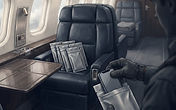
Devices went into Faraday bags on Air Force One. That is what a post-travel sweep looks like at any altitude
Journalists and staff returning from China sealed the phones they used on the trip into radio-frequency-blocking bags until landing, and spare devices were collected for wiping or destruction. The protocol is standard at the top and rare everywhere below it.
· Albina Bieci

Executive Protection
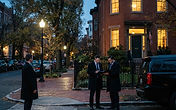
The Secret Service moved a cabinet secretary out of his Georgetown home. Residential protection starts with the address
Citing intelligence on physical threats and concerns about the geo-location exposure of a private residence, the Secret Service relocated Treasury Secretary Scott Bessent to a military installation.
· Albina Bieci