
West Virginia's Legislature lost its network in a quarter of record ransomware against government

By Albina Bieci, Staff Writer
The incident was described as limited to the Legislature's computer systems. The questions that follow are the ones a network investigation does not answer.
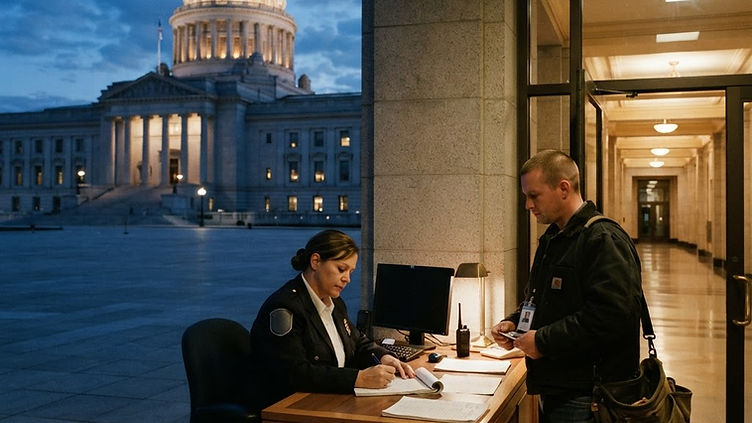
CHARLESTON, W.Va.
The West Virginia Legislature identified a cybersecurity incident affecting its information technology systems on Nov. 19, a spokesperson said, and its website went down with the rest of the network. IT staff noticed unusual activity on internal systems that morning and treated it as a possible ransomware attack, according to The Record and West Virginia Watch. The House's deputy chief of staff, Ann Ali, said the incident appeared to be limited to the Legislature's computer systems.
The timing is the part legislators should read twice. Security research firm Comparitech counted 132 ransomware attacks on U.S. government bodies in the third quarter of 2026, a 91 percent increase over the same quarter a year earlier.
What is known
- Incident identified Nov. 19, 2026, affecting the West Virginia Legislature's IT systems.
- The Legislature's website was taken down; internal systems were impacted.
- Officials described the incident as appearing limited to the Legislature's computer systems.
- No confirmed attribution, no confirmed data theft, no confirmation that it was ransomware.
- Third-quarter ransomware attacks on U.S. government bodies were up 91 percent year over year.
The investigation answers the network question. It does not answer the room question
A forensic investigation establishes how an intruder got into the network, what they touched and what left. It rarely establishes whether anyone carried something into the building, sat at an unattended workstation, or plugged a device into a wall port in a suite that constituents, contractors, journalists and lobbyists pass through every week.
Those are separate questions, and in a legislative building they are worth asking in parallel rather than afterward:
- Were any network jacks in members' offices, committee rooms or telecom closets used by an unauthorized device?
- Did any contractor, vendor or visitor have unsupervised access to a space with live network ports during the incident window?
- Are there wireless access points on the premises that the IT department did not install?
- Has anyone had physical access to the phone and conferencing hardware in the rooms where closed sessions are held?
None of that is a finding about this incident. It is the checklist an incident response should cover before the building is declared clean.
Where TSCM belongs in the response
A technical surveillance countermeasures sweep is not a substitute for network forensics. It is the physical counterpart: a check for transmitters, rogue hardware, unauthorized taps and devices that sit outside the network's visibility. The useful sequence after an intrusion is containment, then sweep, then reoccupation of sensitive rooms, with chain of custody for anything found and counsel coordinating the results.
The same week is a reminder that government suites carry two kinds of risk at once. Credential theft gets an attacker into the mail system. A device in a committee room gets them the conversation the mail was about.
Access control during the outage
Badge readers, visitor management and camera systems usually run on the same network as everything else. When that network is down, a building discovers which doors fail open and which fail locked, and whether anyone knows the difference. The answer should be written down before the incident, not found by walking the halls:
- Confirm the fail state of every controlled door and staff the ones that fail open.
- Move to a paper visitor log with photo identification and an escort requirement for contractors.
- Reissue or audit keys and access cards after the network is restored, since the audit trail for the outage window does not exist.
- Keep a printed post order at each entrance, because the app that holds it is on the network that is down.
West Virginia's Legislature will publish what its investigation finds. The physical questions are the ones that will not appear in that report unless someone asks them.
USPA Nationwide Security provides TSCM bug sweeps and cybersecurity support for government and corporate clients. The company publishes The Watchline.
Reference and services
Sources
About the reporter
Staff Writer
Staff writer for the USPA Nationwide Security newsroom. Receives newsroom tips, corrections and editorial inquiries.
Author biography and credentialsMore from The Watchline


Investigations
The Coast Guard and FBI are boarding tankers at sea, and the intrusion is riding in with the satellite link
Investigators boarded two Texas-bound energy tankers after attacks that took communications and reached ship systems. The same remote path that lets an intruder in lets a device hide.
· Mike Edwards


Investigations
One year after Travis Turner walked into the woods behind his Wise County home, the Marshals Service is still leading the search
He left his vehicle, wallet, keys and prescription medication behind. Ground crews, K-9 units and drones have worked the terrain and 178 leads have come in from seven states. Investigators are still weighing a wilderness death against deliberate evasion.
· Albina Bieci


Investigations
A $7.2 million cargo ring ended with 2.5 years and $2.2 million in restitution, and the ratio is the lesson
Federal sentencing in an interstate cargo theft case, fencing charges against two Illinois siblings and a federal suit over a mall detention arrived in the same week. Asset protection programs are being measured against all three.
· Albina Bieci