
The Sprinkler Myth at the Heart of the Automated Warehouse
October 24, 2026· Brian Fitzgibbons

The Scale Shift Nobody Priced Into the Risk Model
The fulfillment center construction boom entering 2026 has produced buildings of a genuinely new category. Structures exceeding one million square feet are now routine announcements rather than exceptional projects. Inside many of them, automated storage and retrieval systems (ASRS) stack inventory in dense robotic racking columns that rise fifty, sixty, or even eighty feet from the slab floor. Conveyor networks, robotic picking arms, and autonomous mobile robots move goods through these columns at throughput rates that would have seemed implausible to a warehouse engineer a decade ago. The business logic is compelling: labor costs fall, order velocity rises, and inventory density per square foot reaches levels previously associated with refrigerated pharmaceutical storage rather than consumer goods fulfillment.
What has received far less boardroom attention is the way this density transformation interacts with fire physics. The overhead wet-pipe sprinkler system remains the dominant installed fire suppression technology in warehouses across North America. Its design assumptions, however, were developed and codified for a different era of storage geometry. When a fire ignites within a tightly packed ASRS column, the thermal plume that would normally activate ceiling-level sprinkler heads is disrupted, delayed, and in some configurations effectively blocked by the racking mass itself. Water released from overhead heads must then travel vertically downward through that same mass. The physics of water delivery through obstruction are not favorable. The result, documented in fire testing programs and reflected in the evolving language of NFPA 13 and FM Global's data sheets, is that overhead sprinklers functioning precisely as designed may still prove insufficient to suppress a fire burning inside a dense automated rack system.
The thesis of this piece is direct: the e-commerce industry is systematically under-protected against fire in its most capital-intensive facilities, and the gap between installed suppression capacity and actual suppression need is widening with every new ASRS deployment. Closing that gap requires a transition to in-rack smart suppression networks as a standard design requirement, and it requires that transition to begin in planning documents rather than post-incident redesigns.
What NFPA 13 Actually Says, and What It Cannot Say
NFPA 13, the Standard for the Installation of Sprinkler Systems, is the primary governing document for sprinkler design in the United States. Chapter 21 of the standard addresses commodity storage specifically, providing guidance on storage heights, commodity classifications, and the corresponding sprinkler design approaches required for each category. The standard distinguishes between ceiling-only protection, in-rack sprinkler systems, and combinations thereof, and it assigns required approaches based on commodity type and storage configuration.
A careful reading of Chapter 21 reveals something that is often glossed over in project specifications: the standard's prescriptive tables were developed through fire testing conducted on specific rack geometries and commodity arrangements. When a warehouse departs significantly from those tested configurations, the prescriptive tables become a less reliable guide. ASRS systems present precisely this kind of departure. The racking geometry is denser than the open-frame selective rack configurations that anchor much of the standard's testing history. The commodity arrangement changes dynamically as robotic systems move totes and cases throughout an operating shift. And the vertical column heights common in modern ASRS installations push into ranges where the hydraulic calculations supporting overhead-only protection become, to use the standard's own logic, increasingly speculative.
NFPA 13 does not prohibit in-rack suppression in ASRS environments; in some configurations it mandates it. The standard's language on high-piled storage and on storage exceeding certain rack heights makes in-rack sprinklers a required consideration. The practical problem is that many ASRS projects are specified and permitted under interpretations that push ceiling-only systems to their stated design limits without in-rack supplementation, and the standard's prescriptive pathways, while technically navigable, were calibrated against fire behavior that ASRS configurations may not reliably reproduce.
The Physics of Obstruction and Thermal Plume Disruption
To understand why overhead systems face structural limitations in ASRS environments, it is useful to work through the suppression sequence. When a fire ignites in a conventional open-rack warehouse, it produces a rising thermal plume. That plume travels upward through relatively open air space, reaches ceiling-level detection or sprinkler heads, activates them, and water discharges downward into the fire area. The geometry is favorable: the fire is visible to the ceiling, and the water path from ceiling to fire is largely unobstructed.
In a dense ASRS column, this sequence encounters interference at multiple points. The thermal plume must rise through tightly packed tote inventory or case goods before it can reach open airspace near the ceiling. The racking structure itself, combined with the inventory mass, may absorb, redirect, or delay the plume sufficiently that ceiling head activation is slower than the fire growth rate. Once ceiling heads activate, water must descend through the same inventory mass. Depending on commodity type, tote material, and racking configuration, a significant portion of that water may never reach the seat of the fire. FM Global Data Sheet 8-9, which addresses the storage of Class 1 through 4 and plastic commodities, explicitly accounts for the way storage configuration affects suppression effectiveness, and its design requirements for high-challenge commodity storage reflect the understanding that overhead-only protection is inadequate for certain storage geometries regardless of design density.
Underwriters Laboratories has conducted fire testing programs specifically examining ASRS and high-bay automated storage environments. The testing data from UL's fire programs has informed both NFPA technical committee deliberations and FM Global's engineering guidance. While the full testing datasets are proprietary or available through UL's subscription research access, the directional finding is consistent across sources: fire growth rates in dense automated rack storage can outpace the response time of ceiling-only suppression systems under realistic ignition scenarios. In-rack suppression positioned within the rack array addresses this by placing water delivery at or near the fire origin rather than at the ceiling.
The Insurance Record as a Data Point
The insurance loss record for large automated warehouse fires, while not always disaggregated by suppression system type in publicly available summaries, provides a relevant empirical signal. Warehouse fires have historically produced some of the largest single-event property losses in commercial lines insurance. Industry sources including FM Global's annual loss data and reports from Lloyd's market underwriters have noted that warehouse fire severity has increased as building sizes and inventory values have grown. A major automated fulfillment center carries the replacement value of the structure and equipment, which in the case of a fully equipped ASRS system can run to hundreds of millions of dollars, along with the inventory value, the business interruption exposure, and the supply chain disruption costs that ripple through a retailer's fulfillment network when a hub-level facility is taken offline.
OSHA's warehouse safety standards under 29 CFR 1910.176 address material handling and storage generally, and OSHA enforcement actions following warehouse fires have at times cited inadequate fire protection as a contributing factor in casualty and near-miss events. The regulatory framework, taken together with the NFPA design standards and the FM Global engineering data sheets, creates a converging body of guidance that points toward the same conclusion: suppression system design for high-bay automated warehouses requires individualized engineering analysis rather than prescriptive table application.
The business interruption dimension deserves particular emphasis for e-commerce executives reviewing this issue. A fulfillment center fire that disables a regional distribution hub produces losses well beyond the one-time property claim. It interrupts order fulfillment for a geographic customer base, forces redistribution of volume to other network nodes that may lack capacity, triggers contractual delivery failure penalties, and produces customer satisfaction degradation that persists beyond the physical recovery period. The logistical gridlock scenario is a more damaging outcome than the property loss alone, and it is a scenario that adequate in-rack suppression is specifically positioned to prevent by containing fires to a localized rack section rather than allowing them to propagate across a facility.
What In-Rack Smart Suppression Actually Requires
In-rack sprinkler systems are established technology, specified and installed in cold storage, high-bay conventional warehouses, and pharmaceutical distribution centers for decades. What distinguishes the current recommendation from historical practice is the addition of intelligent control and monitoring layers that reflect the operational reality of an ASRS environment. A conventional in-rack system places sprinkler heads at defined vertical intervals within the rack structure and connects them to dedicated supply piping. In an ASRS context, several additional design considerations apply.
First, the rack structure in an ASRS installation is typically engineered to tighter tolerances than conventional selective racking, and the suppression system design must be coordinated with the structural and mechanical ASRS engineers from project inception rather than retrofitted after racking installation. Coordination failures at the design stage are a documented source of suppression system deficiencies in complex warehouse projects. Second, the dynamic inventory movement characteristic of ASRS operation means that the commodity present at any given rack location changes continuously. Suppression design assumptions that rely on a static commodity classification may not hold through normal operating cycles if the facility handles a mixed commodity range. Third, smart monitoring layers that provide real-time flow, pressure, and activation data integrated with facility management systems allow for faster emergency response and more accurate post-incident analysis. These are not theoretical enhancements; they represent the direction that both FM Global and forward-looking fire protection engineers are prescribing for high-value automated storage facilities.
The cost argument against in-rack suppression in ASRS environments typically cites installation complexity and the capital cost of additional piping and heads within a structure that is already mechanically complex. That argument collapses when evaluated against the insured and uninsured loss exposure of a major facility fire. The incremental cost of a well-designed in-rack suppression system is a fraction of the business interruption exposure alone, and insurance underwriters are increasingly pricing that reality into premium structures for high-bay automated storage risks.
The Regulatory Trajectory and What Executives Should Anticipate
NFPA 13 undergoes revision cycles that incorporate new fire testing data and engineering experience. The trend in recent revision cycles has been toward more explicit recognition of high-challenge storage configurations and more prescriptive requirements for in-rack protection in tall-rack environments. FM Global's data sheets, which function as engineering standards for FM-insured properties, have similarly moved toward more rigorous requirements for automated storage configurations. Executives who are currently planning ASRS facilities based on the minimum prescriptive requirements of the current code cycle should be aware that those requirements are likely to become more stringent in subsequent cycles, and that designing to minimum current requirements may produce a facility that requires costly suppression system upgrades within its operational lifespan.
There is also a liability trajectory worth noting. If a major ASRS facility fire produces significant casualties or a catastrophic supply chain disruption, and subsequent investigation establishes that the suppression system design relied on overhead-only protection that industry fire testing had already identified as potentially inadequate for the installed storage geometry, the legal and regulatory exposure for the responsible parties, including the facility owner, the fire protection engineer of record, and the ASRS system designer, is substantial. The standard of care in fire protection engineering is informed by the full body of available technical guidance, not solely by the minimum prescriptive code pathway.
A Practical Path Forward
For e-commerce executives and the supply chain real estate teams that support them, the practical implication is that in-rack smart suppression should become a standard specification requirement for any new ASRS facility above a defined rack height threshold, with that threshold determined in consultation with a qualified fire protection engineer rather than set administratively. Existing facilities with high-bay ASRS installations warrant a suppression system adequacy review conducted against current NFPA 13 Chapter 21 guidance and FM Global Data Sheet 8-9, particularly where the original design predates recent ASRS fire testing data. Insurance underwriters should be engaged as technical partners in this review process; their engineering loss prevention teams have developed substantial expertise in ASRS fire risk that is often underutilized by policyholders.
The building boom of 2026 will add significant new automated fulfillment capacity to the North American logistics network. The facilities being designed and permitted now will operate for twenty to thirty years. Their fire suppression systems, if specified thoughtfully in the current design phase, can provide adequate protection for that full operational life. If they are specified to the minimum prescriptive standard without the in-rack supplementation that the physics of dense automated storage requires, they will represent a systemic vulnerability in the supply chain infrastructure that the e-commerce economy increasingly depends upon. That is a vulnerability that can be addressed at the design table for a fraction of the cost it would require to address in the aftermath of a major loss.
USPA Nationwide Security provides industrial fire watch and fire safety consulting services across the United States. For fire watch coverage or facility fire risk consultation, contact USPA at (800) 214-1448.
Related Reading
Questions about fire watch, executive protection or guard coverage for your property? Request a quote or call our dispatch line.
More from the blog

Breaking News
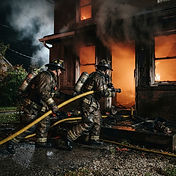
Fire Crews Battle Vacant Apartment Building Fire in Kansas City's Wabash Block
Kansas City fire crews responded Sunday morning to a reported apartment building fire in the 2800 block of Wabash, where they encountered smoke and fire coming from a vacant two-story structure. Interior operations were conducted, searches came back all clear, and no injuries were reported. The cause remains under investigation.


Breaking News
Lithium-Ion Battery Fire Displaces Residents at Spokane's Donna Hanson Haven Apartment Building
A lithium-ion battery from an electric bicycle caused a fire on the third floor of Donna Hanson Haven in downtown Spokane on Saturday, October 25, 2026. The Spokane Fire Department evacuated all residents; Catholic Charities Eastern Washington coordinated decontamination, and most tenants returned home the same evening. Seventeen third-floor residents remain displaced with Red Cross support.

Breaking News
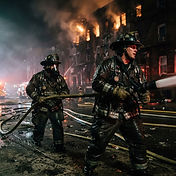
Pennsauken, NJ Apartment Building Evacuated After 3-Alarm Fire at Cooper River Apartments
A 3-alarm fire at the Cooper River Apartments on McClellan Avenue in Pennsauken, New Jersey forced the evacuation of roughly 40 residents early Monday morning. One woman jumped from the fifth floor before fire crews arrived and was transported to a local hospital. The cause of the fire has not been released.