
The Underground Blind Spot: Why Subsurface Infrastructure Demands a Security Doctrine of Its Own
October 26, 2026· Dan Manning
The Infrastructure We Prefer to Forget
Cities have always buried their most critical systems. Water mains, electrical conduit, fiber-optic trunk lines, and now passenger rail corridors and automated freight tunnels run beneath streets that absorb tens of millions of footsteps daily. The people above ground rarely think about what is below them, and for the most part that indifference is harmless. The security professionals responsible for those subterranean systems, however, cannot afford the same detachment.
In 2026, two converging trends are forcing a long-overdue reckoning. Rapid transit agencies on multiple continents are completing or breaking ground on substantial underground extensions, adding miles of new tunnel to networks that were already difficult to monitor and protect. Simultaneously, a generation of automated underground logistics delivery networks, some using electric autonomous vehicles moving through purpose-built tunnels beneath urban cores, is transitioning from pilot programs to commercial operation. Both developments concentrate economic value, human occupancy, and interdependent critical systems in environments that are physically constrained, electromagnetically hostile, and poorly served by the security frameworks inherited from surface operations.
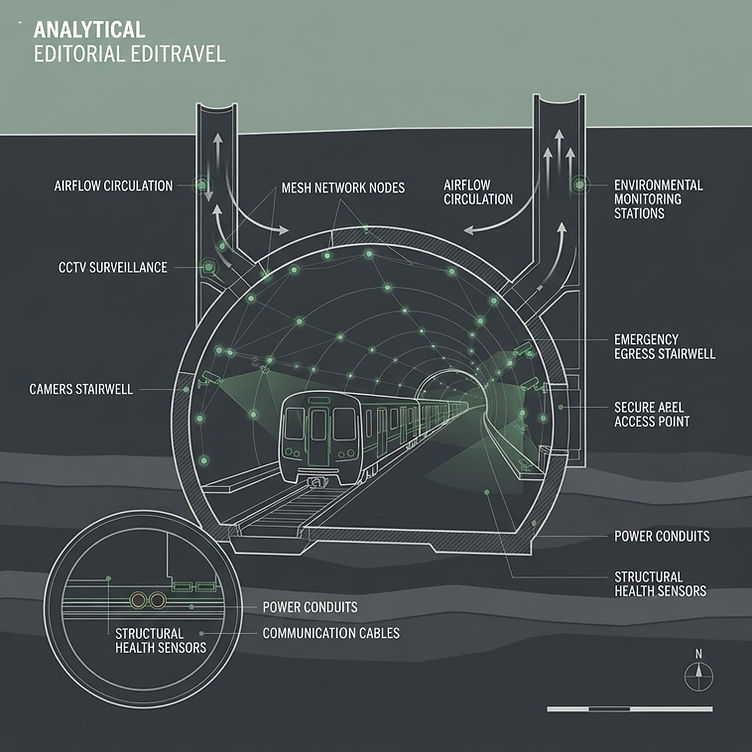
The core problem, stated plainly, is this: subsurface infrastructure faces a category of catastrophic risk that surface analogues simply do not share, because the two variables that matter most in any serious security or fire incident, egress capacity and communications reliability, are structurally compromised the moment you go underground. Addressing that problem requires a security doctrine that treats subterranean environments as a distinct class of infrastructure rather than an extension of what exists above street level.
Why Underground Incidents Escalate Differently
The forensic record of major tunnel incidents provides a grim baseline. The 1999 Mont Blanc Tunnel fire, which claimed 39 lives over a period of roughly 53 hours, remains the most extensively analyzed tunnel disaster in modern engineering literature. The Tauern Tunnel fire the same year, and the St. Gotthard Tunnel fire in 2001, added further data points. What the post-incident engineering analyses of these events share is a consistent finding: the factors that transformed manageable fires into mass-casualty events were confined egress geometry, the rapid accumulation of toxic smoke in enclosed spaces, and the failure of ventilation systems to operate as designed under actual fire conditions rather than modeled ones.
Passenger rail tunnels governed by NFPA 130, the Standard for Fixed Guideway Transit and Passenger Rail Systems, incorporate hard-learned lessons from that forensic record. NFPA 130 establishes specific requirements for emergency egress path spacing, evacuation travel distances, cross-passage intervals in twin-bore tunnels, and the performance standards for traction power shutdown during emergencies. The standard is not static; it is revised on a cycle that incorporates new incident data, and its 2023 edition reflects updated guidance on fire detection sensitivity and emergency lighting minimums. The existence of NFPA 130 represents genuine regulatory maturity. The problem is that the standard, however well-constructed, governs fixed guideway passenger rail, and the emerging category of automated underground logistics infrastructure does not map cleanly onto its scope. Freight-carrying autonomous vehicles moving through a tunnel grid beneath a dense urban core present a different occupancy profile, a different ignition risk distribution, and a different operational tempo than a passenger rail system. The regulatory framework that would govern their security has yet to crystallize.
OSHA Subpart S addresses electrical safety standards in underground working vaults and similar confined electrical environments, establishing requirements for grounding, isolation, and lockout/tagout procedures that are directly relevant to the electrical infrastructure supporting both transit and logistics tunnels. Those requirements become more consequential, not less, in tunnel environments where an electrical fault can trigger a fire in a space where smoke accumulates faster than occupants can be evacuated.
The Communications Problem Is Structural
Any serious discussion of underground security must confront the communications architecture problem directly, because it underlies nearly every other failure mode. Radio frequency propagation in underground environments is fundamentally different from surface conditions. Concrete, steel reinforcement, soil overburden, and the geometry of tunnel bores all attenuate signals in ways that make conventional cellular and public-safety radio systems unreliable without dedicated infrastructure. Transit agencies have addressed this for decades through the installation of leaky coaxial cable systems, also called radiating cable, that effectively create a distributed antenna throughout a tunnel bore. That infrastructure requires maintenance, is subject to physical damage, and was designed primarily for voice communications on first-responder frequencies rather than the high-bandwidth, low-latency data transmission that modern security operations increasingly require.
The Federal Transit Administration has issued security directives and guidance documents addressing communications redundancy as a component of transit security planning, recognizing that a communications failure during an evacuation or security incident in a tunnel environment can transform a manageable situation into a catastrophic one. FTA guidance frames communications continuity as a baseline requirement rather than an enhancement, which is the correct framing. The difficulty is implementation cost and the political economy of transit capital budgets, where communications infrastructure competes for funding against fare equipment, rolling stock, and station rehabilitation.
For the newer category of automated underground logistics networks, the communications challenge is compounded by the operational model. Autonomous vehicles operating in a closed tunnel environment depend on continuous data links for navigation, collision avoidance, and remote monitoring. A communications interruption that a human-operated train crew might manage through procedural backup has no equivalent fallback for a fully autonomous system. The security implication is significant: an adversary who understands the communications architecture of an automated tunnel network has identified a potential attack surface that did not exist in earlier generations of transit infrastructure.
The Department of Homeland Security has published research briefs through its Science and Technology Directorate addressing underground infrastructure protection, including the particular challenges of detection and response in GPS-denied, RF-attenuated environments. That research points consistently toward independent mesh network architectures as the technically sound answer to the communications problem. A mesh network distributed along the tunnel bore, with nodes capable of store-and-forward communication and automatic rerouting around damaged segments, provides a degree of resilience that a centralized communications infrastructure cannot. The capital cost is real, but it should be evaluated against the consequence cost of a communications failure during a mass-casualty event, which is not a speculative risk in enclosed tunnel environments.
Smoke Management Is a Security Issue
Fire suppression and smoke management in tunnel environments is sometimes treated as a purely engineering or life-safety matter, separate from the security function. That separation is analytically incorrect and operationally dangerous. Smoke in a tunnel is an attack multiplier regardless of its source. A deliberately set fire in a transit tunnel, a scenario that has occurred in multiple international jurisdictions, produces the same toxicological and evacuation consequences as an accidental mechanical or electrical fire. The smoke-purging system is therefore simultaneously a life-safety system, a fire-suppression support system, and a security countermeasure.
NFPA 130 specifies performance requirements for tunnel ventilation systems that must be capable of managing tenable conditions in egress paths during a fire event. The engineering benchmark is maintaining survivable conditions in the evacuation corridor for sufficient time to allow occupant egress, which requires the ventilation system to be designed for the actual fire heat release rates relevant to the vehicle types and fuel loads present in the tunnel. As rolling stock and logistics vehicles increasingly use lithium-ion battery systems, the fire dynamics change materially. Lithium-ion thermal runaway events produce different heat release rate profiles and toxic gas compositions than diesel combustion fires, and ventilation systems designed to the older parameters may underperform against a modern battery fire. This is an area where the engineering standards are still catching up to the deployment reality, and security planners should be aware of it when evaluating the adequacy of existing tunnel ventilation infrastructure.
Advanced smoke-purging systems, those incorporating longitudinal ventilation with reversible jet fans, supplemented by transverse or semi-transverse exhaust in station areas, represent the current engineering consensus for managing tunnel fire events. The Mont Blanc and Tauern post-incident analyses both identified inadequate smoke management as a proximate contributor to fatalities, and subsequent European tunnel safety directives incorporated ventilation performance requirements as a direct response. Those lessons translate directly to the North American context, even though the regulatory pathway differs.
Physical Security Layers Below Street Level
Beyond fire and communications, underground transit and logistics infrastructure presents a physical security profile that surface facilities do not replicate. Access control at tunnel portals, service shafts, and mechanical rooms is more consequential underground because the consequences of unauthorized access are geometrically worse in a confined environment. An intruder in an above-ground rail yard operates in a space where detection is easier and response options are broader. An intruder in a tunnel bore or a subsurface equipment room has the advantage of concealment and the ability to create an incident in a space where first responders face significant access and communications constraints.
Video surveillance in underground transit environments has improved substantially with the availability of low-light and infrared camera systems, but coverage gaps remain common, particularly in maintenance corridors, tunnel cross-passages, and service shafts. Those gaps matter because they represent the spaces most attractive to someone with adversarial intent, precisely because detection probability is lower. Comprehensive underground surveillance architecture requires a density of coverage that transit agencies and logistics operators have historically underinvested in, partly because the procurement and installation cost in tunnel environments is substantially higher than for equivalent surface coverage.
Staffed security presence in tunnel environments requires its own operational planning. Personnel deployed in tunnel bores or underground stations need reliable communications, defined evacuation procedures that account for the specific geometry of the tunnel, and training that addresses the disorientation and physiological stress that enclosed underground environments produce in emergency conditions. The FTA has addressed this in its security planning guidance, emphasizing that the human element of underground security requires specialized preparation rather than simple transfer of surface security protocols.
A Security Doctrine for Subterranean Infrastructure
What the foregoing analysis points toward is the need for a distinct security doctrine for underground environments, one that acknowledges the specific risk parameters of subterranean infrastructure and builds around them rather than layering surface-world frameworks onto a fundamentally different operating environment.
That doctrine should be organized around several principles. First, communications architecture must be treated as primary security infrastructure, funded and maintained at the same priority level as access control and surveillance. Independent mesh networks that operate without dependence on surface cellular infrastructure are the technically appropriate solution for environments where conventional RF propagation is structurally compromised. Second, fire and smoke management systems must be evaluated against the actual fuel loads and ignition sources present in the tunnel, not the legacy parameters of an earlier equipment generation. The shift to battery-powered vehicles is a material change to the fire risk profile of underground transit and logistics infrastructure, and it warrants a corresponding reassessment of ventilation system adequacy. Third, egress path protection must be treated as a security function, maintained and inspected with the same rigor applied to access control systems, because a compromised egress path in a tunnel environment carries consequences that surface facilities rarely face. Fourth, physical security coverage, both surveillance and staffed presence, must account for the specific access points, concealment opportunities, and communications constraints of underground environments rather than replicating a surface security template.
Organizations operating or planning underground transit or logistics infrastructure should conduct security assessments that explicitly address each of these parameters, engage engineering expertise in tunnel ventilation and communications architecture alongside traditional security consulting, and ensure that capital planning processes treat communications and fire management infrastructure as security investments rather than purely operational ones.
USPA Nationwide Security provides specialized security consulting and fire watch services with experience in complex infrastructure environments. Organizations evaluating the security posture of underground transit or logistics facilities are welcome to contact USPA's team for a confidential assessment consultation.
The Regulatory Gap and the Professional Responsibility
The regulatory landscape for underground logistics automation in particular remains incomplete. NFPA 130 and FTA security directives address passenger rail with reasonable specificity. OSHA Subpart S addresses electrical safety in underground working environments. But the automated freight tunnel, a category of infrastructure that is moving from concept to commercial reality in multiple cities, sits in a space where the applicable standards are assembled from adjacent frameworks rather than purpose-built for the use case. That gap creates professional responsibility for the engineers, security consultants, and operators involved in these projects to apply the most rigorous available standards rather than the least demanding technically applicable ones.
The historical record of tunnel disasters suggests that the cost of underbuilding safety and security infrastructure in underground environments is paid catastrophically and suddenly, in ways that are far more expensive in every dimension than the capital investment that would have prevented them. The expanding reliance on underground infrastructure in 2026 and beyond makes this a policy and operational question that the security profession needs to engage with directly, rigorously, and without deference to the project economics that have historically driven underinvestment in this domain.
Related Reading
Questions about fire watch, executive protection or guard coverage for your property? Request a quote or call our dispatch line.
More from the blog

Breaking News
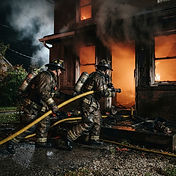
Fire Crews Battle Vacant Apartment Building Fire in Kansas City's Wabash Block
Kansas City fire crews responded Sunday morning to a reported apartment building fire in the 2800 block of Wabash, where they encountered smoke and fire coming from a vacant two-story structure. Interior operations were conducted, searches came back all clear, and no injuries were reported. The cause remains under investigation.


Breaking News
Lithium-Ion Battery Fire Displaces Residents at Spokane's Donna Hanson Haven Apartment Building
A lithium-ion battery from an electric bicycle caused a fire on the third floor of Donna Hanson Haven in downtown Spokane on Saturday, October 25, 2026. The Spokane Fire Department evacuated all residents; Catholic Charities Eastern Washington coordinated decontamination, and most tenants returned home the same evening. Seventeen third-floor residents remain displaced with Red Cross support.

Breaking News
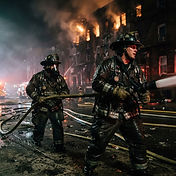
Pennsauken, NJ Apartment Building Evacuated After 3-Alarm Fire at Cooper River Apartments
A 3-alarm fire at the Cooper River Apartments on McClellan Avenue in Pennsauken, New Jersey forced the evacuation of roughly 40 residents early Monday morning. One woman jumped from the fifth floor before fire crews arrived and was transported to a local hospital. The cause of the fire has not been released.
