
The Intelligent Perimeter: Scaling Security Through Human and Digital Convergence
October 22, 2026· Brian Fitzgibbons

The integration of advanced wireless technologies into modern facility management is reshaping the landscape of physical security. As detailed by DJ Youngkin in the October 2026 issue of Security Business, Z-Wave Long Range (ZWLR) represents a significant evolution in how integrators manage property-wide connectivity. By extending communication reach beyond 1,000 meters and expanding the device ceiling from 232 to 4,000 endpoints per gateway, ZWLR allows for a granular level of monitoring that was previously impractical for large-scale commercial campuses, multi-dwelling units (MDUs), and industrial sites. While the technical sophistication of these systems is remarkable, the core mission of security remains the same: the transformation of raw sensor data into meaningful protection and emergency action. As technology scales, the requirement for an integrated human response layer becomes more pronounced, not less.
The Technical Shift in Sensor Density
The ability to connect up to 4,000 endpoints through a single gateway changes the economics of IoT deployments. With over 125 certified ZWLR devices available as of June 2026, including sophisticated motion detectors, locks, and perimeter sensors, integrators can now cover vast areas—from rooftop sensors detecting unauthorized access to access control panels deep within underground parking structures. The shift toward a hybrid architecture—utilizing traditional self-healing mesh networks for dense interior spaces and ZWLR star topology for hard-to-reach or isolated endpoints—provides a stable, standards-based foundation for site security. These devices, which utilize the Z-Wave Security 2 (S2) framework for robust encryption, offer long-term operational efficiency, with battery life for some end-devices reaching up to ten years.
The Paradox of Scale
Increased technical capacity introduces a specific management challenge: the management of complexity. When a facility deploys 4,000 endpoints, it is simultaneously creating 4,000 potential points of alarm, maintenance requirements, and environmental interference. Every sensor serves as a source of information, but information is not synonymous with insight. As device counts increase, so does the risk of sensor fatigue, false alarms, and environmental failures caused by physical obstruction or signal interference. A sensor can identify a breach or a malfunction, but it lacks the capacity to interpret context or exercise judgment. This is where the divide between system monitoring and security operations occurs. An alert generated by a sensor is merely a data point that necessitates verification and a coordinated physical response.
Why the Guard Remains the Critical Variable
Technology is an enabler of situational awareness, but it cannot function as the total security solution. In any threat environment, the sensor serves as the detection and reporting mechanism. The physical security guard, however, functions as the primary response unit. A digital system, regardless of its mesh density or range, cannot leave a desk to walk to a door, investigate the source of a noise, or confirm whether a sensor activation is a genuine emergency or a system error. The human element is required to verify the validity of an alarm, communicate with residents or employees during an incident, and manage the scene until law enforcement or the fire department arrives. When a sensor detects a fire or an unauthorized entry, a human operator is essential to meet first responders at the gate, provide access, and communicate site-specific hazards. These tasks require a level of authority, discretion, and interpersonal communication that software-defined networks cannot provide.
Integrating Digital Efficiency with Physical Presence
Effective facility security requires a symbiotic relationship between sensors and personnel. Sensors provide the wide-area coverage and early detection, while the guard force provides the tactical response and investigation. In practice, this means that while a property manager might utilize ZWLR for campus-wide visibility, they must rely on professional security guard services to handle the outcomes of that visibility. Whether the requirement involves standard patrols or emergency fire watch support, the human agent turns technical data into actionable reality. A building with 4,000 endpoints is only as secure as the person capable of interpreting what those 4,000 sensors are reporting in real time.
Professional security providers must recognize that as building systems become more connected, the value of the onsite guard increases. They are the eyes and ears on the ground, capable of distinguishing between a genuine intrusion and a network anomaly, or between a fire emergency and a faulty smoke detector. This human verification role is critical for reducing the burden on public safety agencies and ensuring that only confirmed threats trigger a formal emergency response. By maintaining this balance, facility operators can leverage the efficiency of ZWLR while ensuring they have the necessary human resources to maintain a safe environment.
Conclusion
The continued growth of the Z-Wave ecosystem, particularly through the adoption of ZWLR, provides security integrators with tools that were previously unavailable. The capability to deploy systems that span entire campuses while maintaining strict security standards via S2 encryption is a genuine advancement. However, it is imperative to avoid the assumption that technological expansion reduces the need for professional physical oversight. The complexity of managing thousands of sensors reinforces the role of the security professional as the ultimate authority on site. Technology detects; the guard acts. This partnership is the standard for modern protection, ensuring that data is never confused with security and that every incident is addressed with the necessary level of human professional judgment. For those managing commercial, industrial, or residential properties, integrating high-density monitoring with established response protocols is the most effective path forward for risk mitigation.
Managing the Response Horizon
The reliance on high-density sensor networks creates a new requirement for rapid physical intervention. As properties reach the capacity for 4,000 endpoints using ZWLR, the logistics of alarm management shift. A system is only as effective as the response triggered by its output. If a security professional cannot physically verify an alert at the perimeter or within a complex structure, the data provided by the sensor remains inert. In large-scale deployments, such as industrial facilities or complex MDUs, the distance between the detection event and the response capability is often the most significant point of failure. Professional security guard services act as the kinetic bridge, bridging the gap between a remote digital alert and the mitigation of a physical threat. When sensors report an unauthorized entry in a remote parking structure, the guard is the agent that secures the site, documents the scene, and coordinates with local authorities in cities like security-guard-services-morristown-new-jersey.
The Human Role in Infrastructure Reliability
Beyond immediate threat response, the presence of a security team is essential for maintaining the operational integrity of the smart system itself. A sensor network is subject to real-world variables, including battery depletion, physical obstruction, and mechanical failures. While ZWLR improves range and connectivity, it does not exempt a system from the need for physical inspections. Security guards perform routine site checks that naturally encompass the physical security of these sensors. They identify when environmental factors—such as construction debris or unauthorized modifications to a structure—compromise the intended performance of the ZWLR network. This routine presence ensures that technical infrastructure remains functional and that high-density networks do not create a false sense of security through dormant or failing nodes. For properties requiring immediate coverage during system maintenance or outages, emergency fire watch services in municipalities such as fire-watch-services-morristown-nj provide a necessary secondary layer of protection, ensuring that if digital monitoring is interrupted, human eyes remain on the facility.
Operational Context and Professional Oversight
Scaling to 4,000 endpoints fundamentally changes the reporting landscape for property managers. A deluge of data from disparate sensors, whether they be door contacts, motion detectors, or access controllers, demands an overarching strategy. Professional security personnel provide the necessary synthesis of this information, acting as the centralized hub for decision-making. They prioritize alerts based on established protocols, distinguishing between a routine equipment maintenance notification and an active breach in progress. This human filter prevents operational paralysis, ensuring that public safety resources are not misallocated to false alarms generated by complex, multi-layered networks. The guard serves as the final arbiter of intent, assessing whether a sensor trigger requires administrative intervention, maintenance, or an urgent escalation to emergency services.
The Future of Integrated Protection
The convergence of digital and physical security is not about replacing the human element with automation; it is about providing the professional responder with better intelligence. ZWLR and similar technologies offer the spatial reach and technical precision that allow security personnel to operate with greater awareness. By leveraging the capability to monitor large footprints, guards are empowered to act more strategically, focusing their efforts where the data indicates risk is highest. However, the requirement for an onsite presence remains absolute. Technology provides the 'what' and 'where' of an incident, but the professional guard provides the 'how' and 'who' required to conclude the event safely. Security remains a human endeavor at its core. Integrators and property managers who focus on the symbiosis between advanced sensor arrays and trained personnel create the most robust protection profiles. This integration ensures that a facility is not merely wired for alerts, but prepared for action. If your property is currently auditing its security posture and requires a review of its current guard force or emergency response capabilities, please contact us at (800) 214-1448 for professional consultation.
Questions about fire watch, executive protection or guard coverage for your property? Request a quote or call our dispatch line.
More from the blog


Breaking News
More Than 100 Firefighters Battle Miami Apartment Fire; 15 Residents Displaced, 2 Hospitalized
Miami Fire Rescue deployed more than 100 firefighters to a five-story residential building on NW 7th Street early Tuesday after fire broke out on the fourth floor, displacing 15 residents — including wheelchair-bound and bed-confined occupants — and hospitalizing two in stable condition. The building's elevator was damaged, and the cause remains under investigation.

Opinion
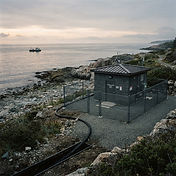
Securing the Subsea Cable Landings: The Vulnerable Chokepoints of Global Data
The entire digital economy transmits roughly 95 percent of international data through undersea fiber-optic cables, yet the physical points where those cables make landfall remain among the least protected nodes in global critical infrastructure. This op-ed argues that the security community's fixation on digital perimeters has left a concrete, addressable vulnerability largely unguarded.

Breaking News
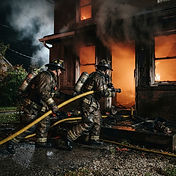
Fire Crews Battle Vacant Apartment Building Fire in Kansas City's Wabash Block
Kansas City fire crews responded Sunday morning to a reported apartment building fire in the 2800 block of Wabash, where they encountered smoke and fire coming from a vacant two-story structure. Interior operations were conducted, searches came back all clear, and no injuries were reported. The cause remains under investigation.
