
Manual Lockdowns Are a Fatal Design Flaw
October 25, 2026· Dan Manning
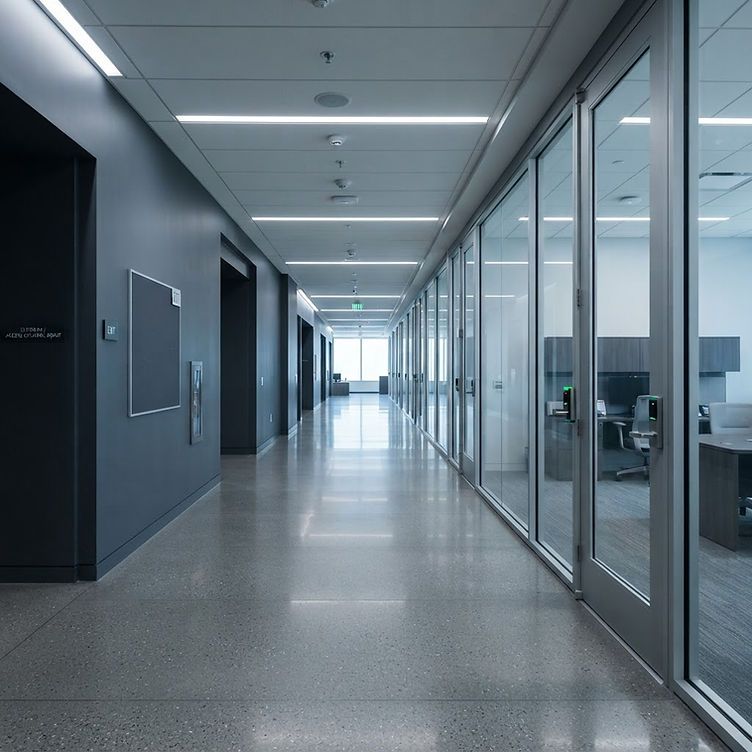
The Design Problem at the Center of Institutional Safety
Every year, institutional safety committees across the United States convene to review shelter-in-place protocols, distribute laminated procedure cards, and conduct drills that rehearse a philosophy developed decades before the current threat environment existed. The logic of those protocols has always been simple: secure in place, reduce movement, wait for law enforcement. That logic is not wrong in concept. It is fatally limited in execution, because it assigns the most time-critical mechanical task in a crisis to the human being who is most likely to be in psychological shock when that task is required.
The central thesis of this piece is direct: any institutional security architecture that requires a staff member to manually locate, insert, and turn a physical key to secure a classroom, corridor, or corporate suite during an active shooter event has accepted an indefensible design flaw. The national conversation about safety spending priorities heading into the late 2026 academic cycle presents a concrete opportunity for administrators, general counsels, and facilities directors to correct that flaw by committing to automated, acoustically triggered, ballistic-rated zoning systems. Passive shelter-in-place philosophy is no longer sufficient as a primary protective layer; kinetic smart-lockdown infrastructure must replace it at the top of institutional capital allocation lists.
What the FBI Data Actually Shows About Response Windows
The FBI's ongoing series of Active Shooter Incidents in the United States reports, produced by the Critical Incident Response Group, consistently documents that the median duration of active shooter events is short enough to make human reaction time the decisive variable. Across the incidents analyzed in recent FBI reports, a substantial portion of events concluded before law enforcement arrived on scene. In those cases, the outcome for occupants depended entirely on the protective measures already in place at the moment the first shot was fired.
That data point carries an architectural implication that many administrators have been slow to absorb. If a meaningful share of active shooter events end before police engagement, then a security philosophy organized around law enforcement response as the primary protective mechanism is structurally misaligned with the actual threat timeline. What the data supports is a physical environment that denies the attacker movement and access autonomously, without requiring a human being to execute the securing action. The FBI reports do not themselves mandate any specific hardware standard, but the timeline data they document builds an undeniable operational case for pre-positioned, automated physical barriers.
NFPA 3000 and the Standard's Demand for Integrated Physical Controls
NFPA 3000, the Standard on Preparedness and Response to Active Shooter and/or Hostile Events, represents the most authoritative consensus framework currently available to institutional planners. The standard addresses the full spectrum of preparedness: organizational planning, training, communication, and physical infrastructure. Critically, NFPA 3000 does not treat physical hardening as an optional enhancement to a training-based program. It treats integrated physical controls as a foundational layer of a complete hostile event response system.
For administrators working through budget justification cycles, NFPA 3000 provides a standards-based rationale that survives legal scrutiny. When a school board or corporate risk committee is asked to approve a capital expenditure for automated locking systems and ballistic-rated door assemblies, the ability to point to a published national consensus standard from NFPA is qualitatively different from advocating based on general concern. NFPA 3000 establishes that these measures are within the recognized scope of institutional responsibility, which has direct implications for both insurance underwriting and litigation exposure.
UL 752 and the Technical Floor for Ballistic-Rated Components
Underwriters Laboratories Standard UL 752, the Standard for Bullet-Resisting Equipment, defines the performance levels against which glazing, panels, and barrier assemblies are tested. The standard classifies protection levels from Level 1 through Level 8 based on the caliber and velocity of projectiles used in testing. For institutional procurement, UL 752 provides the only defensible technical reference point when specifying window film upgrades, door lite replacements, or full barrier assemblies in high-occupancy areas.
The practical significance of UL 752 for an automated zoning strategy is this: speed of lockdown without ballistic resistance means an attacker is denied movement but still has a surface that can be defeated with a firearm. A classroom door that locks automatically in 400 milliseconds after an acoustic trigger but retains a standard glazed lite offers marginal improvement over a manually locked door with the same glazing. The pairing of automated actuation with UL 752-rated components is what produces a genuinely hardened barrier. Administrators who invest in smart-lockdown actuation without simultaneously upgrading the physical specifications of the barriers those systems control are accepting a gap in their protection architecture that both technical reviewers and plaintiff attorneys will identify.
Texas School Safety Center hardware guidelines align with this combined approach. TxSSC guidance to Texas educational institutions emphasizes that door hardware selection must consider both the locking mechanism's reliability under stress and the structural integrity of the door assembly itself. Specifying an electrified strike or magnetic hold-open device on a hollow-core door frame does not meet the spirit of those guidelines; it creates an appearance of compliance without the underlying performance.
Acoustic Gunshot Detection as the Triggering Layer
The automated lockdown concept described in this piece depends on a triggering mechanism that operates faster than human perception and decision cycles. Acoustic gunshot detection technology, which uses sensor arrays to identify the acoustic signature of a gunshot and triangulate its location, has matured substantially over the past decade. Systems from multiple commercial vendors are now deployed in school districts and corporate campuses with demonstrated detection latencies measured in fractions of a second.
The operational model is straightforward. Upon detection of a qualifying acoustic event, the system sends an automated signal to the building management or access control platform, which executes a pre-programmed zoning lockdown: electronic locks engage, access-controlled doors close and secure, designated egress paths remain open to allow occupant evacuation while ingress points are hardened. The entire sequence from acoustic detection to physical barrier engagement occurs without requiring any staff member to take any action. The staff member's role in that architecture shifts from executing the lockdown to accounting for occupants and communicating with emergency responders.
This is the substantive difference between a kinetic smart-lockdown system and a shelter-in-place protocol. The protocol relies on human execution. The system executes autonomously. In an environment where research consistently shows that fine motor skills and complex task execution degrade sharply under acute threat stress, removing the human execution requirement from the most time-sensitive physical task in the response sequence is a meaningful improvement in expected outcomes.
The Litigation Record and the Cost of Institutional Inaction
The legal consequences of inadequate institutional response to active shooter events have expanded substantially through litigation arising from both the Parkland and Uvalde school shootings. In the Parkland cases, litigation examined the adequacy of security measures in place prior to the February 2018 attack, including door locking procedures and access control infrastructure. The Uvalde litigation, following the May 2022 Robb Elementary School attack, has raised questions about both law enforcement response protocols and the physical security infrastructure of the facility.
Without attributing specific rulings or settlement figures that cannot be verified from the source material provided, the overall direction of institutional liability law in this area is clearly toward greater accountability for foreseeable failures in physical security infrastructure. Courts and juries are increasingly willing to examine whether an institution adopted available protective measures that would have been consistent with recognized standards. The existence of NFPA 3000, UL 752, and agency-specific guidance documents such as those from TxSSC means that administrators cannot credibly claim ignorance of available standards. The question for plaintiff counsel in future cases will be whether a given institution knew about these standards, had the resources to partially or fully implement them, and chose to allocate those resources elsewhere.
The financial architecture of institutional liability in this area creates a spending calculus that should inform budget deliberations. Automated lockdown systems and ballistic-rated hardware upgrades carry defined capital costs. Litigation arising from a hostile event that occurs in the absence of available protective measures carries costs that are neither defined nor bounded. Risk managers and general counsels who have not modeled that comparison explicitly should do so before the next budget cycle closes.
Addressing the Counterargument: Cost, Complexity, and False Alarms
The standard objections to automated smart-lockdown investment fall into three categories: cost, system complexity, and false alarm risk. Each deserves a direct response.
On cost, the objection is real but often overstated. Capital costs for access control upgrades, acoustic detection sensors, and door hardware are substantial, and many public school districts operate under genuine fiscal constraints. The appropriate response to this constraint is phased implementation beginning with highest-occupancy and highest-risk zones, combined with advocacy for state and federal grant funding. The Bipartisan Safer Communities Act, signed into law in 2022, allocated funding streams through the U.S. Department of Justice and U.S. Department of Education specifically for school safety infrastructure. Administrators who cite cost as a barrier without having pursued available grant mechanisms have not fully closed the objection.
On complexity, modern integrated access control platforms have substantially reduced the configuration burden for automated response systems. Most institutions that have already deployed card-access or fob-access systems have an infrastructure foundation that can support automated lockdown programming without complete replacement of existing hardware. The complexity argument is more applicable to legacy buildings with no existing access control infrastructure, where the upgrade path does require more comprehensive planning and execution.
On false alarms, the concern is legitimate. Acoustic gunshot detection systems have historically carried false positive rates that varied by environment and sensor placement. Systems installed in proximity to loading docks, gymnasium floors, or mechanical rooms with impulsive noise sources can generate alerts that require human review before triggering a full lockdown. The appropriate design response is a two-stage triggering protocol: automated alert and partial response on first detection, with full lockdown contingent on either confirmation from a second sensor or a brief human authorization window measured in seconds. This architecture preserves automation speed while reducing the operational disruption and staff anxiety associated with frequent false activations.
Practical Recommendations for Administrators
For educational and corporate administrators approaching 2026 budget cycles with active shooter mitigation on their agenda, several concrete actions are warranted.
First, commission a formal physical security assessment against NFPA 3000 criteria. Without a baseline gap analysis, budget requests lack the specificity needed to survive scrutiny from finance committees or boards of trustees. A credentialed physical security assessor can map existing infrastructure against the standard's requirements and produce a prioritized remediation list.
Second, review door hardware specifications against TxSSC guidance for educational institutions, or equivalent state-level guidance for other jurisdictions, and against UL 752 performance levels for any glazed components in high-risk areas. Hardware that does not meet these benchmarks should be scheduled for replacement in the capital plan.
Third, issue a formal request for information from acoustic gunshot detection vendors for a pilot deployment in the highest-occupancy building on the campus or portfolio. Pilot deployments generate the institutional data needed to evaluate false alarm rates, integration complexity, and staff response protocols in a controlled context before full-portfolio commitment.
Fourth, engage legal counsel to review institutional liability exposure under current case law developments from Parkland and Uvalde-related litigation. That review should explicitly address whether existing security infrastructure is consistent with NFPA 3000 and applicable state standards, and should document the institution's good-faith efforts to close any identified gaps.
Finally, treat staff training as a complement to physical infrastructure investment, not a substitute for it. Training that prepares staff to execute manual lockdown procedures is valuable in contexts where automated systems have not yet been deployed or have experienced a failure. Training that replaces the investment in automated systems by asserting that well-trained staff can close the protection gap is not a defensible position when measured against the human performance data from documented incidents.
The Spending Decision That Cannot Be Deferred
The late 2026 budget cycle arrives against a backdrop of ongoing national debate about the appropriate level and allocation of safety spending in educational and corporate environments. That debate frequently becomes abstract, circling questions of philosophy and priority without arriving at technical specifics. This piece has argued for a specific technical position: that the protection gap created by manual lockdown dependence is identifiable, measurable, addressable with available technology, and increasingly indefensible under both the liability standards courts are applying and the consensus standards NFPA has published.
Administrators who defer this investment are making a documented choice to retain a known architectural vulnerability in their physical security environment. The technology to address it exists, the standards to specify it are published, and the litigation record demonstrates that courts are prepared to hold institutions accountable for foreseeable failures. Physical protection that executes at machine speed, secured by ballistic-rated components tested to UL 752 standards, triggered by acoustic detection systems with sub-second latency, represents the current state of the art in institutional hostile event response. Institutions that have the capacity to move toward that standard and choose to allocate resources elsewhere will find that choice examined carefully if the architecture they retained is ever tested under fire.
USPA Nationwide Security provides professional security consultation and guard services for educational institutions, corporate campuses, and critical infrastructure nationwide. To discuss active threat mitigation planning for your facility, contact the USPA team at (800) 214-1448.
Questions about fire watch, executive protection or guard coverage for your property? Request a quote or call our dispatch line.
More from the blog

Breaking News
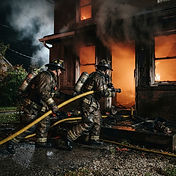
Fire Crews Battle Vacant Apartment Building Fire in Kansas City's Wabash Block
Kansas City fire crews responded Sunday morning to a reported apartment building fire in the 2800 block of Wabash, where they encountered smoke and fire coming from a vacant two-story structure. Interior operations were conducted, searches came back all clear, and no injuries were reported. The cause remains under investigation.


Breaking News
Lithium-Ion Battery Fire Displaces Residents at Spokane's Donna Hanson Haven Apartment Building
A lithium-ion battery from an electric bicycle caused a fire on the third floor of Donna Hanson Haven in downtown Spokane on Saturday, October 25, 2026. The Spokane Fire Department evacuated all residents; Catholic Charities Eastern Washington coordinated decontamination, and most tenants returned home the same evening. Seventeen third-floor residents remain displaced with Red Cross support.

Breaking News
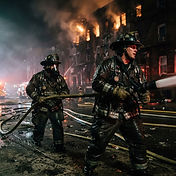
Pennsauken, NJ Apartment Building Evacuated After 3-Alarm Fire at Cooper River Apartments
A 3-alarm fire at the Cooper River Apartments on McClellan Avenue in Pennsauken, New Jersey forced the evacuation of roughly 40 residents early Monday morning. One woman jumped from the fifth floor before fire crews arrived and was transported to a local hospital. The cause of the fire has not been released.
