
In Titusville, the sprinkler did its job. Now the system is the reason the building needs a watch

By Albina Bieci, Staff Writer
A single head held a third-floor bedroom fire in check before crews arrived. The discharge also left lower units under water and the system out of service, which is the condition that puts a fire watch on the building.
TITUSVILLE, Fla.
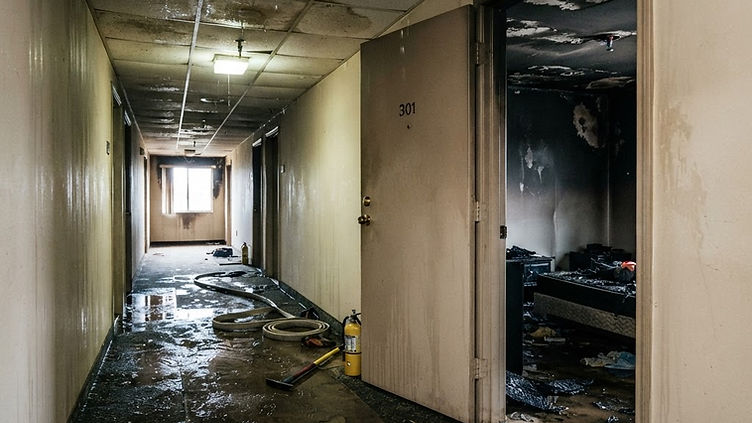
A third-floor bedroom fire at an apartment complex on South DeLeon Avenue in Titusville was already being held in check by the building's own sprinkler system when firefighters arrived, according to Space Coast Daily. One occupant was hospitalized with burns. Between ten and fifteen residents were displaced, not by flame but by the water that put the fire out.
Emergency fire watch
Alarm or sprinkler system out of service? USPA can post a fire watch on site within 60 minutes.
Trained officers, documented patrol rounds and direct 911 notification, scoped to the order your fire marshal actually issued.
Live dispatch, 24 hours. In an emergency, call 911 first.
The sequence matters more than the damage total. Titusville Fire Department crews responded to a water-flow alarm, the signal a sprinkler system sends when a head opens, and found the fire contained to a single bedroom. That is a sprinkler system performing exactly as designed: it detected the fire, it flowed water on it, it alerted the building, and it kept the fire small enough that the people inside could get out.
What follows a successful sprinkler activation is less widely understood, and it is where the displacement came from.
What the record establishes
- The fire occurred at an apartment complex on South DeLeon Avenue in Titusville, Florida.
- Crews responded to a water-flow alarm and found a third-floor bedroom fire.
- The sprinkler system activated and suppressed the fire before crews arrived.
- One occupant was hospitalized with burns.
- Ten to fifteen residents were displaced by heavy water damage in lower units.
- The report was published by Space Coast Daily on Nov. 27, 2026.
The cause of the fire has not been established in the reporting.
The system that saved the building now has to be taken out of service
A sprinkler head that flows water cannot simply be closed and forgotten. The system has to be shut down, drained, repaired and returned to service under pressure, and that process is governed by NFPA 25, the standard for inspection, testing and maintenance of water-based fire protection systems.
Three things are true at once after an activation like this one.
The operating heads must be replaced. Any sprinkler that has flowed is spent. Heads are replaced with the same make, model, temperature rating and response type, from the building's spare stock, and the spare stock is replenished. Substituting a different head changes the hydraulic design of the area it protects.
The piping and the valve must be inspected. Fire department connections, control valves, the riser, the alarm check valve and the flow switch all get looked at, and the system is restored to full pressure and tested. A system returned to service below design pressure is a system that will underperform in the next fire.
The impairment has to be managed while it lasts. NFPA 25 sets out the impairment procedure: the affected portion is tagged out, the fire department and building occupants are notified, and where the system cannot be restored promptly, a fire watch covers the unprotected area. In Florida, the fire code is built on NFPA 1 and NFPA 101, and Section 901.7 of the International Fire Code gives the code official the authority to require that watch and to prohibit occupancy until the protection is back.
That is the mechanism that turns a contained bedroom fire into a building that needs staffing. It is not bureaucratic caution. It is the code recognizing that a building approved with sprinklers is a different risk than the same building without them, and that the difference has to be filled by a person.
Water is the second fire
The displacement figure in this incident is the part that surprises people. Ten to fifteen residents out of a building where the fire never left one room.
Suppression water moves down. A third-floor discharge lands on the ceiling assembly of the second floor, passes through light fixtures, penetrations and the gaps around plumbing, and reaches the first floor. Carpet, drywall, insulation, cabinetry, mattresses and clothing absorb it. Ceiling tiles in corridors sag and collapse. Water finds electrical panels and receptacles, and once it does, the affected circuits are shut off until an electrician certifies them.
The result is a building where a handful of units are uninhabitable on water alone, and the rest of the building is on edge because the alarm system and the sprinkler system are both in an abnormal condition.
Why an occupied building is harder to watch than a vacant one
Most fire watch work in the country is performed in vacant or partially vacant buildings. This incident is the harder case: the building is still occupied, and the units that remain in service are the ones that now depend on the watch.
That changes the job description.
A patrol in an occupied building has to cover the impaired area, but it also has to know who is inside, where the working exits are, and which stairwells are usable if the alarm sounds. It has to be able to distinguish cooking smoke from a new fire, and it has to be able to knock on doors and move people out without an alarm system to help. NFPA 601 treats this as a defined duty: patrols at intervals, a written log of each round, immediate notification of the fire department, and notification of occupants.
The log is the part owners underestimate. When an insurer asks whether the building was covered during the impairment, the answer is the record, not the invoice.
What the owner has to sequence
The practical order of operations after an activation like this one:
Secure the fire scene and the burned unit until the fire marshal releases it. The unit is both evidence and an opening in the building.
Get the sprinkler contractor on site the same day to isolate, drain and begin the repair, and get the fire department's impairment notification in writing.
Order the watch before the system goes down, not after. A gap of a few hours between the isolation and the arrival of the watch is exactly the gap the code is written to prevent.
Assess the water-damaged units honestly. A unit with wet ceilings and standing water is not habitable, and putting a tenant back into it invites a mold claim and a second displacement two weeks later.
Coordinate the alarm panel. The water-flow alarm that started this sequence is a signal from the panel. If the panel itself was affected, the building has two impaired systems rather than one, and the watch footprint grows.
Plan the return to service as a documented event. The contractor's test report, the fire department's acceptance and the watch's final log entry should close the file together.
The larger point
Sprinklers work. That is the headline of this incident, and it should not be lost. A bedroom fire in a multi-family building became a one-room fire with one injury and no deaths, because a single head opened and held it.
But a sprinkler system is not a permanent condition. It is a maintained system, and every activation is followed by a maintenance event during which the building's protection is reduced to what its occupants can do on their own. That interval is where fire watch comes from, and it is why the request for coverage arrives at the same time as the restoration contractor.
The four things an owner should have ready before the next activation
Every building with a sprinkler system will eventually have a head open. The owners who come out of that event well are the ones who decided in advance what they would do, and the ones who do not are the ones who spend the first night on the phone.
Four items belong in a pre-fire plan, written down and stored where a property manager can find them at 2 a.m.:
The sprinkler contractor's emergency number, and a second one. Not the sales line. The service line, plus a named technician. A system that is isolated but not being repaired is a system that keeps the building on a watch for an extra day.
A spare head cabinet that matches the system. NFPA 25 requires spare sprinklers on site, in the correct types and temperature ratings, with a wrench. A cabinet full of the wrong heads is worse than an empty one, because it invites a substitution that changes the design.
A pre-arranged fire watch provider. The order arrives from the fire marshal with a deadline attached. An owner who has already had the conversation, and who knows what coverage costs and how fast it can be on site, can satisfy the order the same day.
A tenant notification template. The occupants of the building need to know what happened, what is working and what to do if the alarm sounds. That message should be written before it is needed, in plain language, with the fire department's number in it.
The value of the list is not administrative tidiness. It is that each item shortens the interval between the fire and the restoration, and that interval is exactly the period the fire watch is paying for.
USPA provides emergency fire watch for buildings with impaired suppression and detection, staffed to NFPA 601 patrol and documentation standards, and the fire watch white paper explains how coverage is scoped, logged and closed out with the authority having jurisdiction.
Reference and services
Knowledge base
NFPA 25 Impairment Protocols (2026): Fire Watch, the Ten-Hour Framework and System Restoration
National reference · 23 pages, citation registry attached
Read the volumeService
Fire watch services
How USPA staffs this work, with the coverage, licensing and dispatch terms for the assignment.
See the serviceSources
About the reporter
Staff Writer
Staff writer for the USPA Nationwide Security newsroom. Receives newsroom tips, corrections and editorial inquiries.
Author biography and credentialsMore from The Watchline

Fire Protection
A Thanksgiving fire displaced 36 people from a St. Paul building where one apartment burned
Firefighters held the flames to a single unit. Inspectors still emptied all sixteen, because smoke, water and severed utilities make a building uninhabitable long before the charred apartment does.
· Albina Bieci

Fire Protection
Eighty firefighters, one downtown Los Angeles commercial building, and the roof they had to cut
Crews knocked the fire down in twenty minutes at 717 E. Ninth Street. The ventilation openings and a compromised alarm panel are what keep the building a fire watch assignment after the trucks leave.
· Albina Bieci

Fire Protection
Pooler crews stayed for the water. The alarm system is what keeps the building on a watch
Pooler Fire-Rescue put out a commercial fire on Highway 80 and then spent hours on smoke and water removal. Electrical shutdowns and wet detection are why the building is not cleared when the fire is.
· Albina Bieci