
Memphis, Little Rock and Charlotte: the cold-snap buildings most likely to lose fire protection this weekend

By Albina Bieci, Staff Writer
Distribution space, vacant storefronts and 1980s multifamily share one trait across the Mid-South: nobody is inside at 2 a.m. when the fitting splits.
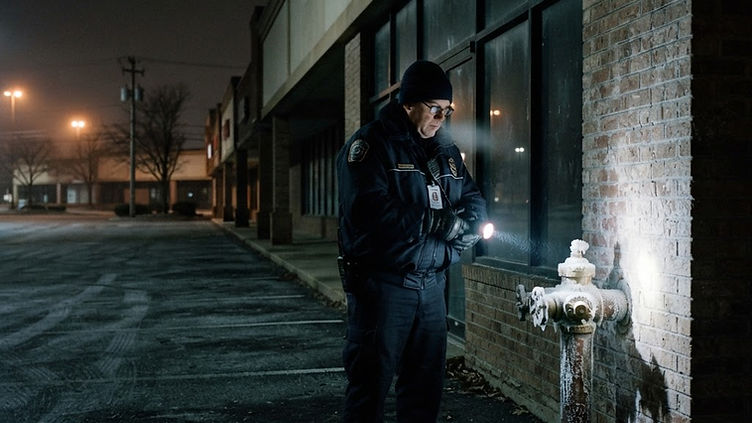
MEMPHIS, Tenn.
MEMPHIS, Tenn. — The first hard freeze of the season is forecast to arrive across the Mid-South from Friday, November 13 through Sunday, November 15, and in three of the region's largest metros the buildings most likely to lose fire protection are the ones where nobody works at night: distribution warehouses, vacant storefronts and older apartment complexes with exterior utility closets.
National Weather Service guidance puts overnight lows in the upper 20s and low 30s across the corridor, with highs forecast to stay in the 50s. Memphis, Little Rock and Charlotte sit inside that band. None of the three is a cold-weather city in the way Minneapolis or Buffalo is, and the construction reflects it: short frost depths, shallow domestic lines, sprinkler piping in unheated attics and storage areas, and riser assemblies on the outside of buildings.
Memphis: the distribution problem
Memphis moves freight, and the buildings that move it are enormous. A single distribution center can hold hundreds of thousands of square feet of racking under a wet-pipe sprinkler system, with unheated receiving areas, dock canopies and racked storage space that stay much closer to outside temperature than the office portion of the building.
When a line in the racking or near a dock door freezes and splits, the failure is not a dripping pipe. It is a system that depressurizes and a fire protection envelope the size of several football fields that is no longer protected, in a building holding palletized product that burns.
Memphis also carries a substantial inventory of older and vacant commercial buildings — downtown, along the older arterial corridors, and in the industrial fringe where a previous tenant left a sprinkler system in place and a thermostat turned down. A vacant building that freezes over a weekend is discovered on Monday by whoever unlocks the door.
Little Rock: older stock, shorter frost depth
Little Rock's exposure is concentrated in the older commercial and multifamily buildings that make up much of its downtown and midtown fabric, plus the industrial properties along the Arkansas River.
Two features matter. First, domestic and fire protection piping in buildings of that era is frequently in exterior walls, crawlspaces and unconditioned basements. Second, water mains in this part of the country are buried well above the frost depths used in northern states, so a sustained freeze changes the behavior of the whole system, not just the pipe inside the building.
A dry-pipe system on an unheated warehouse is the other common failure. Dry systems depend on drum drips and low-point drains being cleared, and the first cold night of the year is when the accumulated condensate from a humid Arkansas summer announces itself.
Charlotte: growth does not equal freeze protection
Charlotte's risk looks more like Nashville's than Memphis's. The metro has built rapidly, and most new construction complies with a code that requires sprinkler piping to be protected from freezing — but compliance is achieved through insulation and assumptions about attic temperatures that a two-night freeze with wind can defeat.
Parking structures are the clearest example. Garages serving new mixed-use buildings are unheated by design, and their dry-pipe systems are exactly the assemblies that fail when residual water is not drained. Older multifamily in east and west Charlotte adds the classic southern profile: exterior utility closets, open crawlspaces and a single riser serving 150 units.
How coverage is being assigned
The criteria used to rank properties in all three metros are consistent: a building that will be empty overnight, a water-based system exposed to unheated space, and no on-site staff to notice a pressure drop.
Officers walk the affected zones on a fixed interval, checking riser-room and storage temperature, gauge readings where the system is partly charged, dock and racking areas, and the status of any tagged system. Where protection has already failed, the fire-found procedure is written and agreed before the first shift, naming who calls 911 and who meets the fire department.
Coverage is described at fire watch services in Memphis, Little Rock and Charlotte. Memphis properties already recovering from a burst line can also use the emergency sprinkler repair route, and any building that loses protection overnight can be staged through the emergency fire watch line.
The sequence the fire marshal expects
Tennessee, Arkansas and North Carolina each enforce an adopted fire code through a state fire marshal's office and local fire departments. In all three, a required system that is out of service triggers the same obligation: notify the authority having jurisdiction, and maintain an approved fire watch until the system is restored.
NFPA 25 provides the impairment procedure that makes the watch documentable — notification, tagging, interim protection and a restoration test. The order matters. A property that posts officers without notifying the fire department has coverage the department does not know about. A property that returns a system to service without a test has a repair, not a restoration.
Before Friday
Drain dry systems and drum drips and record it. Confirm heat in riser rooms, dock areas and any space where sprinkler piping runs. Wrap or heat-trace exposed backflow preventers. Verify that low-temperature and supervisory alarms reach someone overnight. Confirm shut-off locations with weekend staff. Line up a sprinkler contractor and a water restoration vendor now, because after the first regional freeze the queue is measured in days. For vacant buildings, arrange a physical check rather than relying on an alarm that reports to an office that will be closed.
A regional freeze does not produce dramatic fires. It produces broken pipes, flooded ceilings, and buildings whose protection went out of service on a Saturday night with nobody inside to see it happen.
Why a warehouse outage is a total loss of protection
In an office building, an impaired system means the occupied floors are unprotected until it is restored. In a distribution center, the same impairment applies to a volume of combustible material measured in acres.
Modern racking stores product high, in dense arrays, with flue spaces designed to let sprinkler water reach a fire in its early growth. Take the water away and the same geometry becomes a chimney. A fire that starts in a single pallet position has vertical fuel and horizontal fuel in every direction, and the building's own height works against the responding department.
That is why an impaired warehouse system is treated differently from a small commercial outage. Officers are posted to the racking aisles and the dock face, with rounds short enough that a smoldering start is found by a person. Where the building has a fire pump, its status is recorded on every round, because a pump that has lost heat is a second failure stacked on the first.
Vacancy is the multiplier
All three metros carry commercial buildings with no tenant and no staff: a former big-box space, a closed restaurant, an office floor leased but unoccupied, a storefront awaiting redevelopment.
A vacant building is a freeze risk in two ways. The heat is off, sometimes entirely, and the sprinkler system is left in service because the owner does not want to pay to drain and restore it. Nobody is inside to hear a fitting split, and the alarm, if it reports anywhere, reports to a management company handling dozens of properties.
The result is a building discovered on Monday with water through several floors and a system that has been out of service since Friday night. For those properties, a physical check on Saturday and Sunday is the cheapest intervention available, and it is the one most often skipped.
The notification clock
The obligation to notify the authority having jurisdiction is not satisfied by an internal email. Memphis, Little Rock and Charlotte each enforce an adopted fire code with an impairment provision, and each expects the property to report a system that is out of service and to maintain an approved watch until it is restored.
Properties that call the fire department after the water has been cleaned up are in a different position from properties that called when the system was tagged. The first is a documented impairment with interim protection. The second is an unreported outage discovered after the fact.
The same distinction applies to insurance. A carrier reviewing a freeze claim will ask what the property knew, when it knew it, and what was done in the interval.
Preparing a distribution market for a two-night freeze
For warehouses, the checklist is mechanical: drain dry systems and low points, confirm heat in the pump room and any space where wet piping runs, verify that the pump house is above freezing, and check the fire department connection for obstruction by snow, ice or stored product.
For multifamily and older commercial, it is the same list applied to smaller buildings: exterior riser closets, backflow assemblies, crawlspaces and attic runs. For vacant property, it is a person on site.
None of that is complicated. All of it has to happen before Friday night, because after the first regional freeze the contractors are booked and the only variable left is who is walking the building.
Services in Memphis, TN
Sources
About the reporter
Staff Writer
Staff writer for the USPA Nationwide Security newsroom. Receives newsroom tips, corrections and editorial inquiries.
Author biography and credentialsMore from The Watchline


Fire Protection
Gulf Coast faces a low-30s freeze with almost no cold-weather protection in its buildings
Mobile, Pensacola and New Orleans are engineered for heat, hurricanes and humidity. A single night near freezing is enough to take commercial fire protection offline across all three.
· Albina Bieci

Fire Protection
Nashville and Knoxville head into near-freezing nights with unheated attic lines and full parking decks
Tennessee's multifamily boom put a decade of sprinkler piping into attics and garages designed for a mild winter. Two cold nights is what it takes to find out which ones hold.
· Albina Bieci

Fire Protection
Birmingham and Huntsville brace for sub-freezing nights, and Alabama's exposed risers are the reason
The state's commercial stock was built for heat. Two nights in the 20s puts exterior riser rooms, backflow preventers and unheated warehouses at the top of the risk list.
· Albina Bieci