
A two-alarm fire on College Hill gutted one unit, displaced about 15 residents and sent a Pullman officer to the hospital

By Albina Bieci, Staff Writer
The fire ran through a six-unit building in the campus neighborhood, and a responding officer was treated for smoke inhalation. Smoke and water damage across the adjoining units is what forces the power and alarm shutdowns.
PULLMAN, Wash.
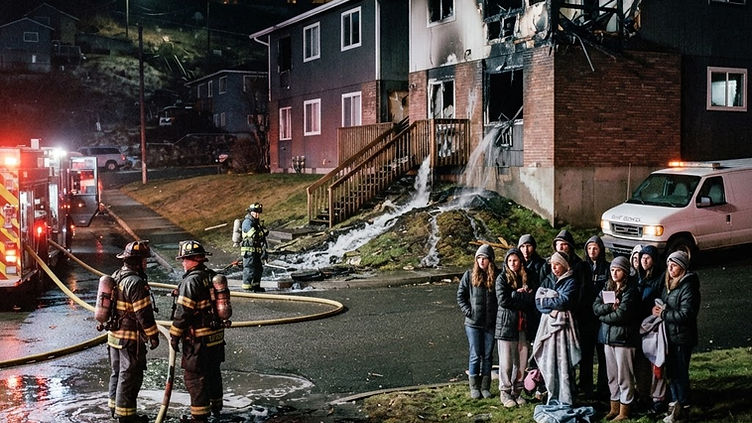
A two-alarm fire tore through a six-unit apartment building on College Hill in Pullman, Washington, gutting one unit, displacing roughly fifteen residents to an emergency shelter and sending a responding police officer to the hospital for smoke inhalation, according to reporting by Pullman Radio.
The officer was not the only person exposed to smoke that night, and the building was not the only property affected. In a six-unit building, a fire that guts one unit usually takes the other five out of service for reasons that have nothing to do with flame, and the residents of those units are displaced by the response to a fire that never entered their apartments.
What has been confirmed
The fire was a two-alarm incident at a six-unit apartment building in the College Hill neighborhood. One unit was gutted. Approximately fifteen residents were displaced and moved to an emergency shelter. A police officer who responded was taken to a hospital for treatment of smoke inhalation.
The cause has not been established in the reporting available at publication. No damage estimate has been released. The condition of the officer after transport has not been made public, and the article will be updated if the department issues a statement.
College Hill is a dense rental neighborhood next to the Washington State University campus, where older houses and small apartment buildings sit close together on narrow streets. Buildings in that configuration share the two things that decide how a fire spreads: a roof line and a wall.
Why one gutted unit displaces fifteen people
A six-unit building is a single structure with a shared attic, shared electrical service in most configurations, and a shared alarm system that covers every unit. When fire reaches the attic, it can run the length of the building above the ceiling line, past the separations that divide the apartments below. Crews open ceilings and pull down material to find it, and the water that stops it lands on everything underneath.
The result is a building where the fire damage is concentrated in one unit and the habitability damage is everywhere. Smoke travels through shared voids and penetrations. Water pools in lower units and in wall cavities. Electrical panels that were not involved in the fire are now wet or have been shut off, and the alarm system is reporting trouble on devices across the building because the wiring that connects them has been exposed to heat or water.
That is the point at which the building stops being a fire scene and becomes an occupancy problem. Five units are standing, and none of them can be certified as safe to live in while the power is off and the alarm system is impaired.
The officer injury is the part worth pausing on
Smoke inhalation injuries to responding officers happen in the first minutes, before a scene is organized and before anyone is assigned to a fixed position. An officer arriving ahead of the fire department often goes in to clear occupants, and in a residential building with a common corridor, the smoke layer in that corridor can be down to knee level before the first engine is on scene.
Departments have tightened procedures around this over the past decade: no entry without an air pack and a partner, clear the building from the outside where possible, and leave the interior to the fire department. The injury in Pullman is a reminder of how much of the early evacuation work in a residential fire falls to police, and how little protection they carry while doing it.
What a fire watch covers in a building like this
Washington's fire code adopts the International Fire Code, which gives the fire official authority to require a fire watch when a required fire protection system is out of service or when conditions in a building create a hazard the systems cannot address. A six-unit apartment building with a damaged alarm system and no power to half its units meets that description.
In practice, a watch on a building of this size is a posted officer working the exterior and the common areas on a documented schedule, checking the affected unit and the units below it for the smell of smoke in concealed spaces, and keeping people out of the building. The building is full of the possessions of fifteen people who could not take everything with them, and a damaged apartment with a forced door is not secure.
The redevelopment risk in a building that has burned is real. A fire in one unit can leave a hot spot in a wall cavity or above a ceiling that the fire department could not reach with water from the exterior. The watch exists to catch that before it becomes a second fire with nobody in the building to notice it.
Related coverage
Watchline has reported on the same pattern in other small apartment buildings this week. In South Bend, an overnight fire in a three-unit building hospitalized one man and displaced the rest of the tenants. In Corpus Christi, a pre-dawn second-floor fire left investigators working a Buford Street apartment building.
What tenants and landlords should do first
The landlord's first obligation is to tell the tenants in writing what is and is not safe to enter, and when. In a building where the power has been shut off, an apartment that looks untouched may have no heat, no refrigeration and no working smoke alarm, because the alarm in that unit is powered by the building's system rather than by a battery.
The tenants' first obligation is to keep the receipts. Emergency housing, replacement medication, food that spoiled in a refrigerator that lost power, and the cost of a temporary rental are all recoverable under most renters policies, and most policies require documentation that is much easier to collect in the first week than in the third.
The service connection
USPA Nationwide Security provides emergency fire watch and post-fire site security for multi-unit residential properties in eastern Washington and the Palouse, including buildings where a fire has left alarm or electrical systems out of service. Officers log rounds, keep unauthorized entry out of damaged units, and call the fire department directly when something is found. Requests can be made through the emergency fire watch page or by calling (800) 214-1448.
What the shelter operation involves
Moving fifteen people into emergency shelter on a cold night is a logistics problem before it is a housing problem. Shelter capacity, transportation, medication left in a unit, pets that cannot be admitted and identification documents inside a building nobody can enter all have to be worked out in the first few hours.
The Red Cross and local emergency management handle the shelter side. The property handles the access side, which means deciding when residents can go back in, escorted, to retrieve what they need. That escorted access is the moment a damaged building is most exposed, because it puts a group of people and their belongings through a structure with no lighting and no working alarm.
How partial occupancy gets documented
In a six-unit building where five units are standing, the landlord has to be able to show what was inspected and what was found. The documentation usually takes the form of a written notice to each tenant naming the unit, its condition, the systems that are working, and the date the unit can be reoccupied.
Where the building's alarm system is impaired, that notice is paired with the fire watch record, because the two together demonstrate that the property took the impairment seriously. An insurer reviewing a later claim on the same building will read both.
The smoke damage nobody claims for
Smoke residue from a residential fire is acidic, and it settles throughout a building rather than only in the unit that burned. It etches metal, discolors painted surfaces and leaves an odor that returns in warm weather if the material was not cleaned. Tenants in adjoining units often do not notice it until they move back in, and by then the claim window has narrowed.
That is why restoration contractors want access to the whole building rather than the damaged unit, and why the property benefits from a single controlled entrance during the work.
What the investigation will look at first
Origin determination in a six-unit building starts with the unit that burned and works outward through the shared assemblies. Investigators look at the electrical service and the branch circuits serving that unit, at appliances and extension cords, and at the common areas that connect to it. In older rental housing converted from single-family use, the wiring is often the part of the building that has been altered most and documented least, which is why it draws attention in an origin investigation.
The finding, when it comes, determines whether anything about the building's condition becomes a code question for the owner.
Sources and status
Reporting on the incident is attributed to Pullman Radio and regional wire coverage. The cause, the damage estimate and the officer's condition remain open pending release by the Pullman Fire Department and the Pullman Police Department. Technical references include NFPA 1, Fire Code and NFPA 25.
Sources
About the reporter
Staff Writer
Staff writer for the USPA Nationwide Security newsroom. Receives newsroom tips, corrections and editorial inquiries.
Author biography and credentialsMore from The Watchline

Fire Protection
A two-alarm fire broke through the roof at The Hive apartments on Abrams Road and damaged six units
Fire broke through the roof of the northeast Dallas complex and six units were damaged. A roof breach and an impaired alarm panel are what put the neighboring wings into a fire watch posture.
· Brian Fitzgibbons

Fire Protection
A three-alarm fire tore through the vacant former Stockton Record building on East Market Street
Crews fought the multi-story former newspaper office and warehouse complex defensively and closed downtown streets. A vacant building that has burned is a security assignment before it is anything else.
· Albina Bieci

Fire Protection
Sprinklers put out an overnight fire at a Perrysburg Township business, and the discharge is what closes it next
The building's automatic sprinkler system suppressed the fire before it reached major structural loss. Once a system discharges and comes offline for recharging and head replacement, the building is unprotected until it is put back in service.
· Brian Fitzgibbons
