
10-Year-Old Boy Killed in Patterson Houses Fire; FDNY Says E-Bike Battery Caused the Blaze
Updated Oct. 29 with the FDNY's confirmed cause, the boy's age and the city's battery fire statistics.

By Albina Bieci, Staff Writer
The FDNY confirmed that a lithium-ion battery on the family's e-bike started the fire that killed a 10-year-old boy on the 11th floor of the Mott Haven tower. Four relatives remain in critical condition.
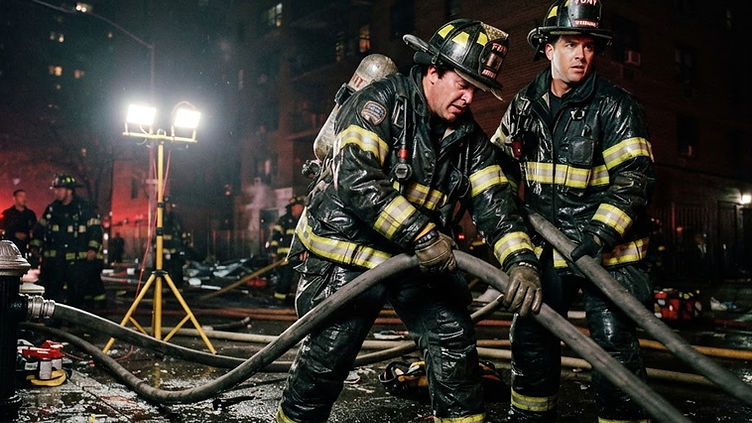
NEW YORK, N.Y.
BRONX, N.Y. — A late-night apartment fire on the 11th floor of the Patterson Houses, a NYCHA residential tower at 320 Morris Ave. in the Mott Haven section of the Bronx, killed a 10-year-old boy and left four of his relatives critically injured early Wednesday, October 28, 2026, the fire department said. Investigators later confirmed that a lithium-ion battery on the family's e-bike started the fire.
About 130 fire and EMS personnel were dispatched to the address just after 12:50 a.m., and the blaze was under control by 2:05 a.m., according to the FDNY. Video obtained exclusively by News 12 showed EMS personnel performing CPR on two individuals on the sidewalk outside the building as firefighters worked to remove victims from the apartment.
Key Facts
- Location: Patterson Houses, 320 Morris Ave., 11th floor, Mott Haven, Bronx
- Time of report: Approximately 12:50 a.m., Wednesday, October 28, 2026
- Fire controlled: 2:05 a.m., according to the FDNY
- Casualties: A boy was pronounced dead at Jacobi Hospital; four others were critically injured — another boy at Jacobi, a boy at Harlem Hospital, and a man and a 33-year-old woman at Lincoln Hospital
- Cause: Confirmed by the FDNY as a lithium-ion battery on the family's e-bike; the bike was stored by the door in the kitchen
- Neighbor account, since corroborated: A neighbor told News 12 that firefighters had relayed that an e-bike battery exploded in the kitchen and that debris blocked the exit. The FDNY later confirmed the battery and the bike's position by the door.
- Victim identities: Not released by officials; the deceased was 10 years old
- Family connection of victims: Two adults and three boys were rescued and are believed to be one family, per WABC; the FDNY did not confirm their relationship
What Officials Confirmed
Fire Commissioner Lillian Bonsignore said investigators determined that a lithium-ion battery on the family's e-bike sparked the fire. The bike, which the family used for work, was found by the door in the kitchen.
"It was in a spot in the kitchen that made it impossible for the residents to leave safely," Bonsignore said at an afternoon briefing.
Mayor Zohran Mamdani said the city would consider new options for storing e-bikes in public housing, including rooms surrounded by cinderblock. "We know that lithium ion battery fires can start quickly and spread incredibly rapidly," he said.
Bonsignore said the city has recorded 401 lithium-ion battery fires, 74 injuries and six deaths so far this year, compared with 292 fires, 51 injuries and one death in all of 2025.
The parents and two teenage brothers of the boy who died were taken to hospitals and were in critical condition as of Wednesday evening, NBC New York reported. Firefighters arrived in less than four minutes and pulled all five people from the apartment.
Neighbors gathered at a memorial outside the building, where a photograph of the boy hung. "All I can say is that the little kid was a happy boy. Everybody in the building loved him," Taisha Aiken said.
Another resident told NBC New York that the e-bike had previously been kept in the hallway, but that residents began keeping bikes inside their apartments after thefts.
What We Know
The FDNY dispatched about 130 fire and EMS personnel to 320 Morris Ave. just after 12:50 a.m. Two adults and three boys were rescued from the 11th-floor apartment and are believed to be members of the same family, according to WABC; the FDNY did not confirm their relationship. One boy was rushed to Jacobi Hospital in critical condition and died there. A second boy was taken to the same hospital in critical condition, a third boy was rushed to Harlem Hospital in critical condition, and a man and a 33-year-old woman were transported to Lincoln Hospital in critical condition. Officials have not released the name or age of the boy who died, or the identities of the injured. The FDNY later confirmed that a lithium-ion battery on the family's e-bike caused the blaze.
A neighbor who spoke to News 12 on condition of anonymity described what she said firefighters at the scene had relayed to her: that an e-bike battery had been plugged in inside the kitchen, that it may have exploded near the stove, and that the resulting debris or fire blocked the apartment's exit. She also said she believed the victims were two parents and their three children, all living in the same unit. The details the neighbor described, including the battery's location near the apartment's only exit, match the account Fire Commissioner Lillian Bonsignore gave at an afternoon briefing.
The fire now belongs to a well-documented pattern: a battery stored inside a residential unit, beside the only way out. The New York City Fire Department has tracked a significant and continuing rise in lithium-ion battery fires across the five boroughs over recent years, with e-bike and e-scooter batteries identified as a primary contributor in residential incidents. USPA's newsroom previously covered a comparable lithium-ion battery apartment fire involving displaced residents in Spokane; that coverage is available here. A related high-rise displacement incident in Miami was also reported this week and can be read here.
What Has Not Been Released
The FDNY has not released the name of the boy who died, the identities of the injured, or the full extent of damage to the building. It is also not known whether the building's fire alarm system, any installed sprinkler system, or smoke detection equipment operated as designed during the incident, or whether any of those systems were impaired before or during the event. The status of corridor and stairwell conditions on surrounding floors during the fire has not been publicly reported.
This article will be updated as the FDNY investigation develops and as official information is released.
Technical Analysis: Fire Behavior in an Aging High-Rise Tower
The Patterson Houses were constructed as part of New York City's mid-twentieth-century public housing expansion; the complex dates to the early 1960s. High-rise residential towers of that era were built under fire and life safety codes that predate modern integrated systems. While subsequent decades have brought various retrofit requirements, buildings of this vintage vary considerably in the scope of sprinkler coverage, alarm system modernization, and compartmentalization upgrades they have received.
An apartment fire on the 11th floor of a tower of this type carries specific risks that differ substantially from a ground-floor or low-rise incident. Smoke rises through vertical shafts — stairwells, elevator shafts, utility chases — and can migrate to floors well above and below the fire floor with relative speed. Corridor pressurization, door integrity, and the condition of rated fire doors become critical factors in how far smoke spreads before suppression. If an apartment door was left open or damaged by the fire — a possibility suggested, though not confirmed, by the neighbor's account — smoke conditions in the 11th-floor corridor would have deteriorated rapidly.
Lithium-ion battery fires present a specific combustion challenge. These fires can involve thermal runaway, a self-sustaining chemical reaction that generates intense heat and releases toxic gases including hydrogen fluoride, carbon monoxide, and other combustion byproducts. Thermal runaway events are difficult to suppress with conventional water application alone and may reignite after apparent extinguishment. The FDNY and the U.S. Consumer Product Safety Commission have both issued guidance on the particular hazards of charging lithium-ion batteries in enclosed residential spaces, particularly near egress pathways.
NFPA 101, the Life Safety Code, establishes fundamental principles for egress integrity in high-rise residential occupancies, including requirements for protected means of egress and fire door maintenance. NFPA 25 governs the inspection, testing, and maintenance of water-based fire protection systems — including standpipes and sprinklers — and establishes the conditions under which a system is considered impaired and a fire watch must be initiated. Where systems are found out of service, damaged, or of uncertain status following a fire event, those standards and applicable local rules govern what comes next for the building.
Local Context and the Building's Obligations After the Fire
For a NYCHA building management office and any third-party property management personnel responsible for the Patterson Houses, the period immediately following a residential high-rise fire is operationally demanding. Several obligations arise simultaneously and are not contingent on a final determination of cause.
The most immediate concerns involve life safety systems. If the fire caused any damage to the building's fire alarm, sprinkler, or standpipe systems — or if inspection following the event reveals impairments — New York City rules, aligned with NFPA 25 and NFPA 72 principles, require that a fire watch be established without delay. The FDNY's fire guard and fire watch requirements apply to buildings where life safety systems are out of service or impaired, and those requirements do not wait for a comprehensive damage assessment to be completed.
A fire watch in a building of this scale is not a single stationary post. It is a structured patrol operation in which trained personnel make continuous rounds through the building — corridors, stairwells, mechanical spaces, and, where access is permitted, affected floor areas — at intervals sufficient to detect any new fire condition before it can develop. The patrol model follows the logic codified in NFPA 601, the standard for security services in fire loss prevention, which defines how rounds should be documented, how discoveries should be reported, and how personnel should be equipped and supervised. A fuller explanation of how patrol rounds work in practice is available in USPA's fire watch patrol rounds explainer.
In New York City, the FDNY can order a fire watch directly and may also require that a licensed fire guard — a person holding the appropriate FDNY certificate of fitness — be deployed for certain impairment conditions. Property managers should confirm with the FDNY incident commander or the borough fire marshal what specific watch requirements have been imposed following this event, document those requirements in writing, and establish a log that records every patrol round: the time, the route, the name of the person conducting the round, and any observations made.
Documentation matters for several reasons. It demonstrates compliance to regulators, supports any insurance claim related to the fire, and creates a contemporaneous record that can be material if litigation arises from the event. Property managers should also ensure that fire watch personnel are briefed on conditions specific to the building — the location of fire alarm pull stations, standpipe connections, the status of any impaired systems, and the emergency contact chain for escalating observations.
For rapid deployment of fire watch personnel anywhere in the Bronx or across New York City, USPA Nationwide Security provides emergency fire watch services with same-day response capability. Coverage can be scaled to the scope of the impairment — a single floor, a wing, or the entire tower — and USPA's teams are familiar with the patrol and documentation requirements that apply under New York City and FDNY rules. The fire watch compliance guide and the USPA fire watch technical white paper provide detailed background on how compliant programs are structured.
Properties in the Bronx seeking both fire watch and general security coverage during the restoration period can reach USPA's Bronx security guard services or the broader New York City fire watch service page for information on available programs. USPA also provides comprehensive security guard services across New York City for buildings requiring access control and perimeter management while repairs are underway and displaced residents are being relocated.
The cost of fire watch deployment varies based on building size, the number of personnel required to maintain continuous patrol coverage, and the duration of the impairment. For a high-rise tower of the Patterson Houses' scale, a compliant watch will typically require multiple personnel working in shifts to ensure uninterrupted coverage. Property managers should obtain a written deployment plan from their fire watch provider and confirm that all personnel hold applicable certifications before the watch begins.
Sources and Open Questions
Reporting for this article is drawn from two sources. The first is the News 12 report by Jonathan Calixto, published October 28, 2026, at 5:31 a.m. and updated approximately one hour later, at https://longisland.news12.com/1-dead-4-critically-injured-after-apartment-fire-at-mott-haven-nycha-building. The second is the New York Post report published October 28, 2026, which draws on FDNY information and on WABC reporting, at https://nypost.com/2026/10/28/us-news/boy-dies-4-family-members-critical-after-fire-rips-through-bronx-apartment-report/. The Post reported that a lithium-ion battery was found at the scene but that it is unclear whether it caused the blaze.
Open questions as of publication include: the official cause of the fire once the FDNY investigation concludes; the full identities and ages of all victims; whether the victims were members of a single family as the neighbor described; the operational status of the building's fire protection systems during and after the fire; whether FDNY has issued any specific fire watch or fire guard order for the building; the extent of smoke damage to floors adjacent to and above the fire floor; and the displacement status of residents in the building.
This article does not attribute any confirmed cause to the fire. The neighbor's account of possible e-bike battery involvement is presented as an unverified third-party claim. All readers with official information relevant to this incident are encouraged to contact USPA's newsroom through the contact page at /contact.
For emergency fire watch coverage in the Bronx or anywhere in New York City, call USPA Nationwide Security at (800) 214-1448.
The Human Cost and Displacement Picture
With a boy confirmed dead and four family members in critical condition across three hospital facilities, the immediate human toll of the Patterson Houses fire is severe. The dispersion of victims across Lincoln Hospital, Jacobi Medical Center, and Harlem Hospital reflects the triage demands placed on EMS crews responding to a multi-victim incident in the early morning hours. Lincoln Hospital is located less than a mile from the Patterson Houses and serves as a primary trauma destination for much of the South Bronx; Jacobi Medical Center, in the Morris Park neighborhood of the Bronx, is a designated Level I trauma center. The geographic separation of patients across those facilities suggests the volume of critical cases exceeded what a single hospital could absorb efficiently.
Beyond the five individuals transported to hospitals, the fire's impact on the broader building population is not yet publicly documented. A fire on the 11th floor of a high-rise tower in the middle of the night — with smoke potentially migrating through vertical shafts — routinely results in the evacuation of multiple floors and, depending on system status and smoke conditions, the temporary displacement of residents from areas well removed from the fire floor itself. Whether residents from adjacent or upper floors were evacuated, relocated to a shelter, or permitted to shelter in place after the fire was controlled has not been reported by the FDNY or NYCHA as of this writing. That information is relevant both to the building's immediate security and access-control obligations and to any fire watch deployment, since active displacement and re-entry traffic in a building with potentially impaired systems creates additional risk that patrol personnel must account for.
The Patterson Houses complex consists of multiple residential towers and is home to a substantial number of households. Even a fire confined to a single apartment on a single floor can require management of common areas, elevator access, and building entry points for many hours following extinguishment, particularly when investigators are actively working the scene.
What Property Managers Should Document Starting Now
Regardless of how the FDNY's investigation ultimately characterizes the cause, the management team responsible for the Patterson Houses faces a defined set of documentation obligations that begin the moment the incident is acknowledged. Insurance carriers, city housing inspectors, and — in the event of litigation — plaintiffs' attorneys will all look to the property's records for evidence of what was known, when it was known, and what actions were taken in response.
The documentation checklist for the immediate post-fire period should include, at minimum:
- The time and method by which building management was notified of the fire and the fire alarm activation, if any
- The identity of the FDNY incident commander on scene and any directives issued to building management during the incident
- The operational status of every life safety system in the building — fire alarm, sprinkler or standpipe where applicable, emergency lighting, and corridor door hardware — as assessed by qualified personnel following the fire
- Any fire watch or fire guard order issued by the FDNY, including the specific floors, areas, and duration covered by that order
- A log of every fire watch patrol round conducted after the order is established, with times, routes, personnel names, and observations recorded contemporaneously
- Communications with displaced residents regarding re-entry, temporary housing, and access to the building
- Photographs and written descriptions of damage to the fire floor, adjacent corridors, and any systems visibly affected
New York City's building and fire codes, along with NYCHA's own administrative requirements, impose record-keeping obligations that overlap with and in some cases exceed general NFPA guidance. Property managers who are unfamiliar with the specific documentation standards that apply to a post-fire impairment scenario in a New York City residential high-rise should consult the fire watch compliance guide as a reference baseline and engage their fire watch provider to confirm that the log format in use will satisfy FDNY requirements.
For properties in the Bronx and across New York City working through these obligations, USPA Nationwide Security's fire watch service page for New York City and Bronx security guard services detail available programs, and additional technical background on compliant fire watch program structure is available in the USPA fire watch technical white paper. Deployment inquiries can be directed to (800) 214-1448 around the clock.
Lithium-Ion Battery Fires in New York City Residential Buildings: The Broader Pattern
The presence of lithium-ion batteries at the scene of the Patterson Houses fire, while not yet established as the cause, occurs within a context that New York City officials and fire safety professionals have been tracking with increasing urgency. The FDNY has reported a sustained increase in fires attributed to lithium-ion batteries in recent years, with residential buildings — and particularly affordable and public housing — representing a disproportionate share of incidents. The economics of e-bike ownership in dense urban neighborhoods, where personal vehicles are impractical and transit gaps are real, have contributed to widespread adoption of battery-powered bicycles and scooters among residents of exactly the kind of high-density residential towers that present the highest risk from rapid fire spread.
New York City Local Law 39 of 2023 established regulations governing the sale and rental of lithium-ion battery-powered bicycles and scooters, including requirements that batteries and chargers meet recognized safety standards. The U.S. Consumer Product Safety Commission has issued separate guidance on the risks of charging lithium-ion batteries unattended, in enclosed spaces, or near egress pathways — each of which corresponds to the scenario the neighbor described, though that description remains unverified by official sources.
Sources
- Tracie Strahan and Lynda Baquero, NBC New York: 10-year-old boy dead, 4 others critical after battery sets NYC apartment ablaze (Oct. 28, 2026)
- News 12 — Jonathan Calixto: '1 dead, 4 critically injured after apartment fire at Mott Haven NYCHA building,' October 28, 2026
- NFPA 25: Standard for the Inspection, Testing, and Maintenance of Water-Based Fire Protection Systems
- NFPA 101: Life Safety Code
- NFPA 601: Standard for Security Services in Fire Loss Prevention
- U.S. Consumer Product Safety Commission — Lithium-Ion Battery Safety Information
- New York Post: Boy dies, 4 family members critical after Bronx fire (October 28, 2026)
About the reporter
Staff Writer
Staff writer for the USPA Nationwide Security newsroom. Receives newsroom tips, corrections and editorial inquiries.
Author biography and credentialsMore from The Watchline


Fire Protection
Fire in a laboratory room triggers Site Area Emergency at Savannah River; no contamination detected
The classification was declared at 5:07 p.m. and lifted at 9:45 p.m. after the fire in a laboratory room was extinguished; one employee was treated and released and radiological surveys found no detectable contamination.
· Albina Bieci

Fire Protection
Aberdeen apartment fire displaces 28 and kills three pets; state fire marshal rules out a cooking fire
Investigators say the fire started in a lower-level kitchen on East Bel Air Avenue but was not a cooking fire; 28 people are displaced and the building sustained about $500,000 in damage.
· Albina Bieci

Fire Protection
Before the first hard freeze: what a property needs in place to avoid an impaired sprinkler system
Wet-pipe failures follow the first sustained freeze every year. The properties that recover fastest are the ones that had a documented plan before the pipe broke.
· Brian Fitzgibbons