
Two residents were displaced by an overnight fire at Quail Oaks Apartments, and the unit is now an open, unpowered space

By Albina Bieci, Staff Writer
Petersburg Fire Rescue stopped the fire before it reached the adjoining units. The cause is still under investigation, which means the damaged unit cannot be repaired yet and has to be held.
PETERSBURG, Va.
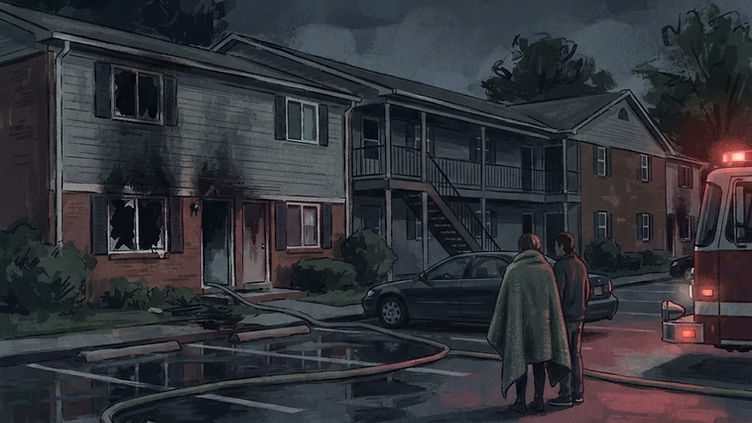
Petersburg Fire Rescue and Emergency Services responded overnight to a structure fire at Quail Oaks Apartments that displaced two adult residents, according to reporting by WTVR CBS 6.
Firefighters extinguished the blaze before it spread into the adjoining units. The cause remains under investigation.
What has been confirmed
The fire occurred overnight at Quail Oaks Apartments in Petersburg. Two adult residents were displaced from the multi-family complex. The fire was extinguished before it spread to adjacent units. The cause has not been determined and is under investigation by the fire department.
The reporting available at publication does not state which building or unit was involved, whether anyone was injured, whether the unit was rented or owned, or what the damage estimate is. Those details will be added here if the department or the property releases them.
A two-person displacement is still a building-systems event
Two residents is the smallest displacement number a fire can produce and still be a displacement. It is easy to read that as a small fire, and in terms of flame it usually is.
It is not small in terms of what the building loses. A single apartment fire, even one put out quickly, results in a set of actions that are taken for safety and that each remove something from service. The electrical circuit serving the damaged unit is de-energized at the panel. The smoke alarm and any heat detector in that unit are either destroyed or disabled. If the unit had a sprinkler head that flowed, the system serving that branch line is now drained and out of service until the head is replaced and the line is repacked and tested. Water that went into the wall cavity is sitting in the insulation around the plumbing.
In a garden-style apartment building where units share a common roof, a common attic and often a common electrical service, the question the fire official has to answer is whether the impairment is confined to the damaged unit or extends to the building. When the answer is that the alarm loop serving several units was affected, the code answer is a fire watch on the whole loop.
What Virginia's code requires when a system is out of service
Virginia enforces fire safety through the Statewide Fire Prevention Code, which adopts the International Fire Code with state amendments, alongside the Uniform Statewide Building Code for construction. The out-of-service provisions are the ones that matter after a fire: where a required fire protection system is out of service, the code official must be notified and an approved fire watch must be provided until the system is restored.
The practical effect for a property is that the fire watch is not a decision the landlord makes after weighing cost. It is a condition of continuing to occupy the building. And because the fire department has already been to the building, the impairment is known to the authority having jurisdiction, which removes the option of quietly leaving a system offline.
Why the investigation freezes the unit
"Under investigation" is a specific status with operational consequences. Until the fire department has determined the area of origin and completed its examination, the unit is an evidence scene, and the property cannot begin demolition, cleaning or repair inside it.
That has two effects. The first is that the unit stays exactly as the fire left it: charred, wet, and open. The second is that the unit stays open longer than the property would like, which is the period when an unoccupied apartment in an occupied building is most likely to be entered.
It also affects the residents. A tenant whose unit is held as an investigation scene cannot retrieve property without an escort, and cannot begin a contents claim until access is arranged. That coordination is normally done through the property, which makes the property the party responsible for keeping the unit closed.
What "extinguished before it spread" tells us
The most useful piece of information in the reporting is that the fire did not reach the adjoining units. In a multi-family building, that outcome depends on three things: how fast the fire was reported, how the units are separated, and whether the separation held.
The separations in a garden-style apartment building are the party walls between units and the floor and ceiling assemblies. In buildings constructed to modern code, those assemblies are rated, and the rating is what buys the fire department time. In older buildings, the separations may be a single layer of gypsum on wood studs, which provides a few minutes rather than an hour.
A fire that is stopped at a party wall is a fire that the building's compartmentation worked on. It does not mean the adjoining unit is unaffected. Smoke passes through every penetration in a rated assembly: outlets, plumbing, the gap at the top plate, the recessed light can that was installed after the wall was built. Residents in the adjoining units should expect smoke odor and residue even where there is no visible damage, and they should document it.
The watch on a small fire is short but not optional
A watch on a single damaged unit in an otherwise occupied building is a different assignment than a watch on a vacant structure. It is usually a shorter commitment, measured in days rather than weeks, and it is focused on three things.
The first is the damaged unit itself, which is where a hot spot would be if there is one. The second is the shared assembly: the wall and ceiling surfaces adjacent to the damaged unit, checked for heat and for the smell of smoke in the cavity. The third is access, because the unit is open, the door was forced, and the residents are gone.
An officer working that assignment is not standing in front of the building for show. They are walking a route on a schedule, recording it, and holding the one opening that matters. Where the property is small and the damage is confined, that may be a night shift rather than a round-the-clock post, and the fire official is the one who decides which.
What the displaced residents should do
The two adults displaced here are entitled to a written statement from the property describing the condition of the building and when they can return, and they should ask for it in writing rather than by phone.
They should also keep the receipts. Lodging, meals, clothing, medication and transportation are recoverable under most renters policies, and the claim is much easier to support when the documentation starts on the first night. The fire department's incident report number is the document every insurer asks for, and it is available on request.
What Virginia law says about a unit that cannot be lived in
Virginia keeps the fire department's authority and the landlord's obligation on separate clocks, and both are running after a fire like this one. The fire department decides whether a structure is safe to occupy. The landlord is separately required under the Virginia Residential Landlord and Tenant Act to maintain the premises in a fit and habitable condition, and the Act addresses what happens when a fire or casualty makes a unit unusable: the tenant's rent obligation is reduced, or the tenancy may be terminated, depending on the extent of the damage and the terms of the lease.
For the two residents displaced here, that makes the conversation with the property a statutory one rather than a favor request, and it is best conducted in writing. For the property, it makes the condition of the unit at the moment of the fire a record worth creating carefully, because that record determines both the rent question and the insurance claim.
The fire watch sits outside that framework entirely. It is not a remedy for the tenant and not a substitute for repair. It is the measure the code requires while the building's protection is reduced, and it ends when the systems are restored rather than when the tenant is made whole.
Related coverage
The Watchline has reported on overnight apartment fires across the mid-Atlantic this month. In Bethlehem, Pennsylvania, a duplex fire displaced several families. In North Naples, a fast-moving fire in an apartment complex emptied units overnight.
The service connection
USPA Nationwide Security provides fire watch, board-up and post-fire access control for multi-family properties in Petersburg, Richmond and central Virginia, including buildings where a single unit fire has left a shared alarm loop or an open apartment that has to be held during an origin investigation. Officers work documented rounds, keep the damaged unit closed, and call the fire department directly when something is found. Requests can be made through the emergency fire watch page, the central Virginia fire watch page, or by calling (800) 214-1448.
Sources and status
Reporting on the incident is attributed to WTVR CBS 6. The cause, the injury status, the unit count of the affected building and the damage estimate remain open pending release by Petersburg Fire Rescue and Emergency Services. Technical references include the Virginia Statewide Fire Prevention Code and NFPA 101, Life Safety Code.
Sources
About the reporter
Staff Writer
Staff writer for the USPA Nationwide Security newsroom. Receives newsroom tips, corrections and editorial inquiries.
Author biography and credentialsMore from The Watchline

Fire Protection
A fire confined to one bathroom at Audubon Park Apartments still took a building's plumbing and alarm loop out of the argument
Daphne police and fire crews contained the late-night fire to a bathroom with no injuries reported. Investigators are still working the ignition source, and that is the period when the unit has to be held.
· Albina Bieci

Fire Protection
A third-floor fire on Warsaw Avenue did $100,000 in damage in thirty minutes, and displaced three people
Firefighters had the East Price Hill fire under control in about half an hour and carried a dog out of the building. Three residents were displaced from a three-story walk-up whose upper floor and roof assembly now have to be inspected.
· Albina Bieci

Fire Protection
A fire inside the wall cost four units at Park Canyon Apartments while twelve were cleared to go home
Flames moved through the concealed spaces between the upstairs and downstairs laundry areas of a 16-unit Dalton building, causing roughly $50,000 in damage. Four households went to Red Cross lodging and twelve went back in.
· Albina Bieci
