
The São Paulo hotel incident is a coordination problem, not a bodyguard problem

By Mike Edwards, VIP Security Director, USPA Nationwide Security
A confrontation in a luxury hotel breakfast room has the close protection industry arguing about liability, but the operational failure it exposes is simpler: two details, one room, no shared channel.
SÃO PAULO, Brazil
SÃO PAULO — A physical confrontation inside a luxury hotel breakfast room here has become a case study in what happens when two unrelated protection details occupy the same space with no communication between them, after the operator involved publicly addressed the incident this week.
Veteran close protection operator Pascal Duvier confirmed he intervened when an 11-year-old child walked past the table of the client he was protecting, and that the child's family responded aggressively to the intervention. He also confirmed that he was retained by a different high-net-worth client staying at the same property, and that early media reports attaching him to a visiting recording artist's detail were wrong.
What is established
Established: a physical intervention by a protection operator in a hotel breakfast room, a child in the protected space, a strong response from the child's family, and a factual correction to the initial attribution of the detail.
Not established: the exact words exchanged before contact, whether the operator identified himself beforehand, and what the hotel's own security posture was at the time. Those determine how a court or an insurer would see it, and they are not yet on the record.
The attribution error is the instructive part
In the first hours, the operator was widely reported as belonging to a celebrity detail that was not his.
That mistake is not a media curiosity. It is a live operational risk in every hotel that hosts more than one protected guest. A principal's security posture is inferred by everyone in the room, including the press, from who appears to be working. When two details are present and neither is declared, the assumption fills the gap, and the assumption is usually wrong.
For the operator, the consequence was a reputational problem attached to a client he does not work for. For his actual client, it was a disclosure problem: their presence in the building became inferable from a stranger's arrival.
Two details, one room, no shared channel
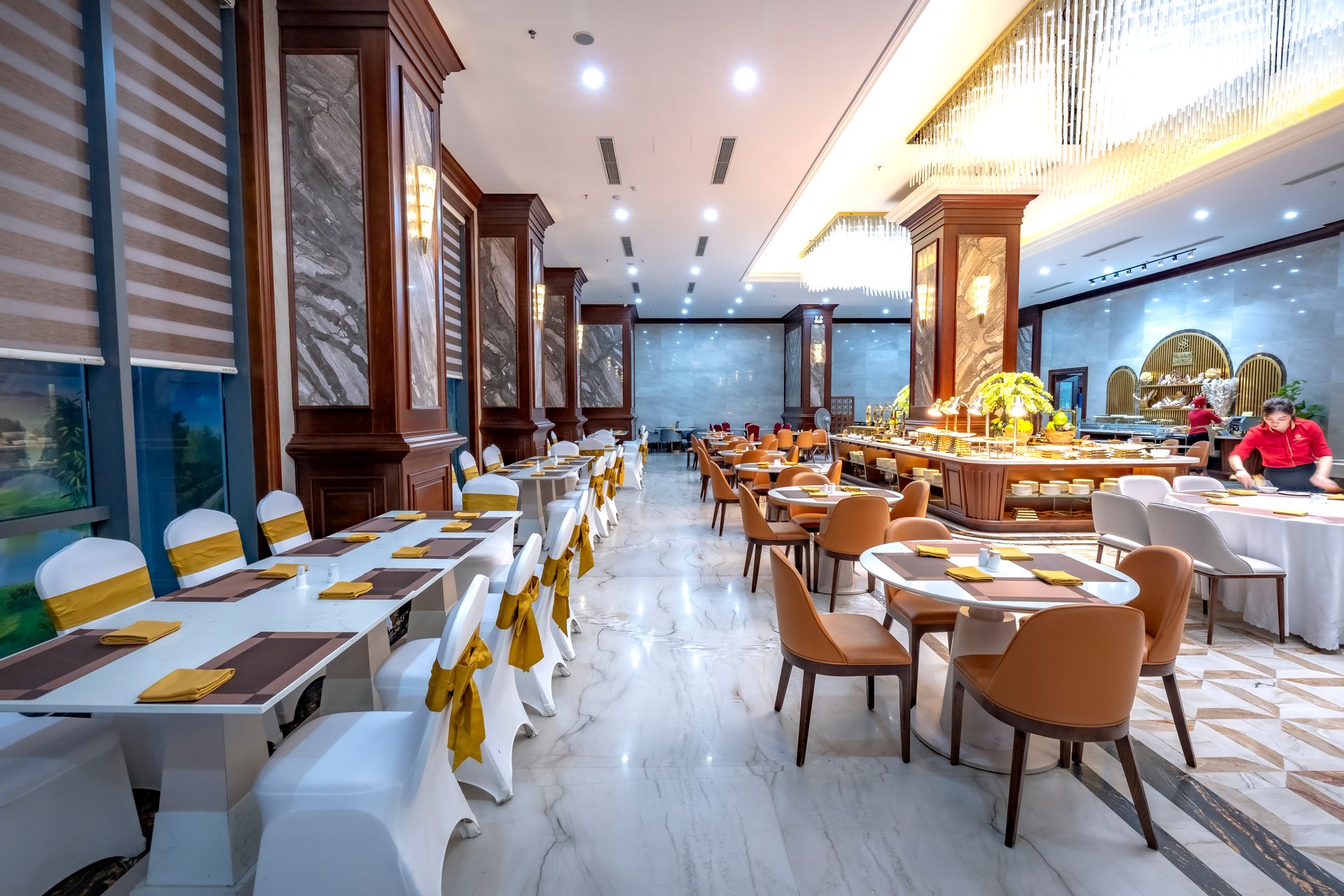
A hotel breakfast room is one of the hardest environments in close protection: a fixed furniture layout, several entrances, a buffet that forces movement, guests in nightwear, children, and no ability to control who walks where.
When a second detail arrives without notice, the room acquires two sets of assumptions that contradict each other. One detail has decided that anyone approaching the table is a threat until proved otherwise. The other has decided that the room is benign, because their principal's presence there is not public.
Both are professionally defensible. Neither is survivable in the same five feet of carpet.
The standard remedy is coordination before arrival, and it is entirely unglamorous: the hotel's security director holds a register of protected guests, details declare themselves to that director on arrival, and where two are present the director connects them so that each knows the other's client is not to be approached, photographed, or seated adjacent.
Most properties that host public figures have this in some form. It fails when a detail does not declare, when the hotel's night or breakfast manager is not briefed, or when a client books through a channel that never reaches security.
Where the liability line actually sits
Protective operators carry a lawful authority that is narrow. A private citizen may use reasonable force to prevent an imminent threat to a person, and may not use force to enforce a client's preference for personal space. Physically stopping a child who is walking past a table sits on the wrong side of that line unless a threat was reasonably perceived, and the perception has to be defensible after the fact.
Contracts make this worse rather than better. Most close protection agreements are written around threat categories and hours, not around contact permissions: who may be touched, under what conditions, and what the operator must do before initiating contact. An operator who has not been given a written standard has to invent one at the moment, and the invention is judged later by people who were not there.
What should change in the routine
- Declare the detail to the property's security director on arrival, in writing, with a contact who answers at 3 a.m.
- Ask directly whether another protected guest is in house, and where they are seated or accommodated.
- Instruct the detail in one sentence: verbal presence, body position and a step back before any contact, with contact reserved for a perceived weapon or a confirmed approach to the principal.
- Put the contact standard in the contract, so the operator is executing a briefed policy rather than a personal judgement.
- Give the client the same sentence, so they know what their detail will and will not do on their behalf.
The industry debate this incident has produced is largely about liability. The useful part of it is about coordination, which is cheaper, and which prevents the incident that creates the liability.
USPA Nationwide Security provides executive protection and event and venue security for clients whose movements cross properties that host other protected guests.
Related coverage
- More than half of the S&P 500 now pays for a bodyguard. The filing is the tell.
- The hybrid threat: attackers merge digital reconnaissance with physical ambush
- The most dangerous address in the program is the one they sleep at
Close protection for a travelling principal: (800) 214-1448 or request executive protection.
Sources
About the reporter
VIP Security Director, USPA Nationwide Security
Mike Edwards directs VIP protection details at USPA Nationwide Security, including the selection and supervision of close protection personnel.
Author biography and credentialsMore from The Watchline
Executive Protection
Silicon Valley details are spending on analysts before they spend on bodies
Practices serving the technology corridor are hiring analysts before officers, on the finding that the useful warning arrives days before the principal moves.
· Michael Evans

Executive Protection
The most dangerous address in the program is the one they sleep at
Assessments presented to close protection conferences now rank the private residence above public appearances as the likeliest place a high-profile client is breached. The budget rarely follows the finding.
· Mike Edwards

Executive Protection
Protective details are moving past the C-suite, and the reason is attribution
Boards are funding protective details for general counsels, chief operating officers and researchers. The driver is attributable exposure, not seniority.
· Michael Evans