
The Secret Service is defending airspace now, and the ground perimeter is the wrong place to start

By Michael Evans, Founder and Strategic Advisor, USPA Nationwide Security
Federal updates show protective planning shifting toward drone detection and mitigation, including systems built to defeat jamming. Ground security assumptions have not caught up.
WASHINGTON
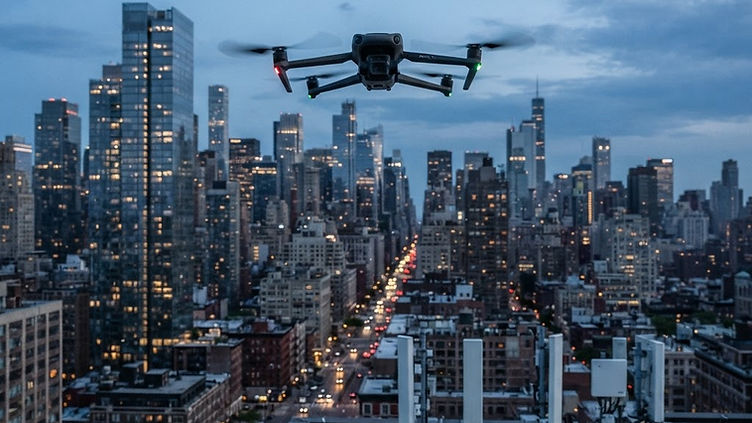
WASHINGTON — The U.S. Secret Service has been reworking how it builds public security perimeters, moving unmanned-aircraft defense ahead of conventional ground logistics in its planning for protected events, according to federal updates on the agency's counter-drone work.
The change is not a matter of buying new equipment. It is a change in what a perimeter is assumed to protect against, and in how early the airspace question is asked during planning.
What the agency has described
Established by federal statements: the Secret Service operates counter-unmanned-aircraft capabilities around protected events, its planning now treats airspace as a principal security dimension, and its program includes the ability to detect and to mitigate.
Not established publicly: the specific detection architecture in use, the rules of engagement for mitigation, and how often the capability has been activated at a protected event. Those are operational details that agencies do not disclose, and their absence is not a gap in reporting so much as the nature of the subject.
Why one airframe class changed the argument
For roughly a decade, counter-drone defense rested on a comfortable assumption. A small quadcopter carries a radio link to its operator. Find the link with radio-frequency sensing, then either disrupt it so the aircraft fails safe, or locate the operator by direction-finding and go and find them.
Fiber-optic control removes both options. The aircraft trails a hair-thin spool and takes its commands down a physical line, so there is no radio emission to detect and nothing to jam. Range is limited by the spool and by the weight the airframe will carry, which puts the operator physically closer to the target and makes physical security of the launch point matter as much as electronic defense.
Autonomy removes the operator from the problem entirely. An airframe flying a pre-programmed route or tracking a target with onboard sensing needs no link at all after launch, and no amount of radio-frequency work will affect it.
Against those two classes, radio-frequency detection has close to nothing to offer, and radar, acoustic sensing and optics are what remain.
Why the argument moved ahead of the ground plan
Protective planning traditionally runs in a fixed order: venue, route, access control, screening, medical, communications. Airspace sat near the end, if it appeared at all, because the threat it addressed was rare and the agencies that could act on it were federal.
Reordering the sequence changes what the earlier decisions look like. A venue with an uncontrolled overhead approach is a different venue once that consideration arrives before the contract is signed rather than after the seating plan is fixed. The reason the federal posture shift matters outside federal protection is that it moves the airspace question into the site-selection stage, where changing an answer is still cheap.
Detection is four different instruments seeing four different things
Radar sees a track and a range. Small, slow, low-altitude airframes are difficult for radar designed for aircraft, and urban clutter is punishing, which is why counter-drone radar is usually deployed with a specific geometry and a specific purpose rather than as general airspace surveillance.
Radio-frequency sensing sees control and video links. It is cheap, it is effective against the ordinary consumer drone, and it is blind to fiber-optic and fully autonomous flight.
Acoustic sensing hears the rotors. It is short-range, directionally coarse, and useful as a cue rather than as a track.
Optics, on a stabilized mount with an operator, identifies and confirms. It is the only one of the four that produces a picture a decision-maker will accept, and it is useless without a cue from one of the others.
The implication for anyone designing a perimeter is that a single sensor is a false confidence. A site that buys radio-frequency detection and calls itself drone-aware has bought a capability that works against the least determined operator in the market.
Mitigation authority is a legal question before it is a technical one
The technical menu for mitigation is short. Jam the link. Spoof the navigation. Interfere with the control protocol. Catch the aircraft physically, with a net, a projectile or another aircraft.
In the United States, several of those actions are felonies for anyone who is not a federal agency operating under specific statutory authority, because they involve transmitting radio signals, interfering with aircraft, or both. The legal authority for counter-drone mitigation sits with a small number of federal departments, and it is exercised under defined conditions rather than as a standing permission.
The practical consequence for a private event is fixed. A private detail can detect, observe, report and move the principal. It cannot lawfully take the aircraft down in most circumstances, and any vendor offering to do so at a corporate event is offering something the client cannot lawfully buy.
What the airspace dimension changes about movement
Ground perimeters assume a threat arriving along the ground plane. Airspace changes the geometry of exposure, and specifically of overhead exposure.
A principal standing at a podium is visible from above. A motorcade on an open road is visible from above and at a distance that ground threats cannot reach. A rooftop terrace event has no cover at all except the building itself.
The countermeasures that follow are architectural and procedural rather than electronic. Move the principal under cover where cover exists. Rehearse the indoor fallback and make it faster than the outdoor route. Choose venues with controlled airspace approaches where the choice is available, and record the ones that do not have them.
The launch point is now the perimeter
Fiber-optic control shortens the standoff distance between operator and target, because the spool limits how far the aircraft can travel. That single physical fact moves the launch point into ground security's problem.
A small aircraft flown from a parked car two streets away, from a rooftop loading area, from a construction site with an open hoist, or from a vacant lot beside the venue, is launched by a person who has to physically be there. They have to arrive, they have to remain during the flight, and they have to leave.
Which means three of the oldest tools in protective work become the counter-drone capability: parking control around the venue, a record of who has roof access, and eyes on the perimeter that report a person standing still in an odd place for longer than a person normally stands still.
A detail that has briefed its posts to notice a stationary vehicle with an occupant, an unfamiliar person on a roof deck, or a car arriving with no passenger and leaving alone has done more for airspace security than a sensing system without a response plan.
Scale determines what is even possible
A stadium holding sixty thousand people presents an airspace problem that no commercial capability solves. The geometry is too wide, the crowd density is too high, and the number of launch points within range is in the hundreds.
A corporate event in a hotel ballroom presents the opposite. The venue is one building, the approaches are limited, and the client controls the roof, the loading dock and the parking structure. In that setting, a deliberate advance and a few procedural controls are a realistic answer, and buying technology is not.
Most protective work sits between those two extremes, and the useful discipline is to be honest about where a given assignment sits before proposing anything. Proposing a detection system for an outdoor festival is a sales motion. Proposing roof access control and a reported-sightings procedure for a hotel event is a security program.
The one sentence that decides the response
Every conversation about a small unmanned aircraft at a protected event arrives at the same question, and it is answerable in advance: what does the detail do with the four minutes between the sighting and the principal being under solid cover?
If the answer is "someone decides at the time", the detail has no plan. If the answer names the person who makes the call, the route that is walked, and the fallback position that is held, the detail has a plan that does not depend on the aircraft being identified.
What a private detail can do without federal capability
Four things, all cheap.
Survey the airspace as part of the advance, including the rooftops and open lots from which a small aircraft could be launched, and the sightlines from them to where the principal will stand.
Assess overhead exposure during movement, not only at the destination. A principal who is covered indoors and exposed for the twelve metres between the car and the door is exposed.
Establish the reporting path in advance, with the local field office or the venue's law enforcement liaison, so that a sighting has somewhere to go that is not a general emergency line.
Brief the unusual-aircraft item alongside the vehicle and pedestrian awareness items, and rehearse the move rather than the observation.
USPA Nationwide Security supports public-facing principals with executive protection and provides event security for venues where the protective and the crowd function have to be separated, plus corporate risk intelligence for teams that need to plan around a changing threat environment.
Related coverage
- A filing changed one sentence about the Hilton. The protective lesson is older than that.
- USPA publishes National Capital Region risk monograph for corporate security teams
- Nobody moved, so she did: the Wicked red carpet and the myth of the co-star bodyguard
Protective planning for a public event: (800) 214-1448 or request a protective assessment.
The Watchline will update this report as federal guidance on unmanned aircraft defense develops.
Sources
About the reporter
Founder and Strategic Advisor, USPA Nationwide Security
Michael Evans founded USPA Nationwide Security in 2005 and led it as chief executive for sixteen years. He reports on protective operations, security regulation and the business of guarding.
Author biography and credentialsMore from The Watchline
Executive Protection
Silicon Valley details are spending on analysts before they spend on bodies
Practices serving the technology corridor are hiring analysts before officers, on the finding that the useful warning arrives days before the principal moves.
· Michael Evans

Executive Protection
The most dangerous address in the program is the one they sleep at
Assessments presented to close protection conferences now rank the private residence above public appearances as the likeliest place a high-profile client is breached. The budget rarely follows the finding.
· Mike Edwards

Executive Protection
Protective details are moving past the C-suite, and the reason is attribution
Boards are funding protective details for general counsels, chief operating officers and researchers. The driver is attributable exposure, not seniority.
· Michael Evans